
Press play to listen, or check it out on your favorite platform:
YouTube | Apple Podcasts | Spotify | Google Podcasts | iHeartRadio | Amazon Podcasts | Spreaker
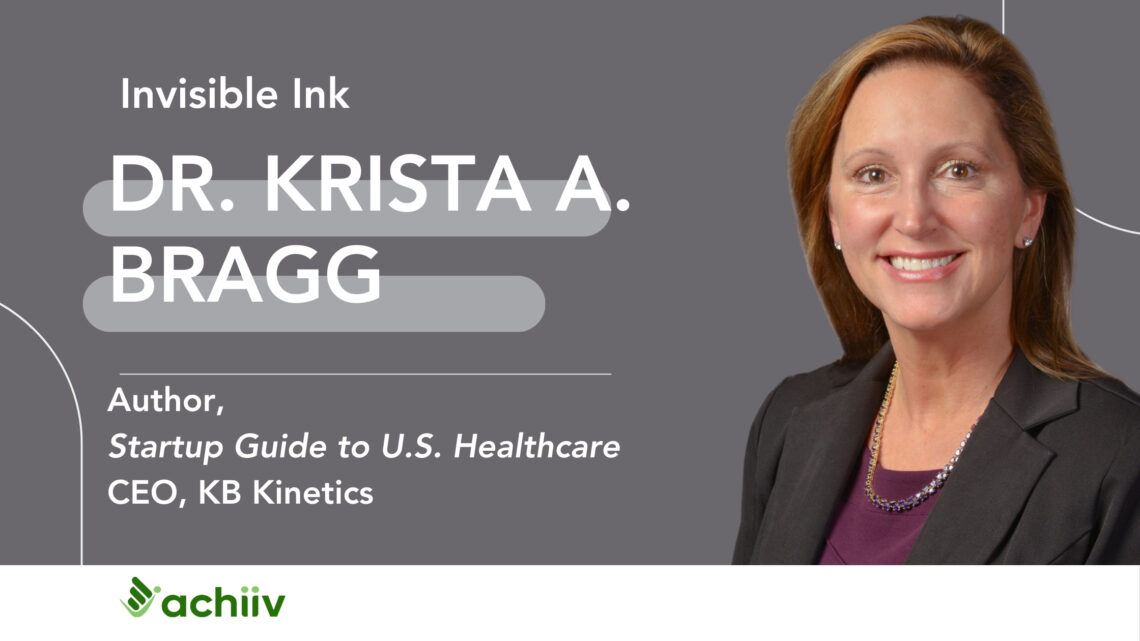
About Dr. Krista A. Bragg
Krista A. Bragg, DNP, MBA, MSN, RN, is a nationally recognized healthcare executive and advisor with a track record of leading hospitals, payers, and guiding companies on U.S. healthcare strategy. As Founder and CEO of KB Kinetics LLC, she partners with health systems and technology companies to drive growth, operational redesign, and innovation.
Her advisory portfolio spans North America, Europe, the Middle East, and Asia. Dr. Bragg is also the founder of Kinetics & Belle Publishing and the author of The Startup Playbook for Entering U.S. Healthcare (2025), which debuted as an Amazon #1 New Release in Medicaid & Medicare. The book equips international founders with a tactical guide to U.S. healthcare strategy, regulation, and market entry.
A recognized authority in strategic growth, value-based care, and operational strategy, Dr. Bragg is a sought-after speaker on healthcare innovation, payer–provider integration, and financial sustainability. She is passionate about redefining healthcare efficiency, fostering physician engagement, and
advancing patient-centered innovation, and her contributions to patient safety, healthcare innovation, and system optimization have earned awards for Operational Excellence and Innovative Leadership.
Episode Highlights
- The hidden financial crisis inside U.S. healthcare systems—and how it radically changes what gets bought (and what doesn’t)
- Why most hospital leaders don’t care about “AI” and what they actually want solved when startups walk through the door
- The biggest near-term opportunities for healthcare founders, and how to leverage them
- The single fastest way to get rejected by a health system and how smart founders plan around it
- Why clinicians must stay in the loop—and how ignoring one stakeholder can kill an otherwise great product
- How to avoid pitching the wrong customer and missing the real decision-maker
- The common pilot mistakes that leave startups stuck in “zombie mode” with no path to revenue
- What healthcare leaders actually mean by “value”—and the metrics that move C-suite decisions today
- Why payer, provider, and employer incentives often conflict—and how founders can choose the right go-to-market lane
- The overlooked risk in converting pilots to contracts and how to protect deals when it happens
- Why flexibility in pricing, contracts, and even branding can make or break early healthcare deals
- The one rule every healthcare founder should remember
Links and resources
- KB Kinetics – A healthcare consulting firm that works with startups and tech companies entering or scaling within U.S. healthcare.
- Startup Guide to U.S. Healthcare – A practical handbook designed to help founders understand and navigate the complexity of the U.S. healthcare system.
- Abridge – An ambient clinical documentation tool that captures patient-doctor conversations and auto-generates medical notes to reduce clinician burden.
- Epic (EHR) – The dominant electronic health record platform that most U.S. hospitals require new solutions to integrate with.
- HIPAA – The regulatory framework governing patient data privacy and security in U.S. healthcare.
- CarePods – An example of a healthcare company where technology adoption outpaced clinician readiness and workflow integration.
Interview Transcript
Shubha K. Chakravarthy: Hello Krista, welcome to Invisible Ink. I’m so excited to have you here.
Krista A. Bragg: Thank you, Shubha. I’m thrilled to be here. I appreciate it.
Shubha K. Chakravarthy: Great. So, I know you’ve written this amazing book, Startup Guide to US Healthcare, so we have a lot to talk about.
But before we get into that, can you just tell us a little bit about your background in healthcare and what prompted you to write the book?
Krista A. Bragg: Sure. I would love to. So, I’ve spent my last couple of decades in healthcare. Started as a nurse and then a nurse anesthetist. I worked my way through hospital operations, managing teams, running hospital services like environmental services or surgical services, et cetera.
And then transitioned into a senior leadership role as Chief Operating Officer for a couple of hospitals, and even had the opportunity to serve in a senior role at a health plan. So, a really great combination of clinical experience, operational experience, and also the payer side.
And, for the past year, I stood up KB Kinetics, which is a consulting company. The majority of our work—about half of it—is around startups and supporting tech companies entering the healthcare field.
The very first tranche of founders that we worked with were all from outside of the United States, so Portugal, Nigeria, and other areas. And they were all asking the same types of questions about US healthcare.
So I thought, well, let’s just put it into writing. And then they’ll have a source that they could reference as they work through the different phases of their startup.
So, that’s why we put it together. It’s a very practical type of manual and certainly not high-level for current healthcare executives. But it’s been really helpful, I think, to the founders.
Shubha K. Chakravarthy: Fabulous. And do you also work with US founders and see that it’s being applicable to them as well?
Krista A. Bragg: Yeah, absolutely. Definitely. Not only that, but students, nursing students, and even people who are new to health insurance jobs or roles—the feedback I’ve gotten is, “Oh, for the first time ever I understand this or that about insurance,” because it’s really translated into layman’s terms.
Even Medicare, Medicaid, in-network, and out-of-network. Certainly, the lens is focused on the founder as they’re creating their product or going to market. But I think the translation of healthcare in general has been helpful to others outside of that.
Current Challenges in Healthcare
Shubha K. Chakravarthy: So let’s jump right in. So you’re—as we’ve talked before and I see in the book as well—you have this very specific lens on what does it feel like from the person who’s inside the system that the founder has to keep in mind.
So, there’s a lot going on in healthcare right now. When you look at the industry, what does it look like from the inside?
Krista A. Bragg: It’s difficult. You know, in preparation for this, I talked with several of my colleagues across the nation in various roles—CNO, CEO, Chief Operating Officer. And their answers were all exactly the same.
And that is: whether they’ve been in the healthcare leadership industry for 10 years or 20 years, right now, they’re suffering from the most difficult financial crisis that they’ve ever had to deal with.
So, we have hospitals across the nation that are closing—rural, small hospitals—which is forcing patients to find new avenues for care, which often leads them to other hospitals that are already overcrowded and are very full.
But when we think about the financials of what’s happening right now in the United States: workforce shortages, which has created a supply and demand issue, which means increased salaries and increased physician subsidies.
When you layer that together with decreased government and commercial reimbursement, the margins are either very tight for hospital leaders or they’re non-existent.
So, they’re working very hard for the daily trade-off of: how do we make sure the hospital stays open and we’re able to continue the services that we have, versus growing and purchasing new apps and new shiny things?
Shubha K. Chakravarthy: Which is an interesting question. So, you know, clearly there are different responses that are possible. It’s kind of like being in the ER, right? There’s a short-term answer, there’s a medium-term answer, and a long-term answer if you have a heart attack.
Opportunities for Founders in Healthcare
Shubha K. Chakravarthy: So what are you noticing as the biggest areas of focus, particularly those that might translate into opportunities for founders? Where are these systems focused to address these painful issues?
Krista A. Bragg: Any kind of application or solution that will make the work easier for the clinicians, anything that will help them save time, increase productivity, or create a workplace of greater desire for recruits and for retention.
When we talk about companies like Abridge, they’ve been able to create draft documentation through ambient listening. You know, you have your appointment with your physician and they are no longer at the computer typing all day, because the ambient listening is picking it up and helping to put notes into the chart.
Those types of activities that can help the clinicians ease their workload and increase their productivity, I think, are probably some of the number one draws.
Shubha K. Chakravarthy: Got it, and that makes a lot of logical sense. You know, obviously you want to give them the tools to do the job they wanted to do in the first place, which is patient care.
But are you noticing anything in terms of, like, surprising areas of opportunity that maybe are not so obvious on the surface?
Krista A. Bragg: Well, I think that in the past, hospitals might have been reluctant to invest in the basic running of the hospital or the operations within.
And I think that this new urgency to help decrease the burden on the clinicians and to improve and enhance patient flow and the overall functioning within the hospital walls. I think that urgency is creating an opportunity for some of the less glamorous types of innovation, you know, as it relates to revenue cycle, billing, et cetera.
And the companies or the startup groups that are inventing solutions that can make those workflows easier are gaining traction right now, versus the more highly regulated digital apps that were more popular a few years ago.
Of course, there’s still opportunity there, but there’s much more impetus now on how can the workflow improve immediately.
AI in Healthcare: Opportunities and Challenges
Shubha K. Chakravarthy: Got it. And to that point, if a founder came up to you and said, “Hey, where should I point my energy?” Given that I have some expertise and I am able to point my focus in different directions over the next 12 to 18 months, what counsel would you give them?
Krista A. Bragg: I think there are a lot of opportunities in workflow speed, documentation relief, staffing, and automation—any kind of work that can be automated, any way to streamline work or automate work. Any of those areas, I think, are really great opportunities right now in particular.
Shubha K. Chakravarthy: So I have to ask you the obvious question about the 800-pound gorilla in the room. AI, right?
Krista A. Bragg: AI.
Shubha K. Chakravarthy: So, yeah, what are you seeing in terms of the startups or the receptivity I should say, and the appetite from the health systems and hospitals for AI applications? And what are some of the dos and don’ts for someone who wants to bring an AI-enabled application into this ecosystem?
Krista A. Bragg: I think that’s a good question because that is the topic of the hour of course. I can tell you that most hospital leaders frankly don’t care about AI. They want solutions that solve their problems, and if a solution is enabled by AI or through AI, that’s great, but it’s not the end-all.
You know, leaders aren’t sitting around the table looking for AI solutions; they’re just looking for solutions. So if a startup is employing AI as part of their solution, it needs to be really focused on solving the problems that the leaders are asking for help with.
Shubha K. Chakravarthy: That makes sense to me because it’s really about getting the job done that they want done. But the question is and I cannot imagine that you would go into any of these ecosystems and not see AI being really critical in some of the more existential, fundamental questions that many leaders are grappling with, especially in healthcare, are about the hallucinations and the reliability to what extent is human control or oversight required.
If I had to ask you for the broad themes as they are evaluating many of these AI solutions that are walking in the door, what are the top two or three themes that are top of mind and are going to be the “must-haves” for anybody walking in?
Integration and Data Security Concerns
Krista A. Bragg: Well, the biggest question that comes up right away is: can your product or solution integrate with the systems that we already have?
A lot of health systems have spent hundreds of millions of dollars on their EHR (their electronic health record), so they’re not looking for new disparate companies to come in with a product or solution that doesn’t automatically integrate with Epic.
I even had this conversation last week trying to connect a founder with a health system, and the health system CNO said immediately, “If it’s not already integrated with Epic, I don’t even want to meet with them.”
This is because they don’t have the bandwidth to take on a disparate system and then do the work to build the APIs or whatever the structural format that needs to happen to enable it to work.
So, I think integration is really key. And then the cybersecurity rules around: where is the data stored? What is the startup group responsible for from a data perspective versus the hospital system? What about the HIPAA rules and regs, and how do they address that?
I think the founders that can go forth with really great documentation and they’re able to articulate the way their systems integrate, the way they’re handling data, and ways that they might be addressing ethical concerns or clinician review will succeed.
For a lot of AI that involves healthcare, there must be a clinician reviewing it. Otherwise, you kind of cross that line into AI practicing medicine. We rely on that human eye to make sure that the data is accurate, that it’s giving the correct output for the patient, and helping to decrease the risk of an unmitigated AI output reaching patient care.
Shubha K. Chakravarthy: So two quick questions on that, and then we’ll jump into the process. One is: you mentioned this integration with electronic health records, and we all know that Epic is like the 800-pound gorilla, right?
Does that mean a significant disadvantage to founders in the sense that you now have an established player like Epic holding a lot of the cards? Practically, what are the implications that you’ve seen for startups who are looking to get into the system and need that integration? Is it like a source of friction? Is it a wall or a barrier? And what should a founder do to address that?
Krista A. Bragg: I don’t think it’s a barrier. It’s something that has to be acknowledged, though, and worked through. You know, there are a lot of solutions that are flowing into health systems that are integrated with Epic or have built APIs in a way that can integrate with Epic.
If they are having difficulty at the onset, involving an influential clinician or clinical group and meeting with Epic together can be helpful as far as getting headway there.
But it’s not a big barrier other than it needs to be addressed, accounted for, and planned for. So, if the founder is meeting with the healthcare system leaders and they have not already integrated with Epic, they should at least have mapped out where all of the data would go, ideally within the chart.
They should have mapped out the API structure, and they should have a plan for how they would meet with Epic or with any other EHR to work towards the integration.
Shubha K. Chakravarthy: Got it. And the only other question was: you mentioned the primacy of the clinician and what a critical role the clinician plays. Have you seen any good or bad practices in terms of how startups address this issue of having a clinician have oversight?
Krista A. Bragg: I have. There’s one company that put forth a diabetes type of application for patients, and they worked directly with the patients initially and then primary care practices, which would make sense, right? A primary care physician.
But they didn’t take into account the endocrinologists. For patients who have diabetes, they see their primary care physician, and then they also are managed tightly, usually by their endocrinologist.
Because they didn’t include the endocrinologist early on and there was no integration with the patient chart, the endocrinologist—justifiably so—became concerned that someone else was managing their patient’s diabetes care with no oversight or insight into that care. So, it didn’t move forward.
I mean, I think that’s an example and I know we’re going to talk about stakeholders in just a little bit but in most aspects within hospital functioning and operations, even environmental services and food and nutrition, involving clinicians and nurses in all of those conversations can be so helpful early on.
Often, they’ll think of different aspects that maybe the founder had not considered. It’s also another layer of support, even for the non-clinical areas.
Shubha K. Chakravarthy: Got it. And I know we’ll get into that.
Navigating Decision-Making in Health Systems
Shubha K. Chakravarthy: So let’s kind of talk about the big question, which is: who is going to buy? And who’s going to make the decision?
So a startup is here, has a great solution, they knock on the front door of a health system—who actually has to say yes for anything to get approved?
Krista A. Bragg: That’s a good question because it’s usually a panel of people, and they all have different perspectives and different priorities.
But certainly, in the last few years, the Chief Digital Officer or the Informatics Officer—the IT leader within the hospital—has an increasingly important role because they are responsible for the overall security of the data and the overall functioning of the EHR.
So those persons need to be included very early on. They’ll be very quick to stop the progression if they’re not included, because their insights into how the solution would integrate and how patient data would be selected is very important. But the COO, depending on the area,the Chief Operating officer, the Chief nursing Officer.
I could tell you in my experience, the nursing teams, which are the majority of the healthcare workers, a lot of times they are not included in early discussions with founders because they meet immediately with the CEO.
The CEO has responsibility for everything, including the strategic direction of the organization, but the nurses that are doing the work, their representative, their chief nursing officer, should be in those meetings as well. So I think the answer really is usually there’s a cohort: the chief operating officer and/or CEO, the chief digital officer or IT, and the chief nursing officer, for most items, need to be included.
Shubha K. Chakravarthy: So we are talking about a fairly distributed—I don’t know if “distributed” is the word—but at least a slightly more diffuse distribution of decision-making power and veto power, if not the decision-making power.
So there’s a lot of dots to be connected here. Is there a way for a founder to think about how to do this that would inform who they reach out to first? What should that approach look like? Have you seen things that work better in terms of this approach than others?
Krista A. Bragg: I think just having an approach, a structured approach, is important and taking time to really think that either through conversations with advisors or the first key connection that the founder might have with an organization.
Let’s say through health or some other forum they connected with the chief IT officer. That person can help guide them through the stakeholders within the organization, and they’ll understand who the influential leaders are versus the formal ones, because sometimes they’re not the same.
So I do think that finding one connection and then working through them to form your cohort is important. But when we think about a solution—let’s say it’s an at-home blood pressure monitoring system—the person who’s going to benefit from it the most is the patient. But the person who’s going to deploy it, use it, and do the work to make it get to the patient and review the data is the physician.
But then the person or the group that’s paying for it might be the insurance company—probably the healthcare side, but maybe the insurance company. So right there you have three different distinct groups of stakeholders, all of whom are equally important.
Understanding and mapping that out is key. What I’ve done with founders is we actually create a grid of: what does your product do? What value does it provide to the patient? What value does it provide to the health insurance company? Be very specific and explicit about that. We’ll talk about value shortly as well.
Having that in front of you when you’re meeting with the different stakeholders really helps to tailor the conversation and to ensure that you haven’t missed anyone.
Shubha K. Chakravarthy: You talked about a “use, benefit, and buy” framework in the book. Is that something you think that would be helpful in this process, and how should a founder use that approach?
Krista A. Bragg: It’s very simple. We’ve done this. You make a grid: who uses your product? Who’s your customer that uses the product? Who is your customer that is going to benefit from the product? Who’s the customer that’s going to purchase the product?
You could even create some kind of a visual around the product itself. But we’ve just made simple grids, and that’s been really helpful in just guiding the direction of our conversations.
Shubha K. Chakravarthy: And have you seen any examples where big blind spots were caught or some obvious mistake avoided by doing this?
Krista A. Bragg: I think we talked a little bit about CarePods, the company Forward, that’s in the book. There are many examples where maybe the technology got ahead of the clinician, or the technology got ahead of the usability or the change management from the customer side.
A lot of what founders are doing as they’re having conversations is trying to cultivate change management. They want the patients to buy their product, to do something different to make them better, or to use the product that the healthcare system purchases.
So having a map of all the stakeholders, the value, and the benefit to them, and being able to articulate that, is very helpful.
Shubha K. Chakravarthy: I want to talk about one other thing. You talked about meeting somebody through your networks—it may be the IT person, it may be the nursing officer, or somebody else.
I’ve worked in corporate for 20 years. At least from my experience, with large organizations, what you see is all these initiatives typically tend to have a champion, right? Somebody meets this solution or idea, they buy into it, and they’re the ones who are literally spearheading and cheerleading this solution within the organization.
But we also know that there’s turnover and people leave. Is that an issue at all that you see in these kinds of startups and healthcare systems? And if so, what are the implications for a founder who’s invested all of this time and effort and energy in building these relationships?
You know, next day they see a LinkedIn post: “Proud to have served this organization, see you shortly.” And then you’re back to square one. What’s your advice and what have you seen work well?
Krista A. Bragg: It can be, especially right now when about 50% or so of CEOs are expected to turn over between ’25 and ’26. That’s a pretty large churn rate.
I think what I would recommend is just making sure that they’ve solidified a wide network, a broader panel of stakeholders within that organization. They are able to continue, maintain and nurturing those relationships so that if one leader leaves, you still have some champions left.
Unfortunately, sometimes in larger organizations, when the CEO exits, a new CEO comes in and brings their new team. So being proactive about staying connected with the people that are still there, and trying to get access to the new CEO and the new leadership team.
Because sometimes when that happens, the entire priorities of the organization change as well. This has happened quite a few times over the past year in different groups I’ve worked with. They have a plan, they have picked out their pilot dates, they’re moving forward, and then the leadership changes start.
By the end of the six or nine months, the new team is not interested because their priorities are different. That can be really difficult for founders.
So to answer your question, I would say really nurturing those relationships, being aware of what’s going on in the organization to the best of your ability, and trying to make sure you pick up new champions if old ones move on.
Shubha K. Chakravarthy: How practical is that? I know it’s the obvious, logical answer, but it’s very hard, especially when it has some association with an outgoing team. Like “hey, not my problem.”
There’s almost an incentive to distance yourself from anything that is associated, depending on what the circumstances were of the leadership change.
I’m trying to understand from a practical standpoint—as a founder with limited bandwidth and only X number of pilot slots—what have you seen work well in terms of mitigating that risk?
Krista A. Bragg: I think you could organize the work to get wins along the way. There might be ways to organize the pilot outputs so that they’re in shorter chunks instead of waiting for an 18-month-long project to get outputs.
If there’s a way to structure the pilot such that you get some kind of outputs three months in, you have a win. You can show evidence that it’s working or that you have some value that you’re providing to the organization.
There’s a way to break that up so you can start showing value sooner than later could be helpful.
And I think the relationship piece is just so important. I don’t know if people understand how much that really means—the cultivating of the relationships and maintaining them.
Sometimes the conversations that founders are having with other leaders are simply about families and about themselves as human beings. It’s not all about “what can you buy from me?”
Working on those relationships is probably the biggest key. Then show the value as early as you can to the organization, because that really can’t be denied.
If the new leadership team comes in, they’re going to be looking for wins. If they’re able to take the work that’s already started and translate that into something they’re able to show within the first few months of their new leadership, there’s an incentive for them to do that.
Demonstrating Value to Healthcare Leaders
Shubha K. Chakravarthy: One of the things you talked about is value, right? You just said make sure that you show value within the first three months.
I’m just curious, what does that mean in the context of a startup that’s trying to make headway into a healthcare system?
Krista A. Bragg: Yeah, I think for right now the value that most leaders are considering relate to: what time have you saved my team? How have you made work easier for the nurses? How have you made work easier for the physicians?
Have you increased their productivity or eased their burden? So quantifying it into data that you were able to show—before and after relating to your pilot—and the benefit that your product brings.
That’s going to be very important because we’ve talked about the finances being so tight for organizations. There’s just no patience for investing in unknowns. So they’re really looking for proof of concept and proof of outcomes as soon as possible in a measurable way that can be repeated.
Shubha K. Chakravarthy: So let’s say I come in with a pitch. I have this new fancy thing that’s going to revolutionize the world or whatever.
Is there a hierarchy of metrics? What will convince you, or what have you seen convincing a CEO or a C-level executive that has to approve this decision or a pilot?
What metrics should the founder think about, and how should they link their operating ground-level metrics that the product is really going to impact all the way to the metrics that really matter at the senior leadership level?
Krista A. Bragg: Well, it depends on the organization you’re speaking with, right? So if you’re talking with a health insurance company, they’re going to want data and metrics around per-member, per-month expenses relating to cost of care for patients.
If you’ve been able to show through feasibility studies and pilot studies that one out of 1,000 ER visits can be avoided a year in this patient cohort, that can be quantified. And depending on the size of the cohort, that could be a meaningful number for the insurance company.
So you have to understand your stakeholder’s bottom line and what their priorities are, and map your product’s outcomes to solve those problems.
For health insurance, I would say they’re very interested in keeping patients healthy. And when we say that, we mean out of the ER, at home, and not needing as many high-cost procedures or admissions. That’s very important to them; that’s their number one driver.
For healthcare providers—and this is somewhat of a conflict right now given the finances and the pressures that they’re under—most of them are seeking admissions, right? They want volume.
Interestingly enough, we had a meeting with a large academic system a couple of months ago and pitching a product that would help patients stay at home and not have to come to the ER.
But the physician leader at the time was like, “There’s no way we can do that right now. Our volumes are already tight as they are,” which is troublesome, right?
That’s a difficult conundrum for a healthcare system to be under. I mean the US healthcare system, in that we really ultimately want patients to be healthier, but the systems that they’re seeking care from are incentivized by volume.
So understanding who your stakeholder is, who your buyer is, and what they consider a priority, then framing your outcomes to match those and to solve their problems is key.
Shubha K. Chakravarthy: I am just curious because it begs two questions.
The first question it begs is: you should be really careful who you’re pitching to. Like, perhaps you should be pitching the insurer, not the health system. In which case, have you seen health systems having a significant say because you’re now going to mess with their workflow, their systems, and their records?
Is that a common problem? And if so, how do you get around that? What have you seen work?
Krista A. Bragg: Well, if it does impact the health system, they have to be part of the conversation too. But there might be nuances as to how that conversation occurs.
So, I’ll give you an example from another company—an AI-enabled post-op optimization company. I have surgery; this company, I enroll with them, and they manage my post-op care. Well, ultimately, that will help prevent them from needing readmissions, ideally. That’s the idea.
But when that company went to meet with the surgical group, they had mixed feelings about that because they thought that perhaps there might be additional volume that might come from the work that was occurring afterwards.
But when they pivoted towards a health plan, they had a buyer who was interested right away. So I think working through the health plan—if they’re interested and they want to engage—then they can help have those conversations with the healthcare provider side.
Because maybe there’s something in the contract that the health insurance payer can do for the provider to incentivize them to want to use that solution.
Shubha K. Chakravarthy: Got it. And there was one other point which you mentioned earlier, which is: hey, you want to come into the table with outcomes.
We ran a feasibility study, we ran a patient study, whatever the case might be. How do you get that first set of data? You’re kind of in a chicken-and-egg problem, right?
Have you seen approaches? Do you go with a much smaller organization first? How should that go-to-market approach be structured so that they can have the best shot at being successful eventually with these larger organizations in that same vertical?
Krista A. Bragg: I mean, there are some practical things that can be done.
Like, for example, working with a company that developed an app that detects changes in breast tissue density changes. They’re based out of Portugal. They have a mitten with ultrasound sensors and it’s connected to an app; they train the male or the female how to do their own breast exam, and then that person can do it whenever they want and it tracks it.
So it’s a great relief to the patient. They’re performing feasibility studies right now at the University of Alabama at Birmingham. So working through research arms to get access to patient cohorts can be really helpful.
Other applications like Relayd (R-E-L-A-Y-D)—Dr. Chaula and her team—they’re creating AI-enabled inpatient nursing workflows, and they’ve collected some great pilot data by working with nursing students.
And so now they’re in the middle of pitching the healthcare systems just to get one unit. One unit that would volunteer to work with the team to build these apps and to create something that’s custom for nurses.
So there are definitely ways to collect the data. But before most solutions get access to the patient care arena, there usually needs to be some sort of data to validate that there’s an ROI or some kind of outcome that’s good for the organization or the patient.
Shubha K. Chakravarthy: Got it. And those are great ideas.
So one last question on this idea of value: you talked a little bit about this tension between what’s right for patients and then what’s the incentive for some of these organizations. Are there do’s and don’ts or approaches for startup founders to think about this conflict and how to approach them in thoughtful ways?
Krista A. Bragg: Well, I think a lot of really smart solutions solve for both. So it could be just making sure that you’re understanding the value that you’re bringing to the patient and to the physician or the clinician group, and being able to articulate it.
So, when we think about Abridge—which we talked about, and I have it on my mind because they’re based out of Pittsburgh—this is an ambient listening application.
When I went to my last PCP visit (I love my PCP, by the way), she said, “Do you mind if I use this ambient listening device?” She turned on her phone and we talked for a half an hour, and all that was embedded into the chart.
Because the physician was able to simply review those notes—because we talked about clinician oversight—review those notes, approve them, and change anything that wasn’t right, all of that landed into the EHR.
And because of that, she’s able to go home at the end of the day and not have to chart. I don’t know if a lot of people know this, but many physicians spend hours at home every evening documenting their work, which they call “pajama time” jokingly.
From a quality-of-life perspective, that gives that physician hours back every night with her family, but it also gives her time to see more patients, right?
So if suddenly the visit is now 15 minutes, because she’s not spending another 15 documenting, and that allows her to add another slot a day or two slots a day, that helps patients that are trying to get in, right? Which can help them get to their healthcare problem sooner. So maybe they avoid a rising risk of illness. And it helps the healthcare organization because they increase revenue from that visit.
So, you know, if you really understand the product and the different ways that it would impact the ecosystem, and you’re able to articulate that, often if you’re benefiting the clinicians of the hospital, the impact is you’re benefiting the patients.
Shubha K. Chakravarthy: Got it.
Targeting Payers and Employers
Shubha K. Chakravarthy: So I want to now focus more squarely on where you’re going to go to market. I mean, there are payers, there are employers, and there are health systems. It sounds like it makes sense obviously to choose one lane and stick to it.
So I want to talk a little bit about payers and large employers. We haven’t really talked about them. Where is their energy focused today? What are they hungry for, and what are the signals that a startup needs to look for to see if this is the lane that I should be pursuing?
Krista A. Bragg: So for employers, they’re very focused typically on decreasing workplace injuries, decreasing call-offs, increasing productivity. And there are many low-regulation types of solutions that employers could engage a startup company with that doesn’t require FDA and all of that heavy lifting.
If the founder’s product or solution is able to mitigate back injuries for a company that does a lot of warehouse work, for example, or something else like that, that could be very easily implemented. It doesn’t require state approval or any kind of regulatory type of activity. It’s a pretty easy entry point relative to some of the others.
So for employers, they’re really interested in that and how to best take care of the people that are doing the work for them.
Shubha K. Chakravarthy: Got it. And that makes sense.
But is there a point where a startup founder would have to make a choice between, “Do I go to the plan or do I go to the employer?” Right?
I mean, leaving aside this question of employers being self-insured and all of that good stuff, what’s the guidance there? Do you have a point of view on that?
Krista A. Bragg: I think if it’s a low-regulatory type of application that doesn’t require a lot of clinical or any clinical oversight and can be implemented easily, you could go talk to the employer.
But if it’s more complex, it requires claims data, and you’re looking to manage a population’s health over time, a bigger impact than keeping people from calling off because they have back injuries, if it’s a larger scope as it relates to population management, those typically will benefit more from working with a payer.
It’s because they have all that data. You’re able to tell before-and-after impacts to groups of people and see if it is really working the way you thought. And that can be really valuable.
Shubha K. Chakravarthy: That makes sense. There’s only one other question, which is even if they didn’t have that clinical or the large population aspects that you just talked about, I’ve worked with a founder who tried to do it this way and she ran into a problem with the HR folks saying, “Even if you don’t require anything else, I don’t want to deal with two people.” Is that an issue at all? And are you better off just going straight to the plan?
Krista A. Bragg: I mean, you could do either one. But I think a lot of employers, especially right now because many of them are self-funded meaning they’re paying directly for the healthcare costs of their employees, they’re motivated.
Different companies are going to be motivated differently. The insurance company may not be interested in this particular thing. We’ll stick with the back injuries because their total population they’re managing is half of the state or a full state of people.
But an employer that has that issue or is at risk for that issue might be more motivated to connect with the founder. Not to mention, from a logistics perspective, sometimes it’s easier to get to an HR person at a company than it is somebody at a health plan.
Shubha K. Chakravarthy: So are there best practices you’ve seen working in terms of approaching a health plan versus an employer, and what are any don’ts?
Krista A. Bragg: I think as far as don’ts & dos, I think that if you’re going to work with the employer, at some point there might need to be a conversation with the health plan as well. It might be a two-headed type of conversation.
Whether you start with one or the other could make a difference. But if you can get buy-in and championship from the employer, sometimes that can help working with the broker that’s managing the insurance company side.
Because the insurance company is motivated to keep their client, the employer, if the employer’s asking for something that they think is going to be helpful, usually that helps start that conversation.
Shubha K. Chakravarthy: Got it. That’s super helpful.
I want to now talk about one other important thing, which is pilots. This is so critical, especially in this sector of startups that we’re talking about.
What are the must-haves for a pilot? It’s obvious why a startup would want to do it from a customer standpoint, whether it’s a health system or whoever else it is but what would make it the most attractive for them to say yes to a pilot?
Because there’s disruption and there’s uncertainty. You don’t know if it’s going to pay off. There might be a financial aspect involved. What are your thoughts on that?
Krista A. Bragg: Yeah, from the healthcare side, if the founder comes in with data through the feasibility studies, as we mentioned, or some other kind of information that leads them to believe that this product or solution is going to genuinely help their teams work faster, better, or easier, I think that really is the biggest motivator.
Healthcare systems, as we’ve mentioned a few times, are really looking for ways to make work easier. They’re probably not going to be interested in paying for a pilot though, and that’s something that I think some startup founders are expecting. There are not a lot of healthcare organizations right now that will pay money for a pilot.
In their minds, they’re giving you access to prove your value to them through some controlled way, and that is the relationship and the tradeoff. So I think coming in with the data to show what you’re expecting to happen, managing it in a controlled way that is comfortable to the healthcare executives—they’re going to want to have tight insight into how that’s managed—and then also having really clear parameters about what is the pilot, what’s the purpose, who exactly is involved, what are the outcomes expected to be, what’s the timeline, etc.
I’ve seen pilots not go well when they haven’t had structure around them. And then, in addition, that leadership turnover happens that we mentioned. So at the end of nine months, the founding group has done all of this work and then it doesn’t move forward ultimately with the organization because they didn’t have structure around the expectations for the pilot and the leadership also changed.
Shubha K. Chakravarthy: Which makes sense.
Structuring Successful Pilots
Shubha K. Chakravarthy: So you gave one tip very early on, which is, “Hey, make sure that you’re staggering it and sequencing it so that you have very short windows to deliver evidence of value.” So that’s a point well taken.
What are the other pieces around structure that you’ve seen work well that founders should keep in mind? And secondly, how do you force—maybe “force” is not the right word—but how do you set up the pilot in a way that brings up that conversation about, “Okay, now at this point when this happens, we start having a conversation about you paying for this”?
It’s a tough conversation because you’re going in with lower power as the founder. I’m just curious to see what your thoughts are on that.
Krista A. Bragg: Well, I think somewhere in the beginning of the conversation, there has to be an agreement of: what is the value of this? What is the value to the organization?
They need to be able to articulate that what you’re bringing to them is valuable because of X, Y, and Z, and here is how they would manage it. So the healthcare organization needs to understand the value as well as the startup company in that conversation. Even if it isn’t around dollars, there should be some general idea of what the value of that product is before they start the pilot.
And I think there should be also some understanding of what the outcomes are expected to be. If it delivers as promised, is the organization going to be interested in moving forward with purchasing the subscription or whatever the next steps might be?
Those conversations have to happen. Otherwise, it’s going to be the ambiguity. Nature hates a vacuum, and by the end of the pilot, no one’s going to understand what the overall goal was, and then there’s a chance that it will just fizzle out.
Shubha K. Chakravarthy: Sorry to keep harping on this but what is a good pilot versus a bad pilot for you?
Is there a formal agreement? Are there clear go/no-go decision gates where if by six months—I’m just making this up—if by six months you don’t see a 20% reduction in the clinician’s time on X, Y, Z, then we will do X?
Do you lay out a decision tree for them? And at what point do you bring up price? Do you even set the stage and foreshadow the price? Because this is all about getting to revenue.
I mean, that’s the bottom line. Clearly, yes, there’s a mission and there’s a problem to be solved, but you’ve got to make money at some point. How do you set that? I’m just trying to understand the specifics of that when you’re setting up the pilot.
Krista A. Bragg: I think the more structured that you mentioned, the better. The more every detail that’s possible can be lined up and agreed upon is better, whether or not it’s formal. I think having a document that’s signed by a representative from the organization is probably really helpful in the long run.
But as far as the overall pricing, I’m not sure you can get to that at the beginning of the pilot. That’s why making sure that there’s validation, that there’s value to it. The COO agrees there is value to this, to us.
It’s meaningful to us as an organization if you’re able to decrease nursing work time by 20%, and then you as the founder can do the back-of-the-napkin math and come up with ideas on what you think that means from a value perspective as far as the negotiations.
But having those timelines, having the expected outputs, and even having the statement, “If it decreases by 20%, we find value in that from the organization’s perspective”—that’s better than having nothing at all. There should be some agreement that there’s value to it. Otherwise, why waste your time?
Shubha K. Chakravarthy: The one other thing to that is—it’s obviously, excuse me, you need data from the host organization, right? Have you seen or do you foresee any challenges where a founder comes in and says, “Hey, I want your ‘before’ picture, and then I’ll give you the ‘after’ picture”?
Is that an issue at all where they give you the “before” picture so that you can have a much more clear quantification of, “Okay, we did reduce 20%”? Do you have any thoughts on that, or is that not an issue in healthcare? I know it would be an issue in other industries; I’m just curious how it is in healthcare.
Krista A. Bragg: No, it is an issue. And I could think of one immediately that occurred within the past year. A founding group brought in a product that would help increase admissions by bringing in ambulance traffic. It was a way of rerouting patients within this big hospital network to the hospital that was better performing for the organization.
The way they managed that data question is there was alignment on the definition of exactly what data was. “The baseline is these patients from this particular zip code,” et cetera.
And then the founding team was able to audit the initial data. Then, as they collected it months afterwards, they used the exact same methodology that everyone agreed on. The founding group was then able to audit the data to be in alignment.
Shubha K. Chakravarthy: So is that a reasonable expectation, going in to say, “Hey, we’d love to have access to your records before so that we can, for both of our sakes, have a more clear picture of what the actual impact was from using X, Y, Z product”?
Krista A. Bragg: I think it’s reasonable, but the word “access” might be interpreted differently. This organization didn’t open their financial books for them; they pulled a file. They pulled a file with this very specific, agreed-upon criteria. And they pulled the exact same type of criteria for the “after,” and that’s how the data was reviewed.
Shubha K. Chakravarthy: So it almost feels like something that you’d want to build into the pilot design and say, “Hey, we want to make sure that this solution is adding value. You will provide us a file with the following X, Y, Z metrics for this three-month window before we started the pilot, and during the pilot.”
Krista A. Bragg: If it’s possible. Sometimes the data is so sensitive that it’s a meeting where you meet together—certain people from the finance team meet with folks from the startup company—and they simply review the data together without it passing any kind of firewall or being passed around. But yeah, I mean, there needs to be a shared understanding of what the “before” and “after” metrics are that are being evaluated.
Shubha K. Chakravarthy: So to move on from the pilot, if you had to give a top three “absolutely must-do” for a successful pilot, how would you conclude? How would you synthesize what we just discussed?
Krista A. Bragg: Make sure you’ve included all the correct stakeholders, and that might require asking a couple of different people, “Are these the right people? Is anyone missing?” And if you have an IT type of solution, someone from the IT team or cybersecurity must be involved. Otherwise, you’re not going to move very far at all.
Having structure around the criteria—what are the expectations? I mentioned Relayd has been working with nursing students to collect data, but then the pilots themselves are very structured. This is the “before,” this is the “after.” It’s how we’re measuring it, as much as you can, from a financial or metric-driven perspective.
And finally, agreeing on the outputs. What’s expected? Why are you even doing the pilot? There must be a reason. What are you expecting to happen, and is that what the hospital’s expecting? Because if they’re expecting something else, then you’ve wasted all that time and they may not be interested in working with you.
Shubha K. Chakravarthy: Got it. That’s super helpful. So you’ve given us a lot of helpful feedback, advice, and pointers on how to get this right, but I’m sure in your long experience you’ve seen a lot of ways in which things have gone wrong.
Common Pitfalls in Healthcare Startups
Shubha K. Chakravarthy: So I want to maybe shine a light a little bit on some of those things so founders can avoid them. We talked about some of them already, like not having the right buy-in from all the stakeholders. We talked about change in leadership—leadership turnover being a cause—and we talked about poorly structured pilots languishing for months in “zombie land,” where they’re neither dead nor alive.
Outside of these, when you see deals stall, what are some of the most common patterns for failure that you’re seeing with startups?
Krista A. Bragg: Some of them are rather simple, but having a 70-slide pitch. Healthcare executives want to cut to the chase—what’s the bottom line? So if you’re meeting with healthcare leaders and your slide deck is greater than 10 or so slides, you’re probably not making your point in a way that needs to be heard.
The pitch, a lot of the times, benefits from other people giving feedback, so sharing your pitch with trusted advisors can be helpful. But probably the biggest one is your solution doesn’t match their problem.
Right now, everything is like Maslow’s hierarchy. Most leaders in the healthcare space are just looking to safely take care of patients today and safely take care of them tomorrow. So the solution that the founders bring to the table, especially in ’25 and ’26, needs to solve the problems that the health system is dealing with right now, which can vary region to region.
When I go to Montana and meet with groups out there, some of the themes are very similar, but the distinct problems they’re trying to solve are different based on their market and their competition. So as much research that can be done to prep the founder prior to those meetings, so they’re speaking their language to solve their problems, is probably the most helpful.
Shubha K. Chakravarthy: Got it. And on that point, are you seeing either benefits or risks to founders needing to focus on specific regions, not just on specific entities within the healthcare system?
Krista A. Bragg: Well, interestingly enough, it’s kind of like people—healthcare organizations have personalities which motivate them differently.
If you look at Tampa General, for example, they’re extraordinarily innovative. They just signed a large contract with Palantir. They’re doing a ton of work about how do we really improve, using AI, the way hospitals function inside the walls.
So they’re interested in innovative ideas on how to be the best academic healthcare system in the nation. Whereas others are really hyper-focused on turning around financially. They’re looking for maybe not flashy types of solutions, but things that are going to solve their immediate problem as it relates to workforce, et cetera.
All the things that we’ve mentioned—not only is it region, but also the archetypes of the organizations. Large academic research centers function very differently than the smaller rural systems. So understanding the region and the current problems that system is solving.
Shubha K. Chakravarthy: Got it.
Integration and Cybersecurity Considerations
Shubha K. Chakravarthy: One other thing you mentioned earlier on in terms of derailers, you did mention this need to integrate with Epic or the large electronic health record systems and companies. And you also mentioned cybersecurity, right?
So, in terms of EHR, are there other than the top two or three systems—is being interoperable with them good enough, or is there something else that founders need to be aware of?
Krista A. Bragg: I think having your structure of data flow in a document and being able to articulate that really well early on can be helpful, regardless of who the actual end-user electronic health record is.
Many times, if you can get access to Epic and you’re able to integrate with Epic, the others come easier, right? It’s getting your first one completed.
But going into your first meetings, having all of that mapped out—the structure of the data flow, the security aspects that you’ve considered, whether there is SOC 2 in progress or whatever the criteria are that the health system considers important—having all of that together going into the first meetings can be really helpful.
Shubha K. Chakravarthy: And is there anything around “good enough” outside of the platforms, but in terms of cybersecurity? Are there standards or things that would signal that you’re good enough, things to watch out for, or a base level that you should adhere to or meet?
Krista A. Bragg: Well, I think at a bare minimum, it depends on the organization. I’ll tell you that in my experience, health insurance companies tend to be even stricter than providers just because of the data responsibilities that they have.
Not that they’re different than the providers, but they just have such great masses of data. So, a lot of them are expecting SOC 2 level certificates coming in, which for a startup company can be prohibitive because sometimes that can be 80 to 100 thousand dollars to accomplish.
But at a bare minimum, go forward with all of those responsibilities mapped out as far as what the company is responsible for from a data perspective versus the organization. How does the data flow?
Have a whole visual mapped out as well as cloud-based versus not cloud-based and the API structure. Having a really strong understanding and visual of that before you go in is a base that I can tell you, when we’ve had meetings with companies, even established ones in the past that haven’t had all that mapped out, it hasn’t gone very far.
Shubha K. Chakravarthy: Got it. So that’s super helpful and very tangible in terms of “here’s what I need to do tomorrow.”
At a higher level, we’ve talked about a cycle of how to get these clients and customers to adopt your product or solution. Are there any mistakes or pitfalls you’ve seen as they move from the smaller scale demonstration pilots into larger-scale adoption? Any pitfalls or risks that founders should keep in mind?
Krista A. Bragg: I think being really careful about contract terms with your first few clients. The idea of “most favored nation,” where you promise best pricing to your first client, can really backfire if you start to move towards scaling with large organizations because they’re going to expect a lower price per click or lower price per whatever.
So, make sure that you don’t box yourself in with your first couple of contracts. Other things I would say: be flexible with larger organizations that might want different contract styles; maybe they want shared risk versus whatever your subscription fee is.
Being flexible with the way the organizations work can be helpful. Don’t assume that the way you structured your very first deal is going to be the same way you’re going to want to approach future deals. And don’t lock yourself into something that you can’t get out of.
Shubha K. Chakravarthy: Got it.
Managing Slow Sales Cycles
Shubha K. Chakravarthy: And then in terms of one other point, especially if you’re a cash-strapped startup: these hospitals and customers in general—whether they’re health insurers, payers, or providers—have slow sales cycles. These are large organizations.
How do you think founders should manage and optimize that so they don’t have this feast and famine where one day they have a client and the next day they’re out of business? Have you seen that being an issue? And if so, how should founders manage that?
Krista A. Bragg: I have seen that be an issue. Breaking up the project in a way that you’re able to be paid more frequently if possible, even in smaller increments, can be helpful.
Most of the hospitals right now—we work with a lot of systems that have 30, 60, or 90-day time periods before they pay. You have to be able to foot your bills until that paycheck comes in.
Having awareness of that, planning for it through seed money or whatever the case might be, and then also finding a way to perhaps break up the payments so that you can receive more frequent payments might be helpful.
Shubha K. Chakravarthy: Are there things that would work better rather than not when structuring these kinds of payment arrangements?
Krista A. Bragg: As far as timing or terms?
Shubha K. Chakravarthy: Either timing or the terms. You don’t want to be laughed out of the room when you’re proposing a set of terms. I’m just curious—is there anything unique to healthcare that would make them more amenable to agree to your terms?
Krista A. Bragg: I think it’s being flexible and asking what kind of terms the hospital would accept. For example, one company typically charges a subscription fee per month based on the outcomes that they’re producing.
But working with one very cash-strapped organization, the only way they could move forward was with a shared risk arrangement.
It was a hospital system that didn’t have a lot of capital dollars, so it was very clever. The company decided that they would pay the upfront capital costs, they would absorb them, and then once the hospital started to see the financial gains of their product, they started splitting the gains.
So it was a delayed reward for the company, but it was the only way they were able to close the deal, and it ended up being lucrative for both.
Shubha K. Chakravarthy: That’s awesome. So it’s kind of like the healthcare system’s version of a commission basis, right? Like pay-for-performance. It’s basically what it is. I love it.
Krista A. Bragg: Right. And that’s becoming more and more common. The other situation I’ve seen a few times recently is that larger organizations are not interested in putting out disparate solutions for their patients or their members either. If I am Insurance Company A, I don’t want my members receiving a bunch of paperwork with Discharge B Company’s name on them.
So there have been requests for white labeling. “Can you just do the work behind the scenes and let it be our product?” It doesn’t mean that we own it; you can go do the same thing with another company.
So being flexible about your branding—not being too hooked to it that you’re more focused on your brand than the dollars coming in—and just being flexible with the arrangement is the key.
Shubha K. Chakravarthy: I provide this value exchange, right? I’m happy to do that if you pay me X, Y, Z. I’m happy to talk about that all day long.
Krista A. Bragg: That’s exactly right. Yes.
Shubha K. Chakravarthy: Awesome. So you’ve covered a really comprehensive, encyclopedic view of the whole system. I want to just in closing—there’s all this strain that I’m hearing, all these challenges and conflicts. Will all of this, are you still optimistic about startups in the healthcare system? And if so, what makes you optimistic?
Krista A. Bragg: I’m actually more optimistic than ever before because there is motivation. Health systems are motivated. They are desperately looking for ways to decrease staffing costs.
They’re searching in all different areas for ways to improve retention, staff retention, and ways to make clinicians’ workloads easier so that they’ll stay and they won’t go somewhere else to work.
So they’re motivated, which I think is a great time for startups and for founders because there’s an audience out there that maybe a few years ago would not have been so interested in investing dollars.
Right now there’s a lot of opportunity, and healthcare itself really as far as inner workings, it has not changed a whole lot over the past few years in terms of the inner workings of how care is delivered.
So there’s opportunity to do things differently, and I think that is probably what’s most promising. This pain that’s happening right now is forcing a disruption that will help us in the long run because we’ll have to change the way we deliver care.
Final Advice for Founders
Shubha K. Chakravarthy: And so for especially first-time founders where this could all be very confusing and overwhelming, if you could give them one mental model or one rule for selling into healthcare, what would that be?
Krista A. Bragg: I would say the value must be very visible to the stakeholders, but the work to implement it must be very invisible to the clinicians.
Shubha K. Chakravarthy: Say more.
Krista A. Bragg: The clinicians are running; they are overwhelmed. Their workload is very heavy. There’s not a lot of willingness to bring in a new product that requires a heavy lift for implementation or for training.
So, if your product provides great value to the organization, whatever you can do to implement it in the most seamless manner into the workflows—helping the clinicians with their input adapt the workflows to be better—that’s what I would say.
If a founder went to meet with a healthcare system now and their product was the best thing that we’ve seen in years, but it requires a ton of work and hours and hours of training, most healthcare systems can’t do that now.
Shubha K. Chakravarthy: Got it. That’s super helpful. So, in addition to what you just said, the founders who win over the next five years will be the ones who…
Krista A. Bragg: Are able to truly impact the way care is delivered to make it easier and streamline it. So I think it’s less about the flashy stuff that we’ve talked about in the past—whether it’s the new digital tool or this and that. Right now the opportunity is in improving the operations, not replacing clinicians. Finding ways to help them be more efficient, more productive, and enjoy their work more.
Shubha K. Chakravarthy: Fabulous. This has been a fantastic conversation. Thank you for taking the time. Is there anything that I should have asked but I didn’t?
Krista A. Bragg: I don’t think so. For any healthcare executive watching this, it’s like anything—we’re talking generalizations but there are pockets of pain that are more than others.
There’s a lot of opportunity if the founder can just do research and talk to advisors. I don’t think it’s very difficult to find an opportunity for new products. It just takes the time, the research, and the innovation around it.
Shubha K. Chakravarthy: Fabulous. Thank you very much for your time, Krista. This has been an amazing conversation and I’m sure all of our founders will enjoy it as well. Thank you.
Krista A. Bragg: I hope so. All right. Thank you. Take care.



lipitor medication
lipitor medication