Press play to listen, or check it out on your favorite platform:
YouTube | Apple Podcasts | Spotify | Google Podcasts | iHeartRadio | Amazon Podcasts | Spreaker
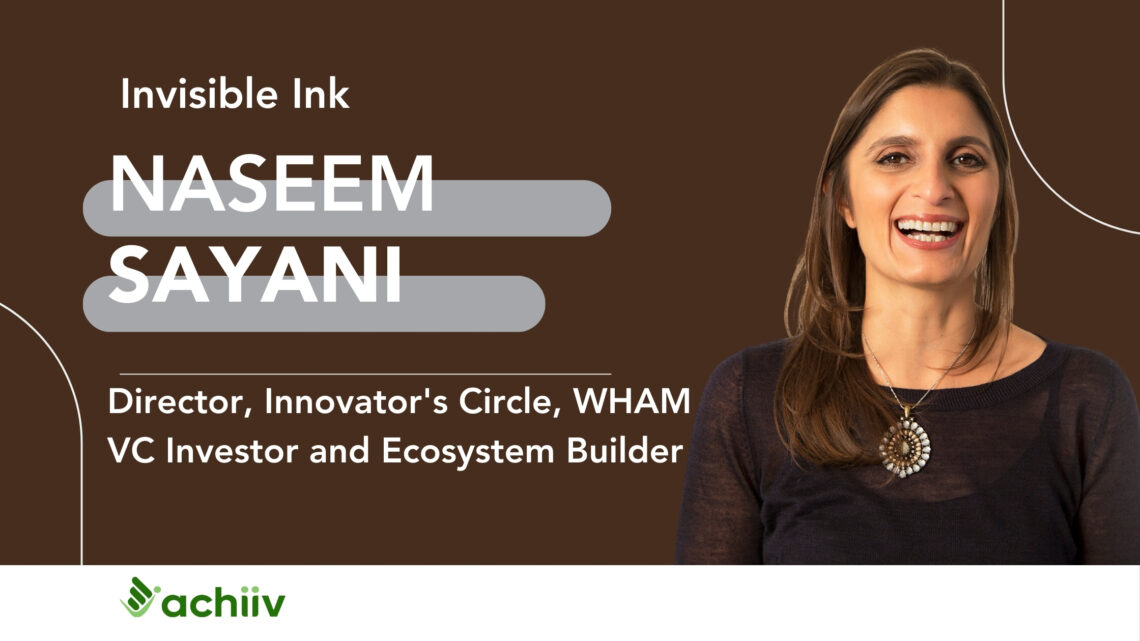
About Naseem Sayani
Naseem is a seasoned VC investor focused on backing and elevating ambitious female founders. Across her VC and angel portfolios, she has made 40+ investments in female-founded teams from Pre-seed to Series A, spanning health tech, fintech, and sustainability. She holds several venture partner roles across the ecosystem at funds including Zero Limits Capital and The Sparrow Fund. Naseem was also a founding partner of Emmeline Ventures, a Los Angeles-based seed-stage fund.
Naseem leads the Innovator’s Circle at WHAM (Women’s Health Access Matters). The Circle focuses on organizing the early-stage startup ecosystem to ensure there are strong companies ready for later-stage investment.
Naseem is a thought leader in the start-up ecosystem and a go-to contact for many founders when making business strategy, talent, operating, and fundraising decisions as they grow and scale their businesses. She actively amplifies the voices and experiences of women in tech and venture capital to bring attention to the funding gaps and differences in women’s experience in the venture ecosystem through her podcast, The Capital Flex, available on Spotify or wherever you listen to podcasts.
Episode Highlights
- Why most female founders lose investor interest early and the simple narrative shift that instantly changes the fundraising conversation
- The hidden bias in “leading with pain” and how reframing your pitch around market size and money unlocks investor confidence
- Why founders routinely miscalculate market size and how to paint a compelling future vision that pulls investors toward your company
- The red flags investors look for in early teams and the specific “superpowers” founders must assemble from day one
- The most overlooked post-funding mistake women make and how to protect your equity and runway as you scale
- Why many founders underestimate predatory term sheet risks and how to build the small advisory circle that keeps you safe
- The difference between a true product and a feature and the unforgiving test that reveals whether your idea is actually fundable
- Why financial fluency matters more than financial perfection and how to speak to your model in ways that earn investor trust
- The real reason founders stumble in regulated markets and how early clinical, payer, or regulatory expertise changes your trajectory
- Why leadership development determines whether you keep the CEO role and how coaching, community, and thought leadership help you scale with your company
Links and resources
- Zero Limits Capital — A venture fund backing early-stage startups with high-growth potential.
- The Sparrow Fund — An investment firm supporting innovative founders through strategic early-stage capital.
- Emmeline Ventures — A Los Angeles–based seed fund investing in women-led companies shaping the future of health, finance, and sustainability.
- WHAM (Women’s Health Access Matters) — A nonprofit advancing research, investment, and innovation in women’s health.
- The Capital Flex — A podcast spotlighting women founders and investors while breaking down the realities of fundraising and scaling in tech.
Interview Transcript
Shubha K. Chakravarthy: Hello, Naseem. We’re so excited to welcome you to Invisible Ink today.
Naseem Sayani: Great. Yeah, I’m happy to be here. Thank you so much.
Shubha K. Chakravarthy: So I have a lot of really interesting stuff to ask you.
But before we get started, you’ve done a bunch of things in your life, in your career, how would you describe your role today in the startup and investing ecosystem?
Naseem Sayani: Oh, that’s a great question. I like to call it ecosystem building. That’s the core of what I say that and investing. There’s been a lot of I think missing links when it comes to the female founder side of the venture ecosystem.
And so that’s where I like to focus my effort is connecting dots, building the wiring as I like to describe it, and really helping to make sure that the female founder side of the ecosystem works the way we need it to work. And so I like to consider myself a builder in that sense.
Shubha K. Chakravarthy: So is there one moment from the last few weeks where you felt like you really hit your calling and you did what you’re here to do?
Naseem Sayani: That’s a good question. It might have been last week. It happens a lot I’ll say but in particular so the Women’s Health Innovation Summit was last week on Thursday in Boston.
I was on a panel that was called Moving from Women’s Health to the Health of Women as an economic imperative and I say a lot of the same things across panels. But last week the combination of me talking about shifting the storytelling in women’s health from leading with pain to leading with money in combination with the two founders on the panel really making that real with how they shifted their storytelling to then really talking about the category as being something powerful.
The kind of feedback we got in the room in that moment was tremendous. And then the feedback coming out of it like we had founders walking up to us the rest of the day going that was the best panel of the entire conference. And they said it over and over and over again.
It’s that kind of thing right where you can actually shift how founders think about what they’re doing in the space and how they’re going to go raise capital. That’s the kind of thing I want to be able to do because we don’t often as women get the coaching that so organically reaches our male counterparts and we did it in 45 minutes in that room and that’s the kind of thing that I want to be able to do at scale.
Shubha K. Chakravarthy: Fabulous. Well hopefully today’s a step forward in that direction. I just can’t wait to dive in. And just one question before we get into the meat of it.
You were in consulting, you were working for Deloitte for a long time. You built products. What made you take the leap from consulting to be on the investor side of the equation? I’m an ex consultant myself and please don’t tell me “I didn’t want to suggest or I didn’t want to recommend. I want to go build things”. I just want something more tactical, more tangible than that.
Naseem Sayani: It was a combination of things. So my consulting life moved from core strategy consulting so really really smart ideas in beautiful pitch decks a hundred pages – “thud” factor.
Then they land on a shelf and we then launched a product studio to help turn those ideas on and put them in market. And then that product studio grew up to be a startup incubator. So now we were actually building startups with our clients and launching them in market. And it was all fantastic. I learned everything I know how to do now from all of that experience.
Challenges Faced by Female Founders
Naseem Sayani: But I was surrounded by these are male dominated environments, surrounded by men. They’re lovely humans and I learned so much from them but there just weren’t enough women in these spaces. And as we were building great startups and doing all those things I also in parallel had my own fertility experience and all of these things.
But I went looking for female founders because I wasn’t meeting them in my day job. And I knew they were out there and I wanted to meet them and I wanted to help them. I wanted to hire them but they didn’t want to work for me during my day job.
They didn’t want to work at the startups that I was building because they already had their own startups. So that was one thing that made me feel like I wanted to go do something different so that I could support their development versus the development I was supporting in my day job. There’s a way to pivot everything I know how to do because I was more closely understanding the gaps in the ecosystem between resources funding capabilities that very naturally surround our male counterparts but don’t easily surround women in the same spaces.
And then the second thing was the women who were building in healthcare knew more about my healthcare than my doctor did in that same moment. So I was getting better answers from the women who were building in healthcare. And so these two things kind of hit a kind of a magic moment where I said “Oh my goodness, the ecosystem has a huge problem with how it works with these two genders”.
My day job is kind of the system that these women are up against. It’s a weird cognitive dissonance problem. And then combine that with where I’m getting better answers is from these same women who don’t have the support that my day job provides to these other founders.
I actually think I need to do this differently. I know how to do a lot of things. I actually need to take all this work I’m doing over here and put it over here because if we funded those founders, consider how many other people they could be supporting with the kind of questions that I have. I want to go do that. And so that’s what it was. It was a moment where I need to shift where my energy is because we need to make sure that that gets more capital.
Shubha K. Chakravarthy: Fabulous. I love that answer and I can literally feel that energy jumping on the screen so I absolutely love it. I want to pick up on something that you said which really resonated with me.
Importance of Leading with Money
Shubha K. Chakravarthy: You said something earlier about we want them not to lead with the pain but to lead with the money. So can you just talk a little bit about particularly in the context of capital flows and we talk about founders who want to raise money.
What are those forces today that make it so imperative that you should lead with money? Can you just talk about how you would take a step back and characterize kind of like the land of early stage funding for example?
Naseem Sayani: So the crux of it is that venture capital is a money business. And you could say every category is a money business but venture is really a money business. We’re putting money into companies to then see an exit to then get more money back so we can do it again.
And what happens a lot of times is the storytelling that a founder might come to an investor with doesn’t lead with how much money they’re going to make and then as an extension how much money I can make as an investor so that we can all go invest again. What will happen a lot of times will be it’ll lead with the pain point in the system. Then the solution to that pain point and then how much it’s worth. And that might be on page six or seven rather than page two or three.
This is most dramatic with female founders. It is most dramatic in those instances because women will lead with empathy and they will lead with pain. They will say this was my personal experience. This is what’s happening to women in healthcare.
This is what’s happening to women in the x, y, z category. And it’ll take four or five pages to get to how big the TAM or how big the category is, or how fast it’s growing. Our male counterparts don’t do that. So when they’re talking to investors about their businesses, they are leading with money out of the gate.
It is this big. It is going to grow this much. My solution’s going to blow it open by this much, and I’m going to make this much money and you’re going to make this much money and we’re going to do it in seven years. That is not how women tell stories because we just don’t know how to talk about money in the same way, in at least 51% of instances.
So leading with money means here’s how big the category is. Here’s the pain point in that category. Here’s what I’m building to expand how much bigger that category can be, accelerate how it’s growing. Then go capture the money, then get to an exit so that you investor also make money.
Tell the story that way instead of leading with the pain point first, lead with the size of the category, and then tell me where the pain is and how you’re going to address it.
Shubha K. Chakravarthy: So I hear what you’re saying, and it makes total sense to me because I come at it from the investor’s perspective, but I’m going to challenge you on that because if you look at literally any pitch deck tutorial, any pitch deck workshop, everybody’s like, “lead with the problem”.
So why is it that is received wisdom? And I’ve also seen male founders who lead with the problem and don’t seem to pay a penalty for that. And yet, like, so there’s a problem here. There’s a conundrum here. Can you just talk a little bit about that?
Naseem Sayani: So you can lead with the problem. The hurdle becomes when the problem gets wrapped too deeply in a personal story, which is where my hypothesis on where it falls down is that it’s a pain point wrapped in a personal story, which then leads to too much of a windup.
So you spend a lot of time in that personal story, and my personal problem led me to build this thing. I don’t want the personal story wrapped around the problem. Where I want the personal story is in the how I’m going to win part of the deck because if your personal story is in the how I’m going to win, then that gives me founder market fit, which is what I wanted.
You’re going to win because you’ve experienced it and you understand it and you know how to navigate it. Great. I don’t want that to be the reason you built it. I want a big hole in the market to be the reason that you built it.
Shubha K. Chakravarthy: I got it. So I think what I’m hearing you say is, hey, here’s a problem. I’m excited about it today. What you’re seeing is, I’m excited about it because I felt it and I want to solve this problem. And that’s where women are getting kicked out of that reckoning for getting money.
Instead, you want to say, hey, I want to solve this problem, but guess what? It’s like a $25 billion problem or a $30 billion problem and nobody has a real solution to it. So it’s at that moment where they’re taking the wrong fork or I should say an unproductive fork in the road versus a more productive fork in the road. Do you have a sense of why this is happening or specific things that are causing this?
Naseem Sayani: We could talk about that for a long time. I believe it’s conditioning. I think that women are raised in scarcity. Men are raised in abundance. We are not raised with the kind of financial fluency that our male counterparts are raised with.
We are told we’re bad with money. We’re told that we are not good business people. We’re told that we’re not allowed to fail is another big one. And so for all of those reasons, we lean back on empathy and we lean back on these other traits that then don’t have us stand in our confidence the way that we often can and should.
And I would argue that a lot of people would, that we’re actually really good with money and we’re actually really good business owners because 80% of household spend sits in women’s hands. If we were bad with money, there wouldn’t be food on the table and there wouldn’t be shoes on our kids’ feet.
It’s just fundamentally, those things wouldn’t hang together. And then we’re also really good business owners because we multitask the heck out of our lives all day long. Actually women-run businesses have better burn rates. They actually function on better budgets. They have leaner teams, better outcomes, higher revenues, better stock prices. You can find all the data in the world to prove that.
But we’re not told that when we’re growing up and the media reinforces it. So if you look at what happens when a male CEO fails. A male CEO fails, it’s on page 10 and then he gets to do it again and it’s great and it’s fine. A female CEO fails and it’s on the front page of the New York Times
Shubha K. Chakravarthy: Literally
Naseem Sayani: Literally, and it gets talked about by the media for weeks. So it’s reinforced by everything around us that we then feel like we have to overcorrect and not actually show up as strong as we possibly could because we’re already getting risk managed when we walk in the door.
Shubha K. Chakravarthy: So that’s a good point. But I want to dig into that a little bit to the second level. So we talked about the fact that women don’t lead with money. We talked about we lead with empathy. I’m curious from your personal experience when you’re working with founders, especially maybe those you’re funded or those you haven’t funded.
I feel like there’s a broader impact here. So it has to play out. I have to believe it plays out in other things too. It’s not just that I lead with empathy, but somehow I’m holding myself back or shrinking. Where do you see it playing out?
Negotiation and Equity Challenges.
Shubha K. Chakravarthy: Are you seeing it playing out differently in, for example, how I negotiate my own equity stake? I’ve seen some data that says that women get funded at lower valuations, smaller checks for smaller share of equity. Have you seen that? So that’s one instance. But where else, in terms of negotiating pay, in terms of even negotiating prices for their products, I want to understand if you can tell us some stories or patterns of what you’ve seen or where that plays out, where it has a second order, third order multiplier effect.
Naseem Sayani: It plays out across everything you just described because it’s a combination of awareness, experience, knowledge, and the people that we’re surrounded by. So if I’m not surrounded by people that have been through these experiences before, then when I get a term sheet as a founder, if I get a term sheet and there are predatory terms in it, I’m not going to be able to recognize those predatory terms unless I’ve seen them before.
Then if I pop that term sheet out to my closest network, if they’ve never seen predatory terms before, they’re not going to be able to call it out. So unless our networks have that experience in them, we’re not going to catch these things. So I’ll sign a term sheet that has a predatory term in it and now when I get to my next round, suddenly founder shares are getting taken away from me.
I’m ending up with common shares instead of preferred shares. Board seats are shifting around and it’s because I signed a document that had a clause in it that I wasn’t aware of. So it can show up there, it can show up in pricing when a supplier or a customer will say, oh, well it always works this way. We’ve done that with every company we’ve worked with. And unless you know enough to say, well, no. It doesn’t always work that way.
I have five other examples where it hasn’t worked that way and we’re not going to do it. This is how we’re going to do it. If you haven’t seen enough or talked to enough people to know that you won’t be able to negotiate that properly. The third instance is when it comes to when you start to take a salary as a founder. I get that question a lot. Like, can I start to take a salary at Series A? And if you ask a male founder that they’ll say, of course, and I’ve been taking small draws during my seed as well, and now I’m taking a full salary. A female founder will hesitate to take a salary at Series A because she’s not sure if she’s allowed to.
What I’ll say to them is absolutely you start taking a salary at Series A because now you have enough capital to start doing that and you make sure your executive team is taking salaries at Series A because now we’re pouring fuel on the business. I need you to work. You have to work so much harder than you have and now is the time to do it.
But because they don’t always have those kinds of resources around them. They don’t always know when to ask or when the right time is to do certain things. And it’s all baked into not always having the right guidance or not having the confidence to say, no, my Series A I’m going to start to take a salary.
But what we’re trying to do as the investor network is put that experience around this part of the ecosystem and say out loud, yes, you’re going to take a salary at your Series A. Make sure somebody looks at your term sheet who’s been through it before, who has seen it, because you don’t know what predatory looks like until it happens to you, and we want to make sure you don’t lose your equity before you’re supposed to.
Shubha K. Chakravarthy: So that’s a great point because there’s this piece around I need to know who to talk to and I need to have that institutional knowledge resident, and it’s easier if I’m hanging out with a bunch of male founders because it seems to be in the air they breathe and they’re like, of course you’re not going to do that because it sounds stupid.
But if I’m only hanging out with other women, then the chances multiply that I don’t know what I don’t know. And those blind spots can come back to bite me in a much larger measure. So it feels in this context, it feels that if you have a lot of these initiatives, and I’m not opposed to them at all. I’m just trying to think through all these women’s initiatives where a whole bunch of women hanging out with other women.
It feels almost counterproductive because there’s a danger that I get “tea and therapy” as opposed to stuff I may not like to hear, but I should because it’s good for me. And what is the real impact of these? I’m not saying all of them, and certainly I cannot paint them all with the same brush, but is there an unintended consequence there of all these women’s initiatives? I’m curious what your take is on that.
Balancing Women’s Initiatives and Inclusivity
Naseem Sayani: So there is, but we need a balance. We need both. We need the women’s initiatives to one, we need to point to the problem before we can fix it. So we have to show the community what’s missing and we need to show up en masse and we need to know how many women they are. We need to put them in rooms and talk about them together and be able to show the volume of founders that are building businesses.
So these spaces are important for that. We also need safe spaces for women to find each other and build community and talk to each other because community is one of those superpowers that women have that we haven’t been given room to activate for a long time and we’re only going to do that if we’re in safe spaces together.
So we need them for that. But we need a balance of also being in spaces with our male counterparts, allies, advocates, partners, because we need to learn what that part of the system already knows that social capital has to move across those rooms so that we understand how things work, where there is a depth of experience and we’re getting better at bridging the gap across those rooms but we have to make an effort to be in those rooms.
Then those rooms have to make an effort to be inclusive and open the door to have us be in there. And that’s getting better. It just takes effort on both sides to make sure we can be in the same space and it not feel strange but we can all hang out together in a good way.
Shubha K. Chakravarthy: So that brings up a really interesting point. There’s this piece around where I can do something to impact and then there’s a part that’s systemic that I may not have as much of an impact as a founder.
So from my perspective as an individual founder who’s trying to make things better I want to understand what’s the single biggest driver that can make a difference to what extent is financial-I don’t like the word financial literacy to be honest because I can be literate and still be pretty dumb and naive. So where does financial sophistication and acumen come in?
Financial Acumen and Resources
Shubha K. Chakravarthy: What have you seen work best for women to start to take a stand and take ownership for this kind of acumen?
Naseem Sayani: It’s a good question. There are resources online in other places where if you need to do a finance 101 course you can find it. If you need to understand how to build a budget you can find a resource to teach you how to build a budget.
There are tools to do that. And there are tools and resources that are within the female founder ecosystem. They also live outside of it. Also as we build our founder communities and our networks of friends there are male founders that will happily sit down and show you how they’ve built theirs and share an example and give you a spreadsheet and you recut it for your business.
I know founders that have done that and so we have to be willing to ask. That’s another one of those things where we have to say I need help. Can you help me with X? And there are resources out there that will help you. Now the other part of that is learning the language, sitting down and doing the work is really important.
And there are also resources out there that will say you can outsource building your financial statements and you can outsource a CFO which is fine but you actually have to learn the finances because most good investors will want to go through your finances with you not with your outsourced CFO.
So you need to know the assumptions. You need to know the metrics. You need to know the details off the top of your head because that’s one of those things that we get unfortunately more detrimented for not knowing those things than our male counterparts do. And so you do have to know those things really really well and you just have to sit down and learn it.
Shubha K. Chakravarthy: So one point on that. So I’ve been working with a few founders of late and one thing I’ve noticed so I get the part around financial modeling and the financial terminology and statements all that. I don’t have any argument with you on that. Where I’m seeing a gap though is to your point earlier about people, for example you know I work more with deep tech and STEM founders.
So they’ll have an understanding of the problem. So if I were to push them on what’s your LTV, what are your margins, what are this, what’s that, the answers will roll off the top of their tongues. No question. The problem that I’m seeing and I want to understand if you see this too is they’re unable to translate the building blocks of the business itself into terms that are attractive to investors.
So for example if there’s a problem that says for example you know I’m working on some kind of AI enabled solution for let’s say pediatric nutrition. They’re translating that and they’re still speaking to me as an investor, in terms of words that make sense to the market but not to an investor. Oh it helps with the child’s willingness to eat vegetables as opposed to it opens up the propensity to buy – there are words that are commercially meaningful versus words that are more insulated to their little part of the world.
Vision and Market Size
Naseem Sayani: So this is part of the storytelling for me is where I would fit it is that you’re either telling a right now story or a visionary transformation story. I see this in pitch decks all the time as well is that it’s a beautiful 10 page deck but it tells me what’s happening right now and what I want to know is why it matters tomorrow.
If I look around in five years when your company has won what does the world look like? Tell me that story because if you can tell me that story that means you’ve understood the market, you’ve understood the trend, you’ve understood behaviors, you’ve understood how they intersect and you’ve understood where your business plays in that future.
That is fantastic. Right now investors are going to lean in and get excited and be like oh my goodness, what is this person after? And then pull it back and tell me where it starts. And what I see a lot of is more so what’s happening right now and not the line of sight to what it becomes when it grows up. That’s the thing that we need more of because that’s what your investor is writing a check to is where the thing is headed not what it is right now.
Shubha K. Chakravarthy: So I’m going to come back to that in a second. But to wrap up this topic of leading with money if you had to leave founders with maybe three actionable things like what can I do tomorrow to start leading with money as opposed to leading with empathy or the technology or the product.
Naseem Sayani: So one take a look at your pitch deck and quite literally move the money page to the front and then tell the story that like move your sentences around and then stand in front of a mirror and tell that story and try it a couple different ways until it feels natural and you’ll have to edit but try it and then test it on someone on a friendly investor and see how it rolls and get some feedback. Do it and then just see how it goes.
Two you have to find friendlies, investor friendlies and lawyer friendlies who can look at documents with you. You have to have those people so that you can make sure predatory terms don’t happen to you. And then three just think about vision. You have to think about vision. What’s the thing when it grows up? That’s what we all want to hear because that’s what we’re writing a check to.
Shubha K. Chakravarthy: Awesome. So now we’ve talked a lot about going to investors getting money. So I want to talk a little bit about the playbook and how you know women especially in deep tech and STEM need to focus on that. So when you as an investor like you’re a venture capitalist you’re listening to the founder’s story which you just talked about.
So part of it that makes it fundable that I heard is paint me a picture of tomorrow that gets me excited enough to write the check. What are the other pieces? What gives that narrative weight and what are you looking for in terms of the top hooks that make you lean in and say “tell me more?”
Naseem Sayani: That’s a good question. So the first one is that vision painting. And if they can answer that question well we’re going to have a really good time. The second question is what is their experience and ability to deliver it? Why are they the best possible founder to do it? That for me is a question around what I call it superpowers.
I want to know what about you makes you the best person to do this? What are your superpowers and how do they describe it? Because you’ll get one of two things will happen. One they will say I’m the best person to do it and I know everything. I’ve got these two people out of my advisory board and we’re going to kill it.
And then another instance you’ll say well I have experience in X, Y and Z and that’s where my anchor is. I’ve brought on this advisory board and these two people on my team and these were because they’ve very specifically understood what they need to put together to get it done. If they can describe those things that’s the combination of superpowers they need to get it done.
The founders who have understood that really well will also have a really good sense of how to grow the team over time. That’s the difference that I’m looking for. The third is the financials of course. So I want to be able to get into the numbers with you. I care about the big number on top. What I really care about is the assumptions.
I really want to dig into what numbers attach to what, how they move, what are the sensitivities. Because if we can do that at Seed you’re going to be brilliant at it at Series A. But if we can’t do it well at Seed it’s very hard to believe that you’re going to be able to do it better at Series A.
Then the fourth one is just coachability. It’s the interaction during the call. What I will want to do is I just want to push on the thinking. I want to push on the assumptions. I want to push on the trends that you’re leaning into and if we can have a really good conversation about it then great. If there’s any weird defensiveness or any like they start to bristle or it’s like oh no it doesn’t work that way then it’s hard to see that there can be a good healthy relationship for the next 10 years.
Because this we’re going to be friends for 10 years. It’s a long time. So we have to be able to really like debate things, spar things, throw them on the wall and whiteboard things out. I try to get a good sense for that on those first couple of phone calls because that’s how we’ll be able to play together on details going forward.
Shubha K. Chakravarthy: Is there anything else that you haven’t mentioned? You mentioned the vision, superpowers, financials, coachability, anything else that you look for?
Naseem Sayani: Those are the I think those are the big four.
Shubha K. Chakravarthy: Awesome. I want to dive into those a little bit if it’s okay. So you talked about vision. I think you covered what I’ll call the aspirational aspect or the inspirational aspect of it.
You hooked, but you didn’t really mention market size, but you mentioned market size a few minutes ago. So can you talk a little bit about what are you looking for? What are the big pitfalls you see and what are the must have factors that a founder must get right when she’s talking about her market
Naseem Sayani: Yeah. I mean, market size has to be big. The thing there is, and I’ll describe it as. You have to know specifically what market you’re after and whether it’s, it’s either an existing market that you’re disrupting or it’s a new market that’s getting created.
You have to know the difference between that. And if it’s an existing market, you’re disrupting. You have to know how you’re disrupting it and what you’re like. What behavior is changing and how is it changing, and where’s the proof point for that change? The thing you’re building is going to anchor on that change behavior and you’re going to accelerate it and you’re going to win a good portion of it. Like that’s the hook I’m looking for.
And of course, I mean big billions of dollars. The market size, the TAMs have to be big, but you have to tell me how you’re going to get into it and capture a good portion of it. So the other part of that is you have to have a lot of founders, I will say, don’t fully think about whether they are a product or a feature.
And you’ll see pitch decks where it’s a really great idea, but it’s, it really could be a feature of another product. It’s not a product all on its own, and it’s not going to be a big enough business for an exit. So the question I will ask them when it sounds like a feature, because there’s another product out there who could also build what they’re doing. How big is this exit going to be? How big does it need to get to before you can exit? When does the M&A conversation start to happen and how much revenue do you need to have for that?
And do they have a good sense of that? Can they peg it? You can follow up and we can talk in two days if you want to. But if it comes across as a feature rather than a product, then that’s going to be a reason that I’m probably not going to move forward because it doesn’t have enough oomph to it because it’s too small.
Shubha K. Chakravarthy: So can you give an example like you talked about first you talked about disruption versus creating a new market. Can you give an anonymized or some kind of disguised example of what would be a disruption and what would be a creation of a new category and a feature?
Naseem Sayani: Yeah, let me think about this. So like telehealth is a disruption. So healthcare companies that are in telehealth, that’s a disruption of care delivery. So we saw this pre COVID and then we saw it accelerate during COVID, but there were, menopause is probably a good example of where telehealth has disrupted how menopause care has been delivered.
We weren’t saying the word out loud for a long time. Now we say it out loud all the time, but when it comes to care delivery, initially you were having to go to your doctor to even get any kind of answers around menopause. The companies that have done well in menopause have delivered it through telehealth.
So there was a behavior starting to emerge where I wanted to talk to someone virtually about my healthcare. But now if I can talk to someone virtually about my menopause needs from the comfort of my home as a grownup woman who doesn’t want to go talk to my doctor because I’ve been gaslit for years.
The companies that leaned on that telehealth trend and said, actually, now I can use this behavior to deliver on a menopause offering to reach all of these women looking for this care. The companies that did that well have grown exceptionally well because now I’m reaching an audience through a platform that is private and safe, and understands her needs quite directly. They’ve grown and they’ve done it well. But that telehealth was the disruption that led to a menopause market that’s exploded. That’s how I would characterize it. Right.
Shubha K. Chakravarthy: And creation?
Naseem Sayani: So, yeah. Gosh. Creation. So creation, I would say. What’s a good example of that? Oh, so sustainable period care. I’m going to stick in the healthcare one because these are where my head goes first. So sustainability is a trend that’s been in the market for a number of years.
We’ve had period care for ages. We hadn’t yet thought about sustainable period care but now there’s an entire category of spend is happening specifically around sustainability at the intersection of period care. That is new money that’s getting spent by younger people on sustainable period care, and there are new products and services. The existing period care products still exist, but now there’s a whole new category that’s just sustainable period care, and there’s innovation only happening in that space. It didn’t exist before.
Shubha K. Chakravarthy: So that makes sense. I’m just trying to figure out, the other point you mentioned was product versus features. An example, or at least a test that you use that I as a founder can apply to my own product and say, would this be a product or a feature?
Naseem Sayani: Yeah. So, as an example, I’m going to think of a good one without giving away who these founders might be. Because I don’t want to do that. So if there’s a device that does, let’s say blood testing device. We’ll kind of make it up, but if there’s a, an at home blood testing device.
It can draw blood and it’s telling you like typical blood testing information and then there’s another company that says they’re going to do hormone testing and let’s say, saliva based hormone testing.
If either one of those companies decides that it’s going to do the blood testing company says it’s going to do hormones, or the hormone testing company says it’s going to do blood testing. You could argue that extension is a feature of the core product.
If you then meet a new company that says, we’re also going to do hormone testing, but we’re going to do it this other way, then you go in some newer, different way, you go, well, there’s already a hormone testing company that could do it through this. This extension of what they already do or the blood testing company could also do what you are doing through its extension of what they already do.
That third company is a feature. It’s not a brand new company doing a brand new thing because other companies already exist to do it and if they turn their model left or right, they can do what you’re already doing. So you’re not going to be another big company doing what these first two companies are already doing.
Shubha K. Chakravarthy: So it sounds to me like you’re coming at it. The simple way to come at it to see whether you’re a product or a feature, is to see what the competition is and how you would relate, you know, how you would, stack up relative to those
Naseem Sayani: If any of your competitors could build a product extension that does what you are aiming to build, then you’re a feature.
Shubha K. Chakravarthy: You are a feature. Got it.
Naseem Sayani: Unless if you are a brand new thing in the same space. Then, yes, a brand new product. But if competitors could otherwise launch a new feature that does what you do, then it’s a feature.
Shubha K. Chakravarthy: And I would imagine that the onus of proof is on the founder. So it’s like, tell me why it’s not a feature is the question not tell me why it’s not a product. Right.
Naseem Sayani: Yeah. Tell me why it’s not a feature. Because if that company could do what you do with a little bit of R and D. Then it’s hard to believe that the exit here is going to be big enough, and you should take your tech and go sell it to them and get your exit right now
Shubha K. Chakravarthy: And then go find something
Naseem Sayani: Yes. And let them build it.
Shubha K. Chakravarthy: Right. So then I want to come to superpowers, You talked about superpowers, and I think there, I got the difference very clearly. The point is don’t just come and tell me, Hey, I’ve got an A team because of all these this blob of like six people.
But you have a very clear specification, like each person has a literally a job to do, and you’re filling in from that very specific squiggly shaped hole in a very specific way so that you can then find, like what are the most typical mistakes you see founders making, and what are the things that they would do that would make it stand out in your eyes?
Naseem Sayani: So if we stay in, healthcare or financial services, we’ll use both of those. So there’s a lot of founders who have tech backgrounds building in these highly regulated industries. They come into healthcare and they come with a lot of tech, but they don’t understand healthcare at all.
And they will start to build a company without having brought clinical expertise into their team. I’ve met a handful of them, and you ask them, where’s the clinical expertise going to come from? And they’ll say, oh, well, I’m going to bring on a advisory board of clinicians but they’re already raising a seed round and they don’t have that clinical advisory board.
That’s a huge red flag. You’re going to have to go get those people before you can take this thing to market because you actually have to stress test it internally before you take it to market. That’s where some founders can get it wrong. They actually really need to have that clinical expertise involved.
The other part where can fall down is how’s the thing going to get paid for in healthcare? How will it get paid for? And you can say initially out of pocket for the consumer that works in some instances, doesn’t work in a lot. But if you’re going to say oh it’s going to get reimbursed.
Okay how, which code, how long is it going to take? Does it exist? Does it not exist? And so if you don’t have the payer expertise in your team to really navigate the reimbursement, you haven’t done enough homework to understand how that’s going to work.
So those become red flags. Also on team building is if you’re building a product in healthcare and you haven’t understood how it’s going to get paid for or where your clinical expertise is or if you need FDA. You don’t have an FDA person inside your team, those are where you need, you haven’t understood the superpowers that you need.
Financial services is the same thing. If you’re building bringing tech into financial services but you haven’t understood the regulation, you haven’t understood how transaction works and transaction processing and those things, you’re not going to be able to build it effectively.
Shubha K. Chakravarthy: So I mean I’m hearing a lot of it tied to industry expertise which kind of gets at do you even know what market you’re in? Because if you don’t understand these basic things, how are you going to succeed in financial services? Which makes total sense.
Are you seeing anything specific to women founders that makes them better or worse? Then what would you recommend that they do to improve their understanding and grasp and their ability to staff not just for today’s superpowers but for tomorrow’s superpowers as well?
Naseem Sayani: That’s a good question. I don’t know that I necessarily see a lot of gaps when it comes to female founders. I do see women actually being very thoughtful about their team building and they will often have found the clinical expertise and built the advisory board and sought out the experience that they don’t have which is great.
I mean, it goes back to the conditioning and you know, we’re not allowed to fail. So the overbuilding as far as experience. They will just do because they want to make sure they have it all in the seats. And so that gets done really well, sometimes a little too well and so they need to maintain the space to be a good strong CEO and a leader without too many voices sitting around them.
But I haven’t seen a gap. The thing that I think founders need to think more about is the skills they’re going to need as they grow, because there’s a big difference between a zero to one founder and a one to two founder. That skill development is not always thought about well.
I want every female founder to have a coach. You need to have an executive coach because building those skills to keep growing up with your company is critical. Not every female founder has an executive coach and that’s the kind of thing that I want to make sure every founder has because it could make a night and day difference in how you grow your company just to have that executive coach.
Shubha K. Chakravarthy: I am going to come back to that because that’s one of the big topics I want to touch. But before we do that, I want to cover the other two things you talked about.
Financial Strategy: What Investors Look For
Shubha K. Chakravarthy: Financial, it’s my favorite subject. What are you looking for? So founders hear varied things. Oh it’s all made up anyway. Don’t bother. It’s too early it’s pre seed who cares, seed who cares.
Walk me through what you’re looking for, why it matters, and how I as a founder, especially women, feel frightened about the math which I don’t believe, but I feel they’re smart enough, it’s just stereotype conditioning. You just walk us through what that, what are you looking for? How do I develop that skillset?
Naseem Sayani: So what I’m looking for is I want to see that you understand how sales and go to market works in the category that you’re building in. So what are the revenue levers? What does pricing look like in the category that you’re building in?
Have you tested the pricing at all? Do you have a sense for how much willingness to pay is in what you’re building in? And then how is that going to scale and how much growth year over year can you actually achieve? And how much speed have you put against it? Because in some cases you’ll see a growth chart that just goes straight up.
Shubha K. Chakravarthy: Yes.
Naseem Sayani: And you go well okay. Or you’ll see it go too slow. So I’ve met founders that they’re on year five or six and they’ve reached 2 million in revenues. You go, “well that’s not fast enough.”
There’s something going wrong. Why is it only 2 million? And they’ll walk through it and I go that’s going to have to go a lot faster. It’s not a venture-backable business. And then you’ll see others who are hitting a hundred million at year three and you go well okay.
Take a step back and help me understand how that happens. And so the understanding how they’ve thought through those growth targets and the pricing is really what I am looking for. Then if it’s B2B and B2C, how do those levers work together and how do they stack up? Does one move faster? Does one move slower?
And if you have B2B then we’re going to talk about salespeople and how does that stack up? And how many salespeople, where are they? How do the markets move? Because all of those things have to play together. So so it is again the assumptions underneath is what I’m trying to understand to see if that founder has understood how these things move together over time rather than just the flat numbers.
The other thing is of course average order value, customer acquisition costs, and an overall CAGR. Those are the big numbers that we want to see and understand, but also have talked through to see how the founder has thought through what those numbers look like and how they’re going to move over time.
Shubha K. Chakravarthy: So these are excellent points and I think what you’re talking to, they point more at the strategic understanding at a causal level versus what I hear about which is a lot of “oh I do the spreadsheet.”
Like I don’t care about the spreadsheet if you’re not able to talk about the spreadsheet. So how would you recommend or how do you advise founders not to overfocus on the Excel spreadsheet. What is the tactical way for them to get mastery of these things you’re talking about that you’ve seen work well?
Naseem Sayani: Oh that’s a good question. So they have to build a spreadsheet. You have to have the spreadsheet. And the really great way to do it is you have to build scenarios. You have to build your base case scenario, then your conservative one which is lower than that so you know it doesn’t go as fast, and then your aggressive scenario and see how things move across those three scenarios.
The one you put in your deck can be whichever one you want. I would put your aggressive one in the deck and then you can talk about what happens if, what happens if, what happens if. You can ratchet it down, but you want to be best foot forward in the deck and talk about here’s how it’s going to grow and here’s how I’m going to make sure we’re as strong as we can be.
And then have the spreadsheet of course available because every investor is going to ask for it. But you want to have built scenarios, not just one scenario for how you’re going to grow. It is more art than science. But you have to have built the science right, but spend time in it. Also don’t overdo the numbers. Like I don’t actually need to see what your $5 on printing costs in year three is going to be like, that actually doesn’t matter.
What I need to be able to see is revenues, costs, COGS, some kind of EBITDA number and bottom line. But sometimes founders will overdo what the financials look like and you don’t get too mired in it because what we’re trying to understand is the trend line.
What we’re trying to understand is how it grows and how it moves. So tell me what the business is going to do over time. But you have to have the deal flow behind it. But you have to understand the numbers and how to build it so that you can talk me through it. That just takes time. You have to sit down and work it and understand how those numbers move. That just takes time.
Shubha K. Chakravarthy: So I’m hearing you do need to do the spreadsheet but you need to do it with a very specific lens of explainability of larger contours of what kind growth am I talking about, what kind relationships am I talking about, what kind inflection points? And to be able to speak in English or investor-speak and say this is why it makes sense and these are things I’m going to have to do in terms of stacking up actions to realize these kind of results. Am I hearing that?
Naseem Sayani: Absolutely. Like can you explain it to a five year old and that’s how you should be able to think about it. It is super complicated but can you walk it through in simple language? And that’s how you’re going to win the room is you can talk about it in simple language and answer it really quickly. That’s when you have a lot of fun talking about numbers is because it doesn’t get mired in lots of lingo. You can actually just talk about it.
Shubha K. Chakravarthy: I just love that you used fun and numbers so close together. You just won my heart right there.
Naseem Sayani: No, I know it. It’s. We’re in super nerd land right now.
Coachability and Leadership Development
Shubha K. Chakravarthy: Okay. Let’s close out this section with coachability. You talked about coachability. To draw an extreme stereotype, I’ve heard that women are more coachable than men. What’s your thought on that and what are the specific areas of coachability that you would highlight for women, especially in terms of maintaining that authority and the gravitas versus being coachable? Can you talk about that?
Naseem Sayani: I don’t think women are more coachable than men. I don’t think that’s true. I think coachability comes down to personality type and your openness to ideas. I think that doesn’t necessarily lean on gender because I’ve met plenty of male founders who are very open to ideas and can talk about things.
What I think it requires is coachability comes down to how centered you are in your ideas and how you’ve thought about it and why you’re building what you’re building and your ability to take feedback. Your desire to take feedback. So if someone’s going to talk about your business with you and they’re going to ask you questions on it, and they have their own lived experience.
They’ve seen all kinds of things in their own business experience. So they’re going to ask you questions that might feel like they’re coming out of left field. But if you’ve thought through strategically how your business is going to grow, you understand the category that you’re in and how it’s going to move, that question is either going to make sense and you’re going to go, oh I understand where it’s coming from and you can respond to it, or you’re going to say oh wait that doesn’t make sense because of these reasons and you’re going to talk through it again.
Then you’re coachable because you’re grounded in how you’ve built your business and you’re open to respond and have a good thoughtful conversation. If you aren’t otherwise grounded in what you’re building in a way that is thoughtful and strategic and there’s things that you’re missing or things that are built on gravitas or things that are built on less stable information, then you’re going to get that question.
You’re going to feel like it’s out of left field and you’re going to go what in the world is that, that doesn’t make any sense. And now you’re on the defensive and you’re going to answer defensively. But it requires really good grounding in the thing that you have built. That is where I think a lot of female founders have really good grounding in what they have built but they don’t trust their instincts in how they answer questions.
Because they will feel like they have to be perfect in how they answer and they can’t debate it. They can because they know what they’ve built and they know why they’ve built it. They just have to lean in and have the conversation if that makes sense. I think it’s more about confidence than it is about anything else.
Shubha K. Chakravarthy: But it’s also this confidence but the ability and willingness to have your mind change if the situation demands it.
Naseem Sayani: Sure absolutely.
Shubha K. Chakravarthy: So have you found any hacks or women or founders who have done it really well, who know how to hit that balance?
Naseem Sayani: So I don’t know if there’s a hack necessarily. I do think it’s just taking in the information where it makes sense and saying well let me take a look and see if that fits in. Then you actually go back and take a look and see if it fits in right. It just comes down to critical thinking and openness.
Shubha K. Chakravarthy: Got it.
Post-Funding: Managing Growth and Authority
Shubha K. Chakravarthy: I know we have a few minutes left so I want to kind of close out with this question of leading with authority. So you, we talked about leading with money and then we talked about how to get the money. And then now you’ve got the money.
And I’ve heard they say the real work begins after you get the check, not before. So what are the biggest blind spots you see especially at the seed stage? Maybe they’re getting the first institutional round. I’m not talking about friends, family, grants and all that stuff. What are the biggest blind spots you see with first time founders at that moment when they get their first check in? How does that impact them going forward?
Naseem Sayani: One of the biggest blind spots is that when you suddenly get a lot of money in your account it can feel really amazing. If you haven’t properly built a budget and thought about how you’re going to spend it, you can sometimes spend it too quickly.
You really have to be disciplined with that first round of funding. Also because the market’s going to change and things are going to move and your ability to pivot and manage that budget will need to flex over time. So how much you raise at seed, you need some buffer. There has to be contingency in there.
Sometimes founders don’t raise enough at seed. Female founders in particular, we’re always too conservative with what we raise. So we’ll say oh I need a million. I’m like you know just raise a million five. Just get a little bit extra in the door so that you have room. So really building your budget and then cushioning a little bit so that you have some room and you have some space for till your next round.
Then really build out your capitalization plan and have thought about what each of your raises are going to need to look like. What do you need that money for? What’s your sensitivity range around that raise so that you have line of sight on what your growth path needs to be before you get into conversations with investors who are all going to have opinions on what your growth path needs to be.
You have to have put that on paper for yourself because then you have a place to discuss and debate from rather than having to back into it based on the questions you’re getting from investors.
Shubha K. Chakravarthy: And a quick note on how you would do that because you’d have no experience on how I’m going to know how much I need at Series A versus B versus C.
Naseem Sayani: I would find really smart people to help you and that again goes back to having friendlies. So as you start to relationship build in the market and you find whether it’s investors that you can become friends with or other founders that are one or two steps ahead of you.
Asking smart questions, getting some good insight, and then starting to write it down on paper and test run it with people and say here’s what I think is going to happen. Here’s how I’m thinking about it. The founder community is the best place for you to test run ideas and get insight because the people that are one stage or two ahead of you will be the smartest people to run ideas against because they can tell you what they’ve done, what worked and what didn’t work.
I have found the founder community to be very good at sharing information and supporting each other, especially on the female founder side of the ecosystem. Everyone is very happy to collaborate and share because we’re all trying to move the whole ship forward. So you’ll find those people who are willing to help you test run ideas so you can get it down on paper in a good way.
Shubha K. Chakravarthy: And the last point I want to come back to is this piece you said around coaching. So you need to scale yourself as a leader so that you are, I mean, of course there’s the data around who gets replaced in Series B, C and all that, but what is your advice on how to scale yourself as a leader as your startup grows?
Naseem Sayani: I think getting an executive coach is critical and yes they can sometimes be expensive but there are ways to do it bite-size and there’s some platforms now where you can do 30 to 60 minute coachings every three to six months or something like that. I think finding other women around you, if that’s what you’re looking for, who are more senior, who can be your phone call every two months just to ask questions, just to have lunch, just to sit at a table and say hey can I run some ideas by you?
I think the biggest thing is not feeling like you have to do it all by yourself and finding other people to be your community around you that you can ask questions to. We all need someone older than us to ask questions to. I do as well. You need to be able to vet what you’re working on to get feedback, to keep refining, and so you have to find those people that you can keep doing that with.
Shubha K. Chakravarthy: Awesome. Anything else in terms of leading with authority that we haven’t talked about post first funding?
Naseem Sayani: The other piece that I would add, and there’s a handful of founders that do this well but I really want more female founders to do more of this, is really thinking about thought leadership and how you are cascading thought leadership into the market.
So LinkedIn is a fantastic platform. I don’t see founders using it enough to talk about the category they’re in and the trends they’re seeing and how the category is moving. I would love for more women to be doing that and just future casting. Here’s where the category is headed. Here are the three things that I think are happening.
Here’s where I think it translates to in two or three years and just start to talk about what’s going on in the category that underlines why you’re building what you’re building because we have room. We have room to start to be the voices of where these categories are headed. And so let’s lean into it more. I would love to see more of us doing that because we have the space to do it and if we all do it and we amplify each other, can you imagine what kinds of stories we could be saying and what kind of category leading thinking could be out there if we were all doing more of it?
Shubha K. Chakravarthy: Fabulous. Well you’ve already painted the vision for me so I can see that tomorrow.
Final Takeaways and Conclusion
Shubha K. Chakravarthy: So in conclusion, what are the top three things? So I’m a founder, I’m listening to this. I want to do better from tomorrow. Top three takeaways.
Naseem Sayani: Really stand in your confidence. Do the math. Figure out your capitalization plan and find friendlies to help you vet it and stress test it and grow it. When it comes to fundraising, practice, practice, practice. Lead with money, not with pain and empathy. It will change your fundraising game top to bottom.
And then three, community. We all need people around us to help us grow and do, whether it’s founders, whether it’s other investors, whether it’s whatever you need around you to keep you grounded and to keep you asking good questions so you continue to grow, find your community. Because it makes a huge difference. On good days and on really hard days, you’ve got to have someone to call. So find that community because it makes a huge difference.
Shubha K. Chakravarthy: Fabulous. Is there anything that you wish I’d asked but I didn’t?
Naseem Sayani: I don’t think so. I think we hit everything.
Shubha K. Chakravarthy: Fabulous. This has been an amazing conversation. I’ve enjoyed it. I’m sure our listeners will. So I want to thank you for the time and for the energy and the passion and all the insights you brought into the game. So thank you so much for doing this.
Naseem Sayani: Oh absolutely. This was fun. Thank you so much for having me.