Press play to listen, or check it out on your favorite platform:
YouTube | Apple Podcasts | Spotify | Google Podcasts | iHeartRadio | Amazon Podcasts | Spreaker
About Dan Gray
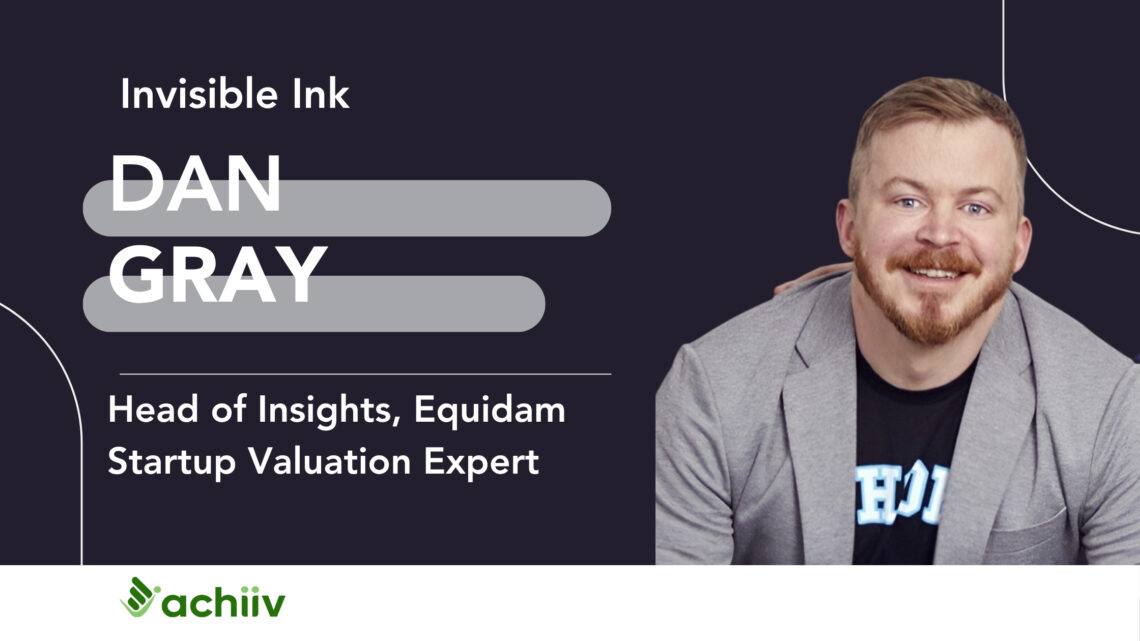
Dan is the Head of Insights at Equidam, a platform for startup valuation that helps make innovative ideas more legible for investment. With two decades of experience in and around startups, Dan’s career spans industrial engineering, gaming, fintech, and animation. He has worked across the startup ecosystem, from startup hubs to accelerator programs, supporting both founders and investors in navigating the complexities of venture capital.
Dan is a prolific writer and commentator on the startup landscape, contributing regularly to Crunchbase News and sharing insights on his blog, credistick.com, as well as on X. His work focuses on demystifying fundraising, startup valuation, and the shifting incentives in the venture capital ecosystem.
Episode Highlights
- Why founders must treat valuation as a story, not a number, and how the story drives belief and funding outcomes
- How “SaaS bias” skews investor expectations and hurts deep tech founders raising their first round
- The single biggest fundraising mistake deep tech founders make,and how to fix it before it costs you equity
- How to define milestones that de-risk your company and drive valuation up round after round
- The hidden logic behind dilution, and how to keep ownership while staying fundable
- What VCs really mean when they say “we don’t invest in hardware” (and how to turn that into an advantage)
- Why valuation models fail for science-based startups,and how to build credible DCF-driven stories investors believe
- The investor’s portfolio math: how fund size, timing, and follow-on strategy affect your odds of getting funded
- How to spot “consensus capital” versus “non-consensus capital”, and why the difference could decide your future
- The truth about VC markups, management fees, and why exits don’t always drive investor behavior
- The “economic energy” test: how to articulate the total value your breakthrough can unlock for the world
- The one framing shift that turns founders from fund-seekers into informed customers of capital
- How to translate a visionary story into a credible financial model investors trust
- Why financial literacy, not hype, is the real superpower for deep tech founders
Links and resources
- Equidam – A startup valuation platform that helps founders connect financial projections with storytelling through multiple valuation methods.
- 1517 Fund – A venture fund that backs unconventional, deep-tech founders and supports those challenging traditional educational and startup paths.
- Thiel Foundation – An organization promoting breakthrough innovation by supporting independent thinkers and non-traditional entrepreneurs.
- Andreessen Horowitz (a16z) – A major venture firm often associated with consensus investing and large-scale fund management.
- General Catalyst – A global venture capital firm operating similarly to a16z, focusing on scaling large portfolios and attracting institutional capital.
- Founders Fund – A prominent VC firm recognized for investing in bold, unconventional ideas and offering strong long-term support to founders.
- Cantos – A deep-tech–focused venture fund known for its disciplined, contrarian investment approach.
- Long Journey Ventures – A small, thesis-driven VC firm that stays intentionally focused and founder-friendly.
- Contrary – A venture capital firm that coined the idea of “the loudest model,” describing herd mentality in venture investing.
- Carta – A leading cap-table and equity management platform providing trusted data on fundraising and dilution benchmarks.
- Boost VC – A venture capital firm and accelerator focused on emerging technologies like crypto, climate tech, space, and VR, known for backing bold, futuristic ideas.
- Compound – A New York–based venture firm investing in early-stage startups at the intersection of science, technology, and culture.
- Also Capital – An early-stage venture fund that invests in innovative startups aiming to create systemic change across industries.
- Bruckner+Ventures – A boutique venture firm supporting early-stage founders working on transformative technology and climate-related innovation.
- ENIAC Ventures – One of the earliest seed funds in the U.S., focusing on founders leveraging data, AI, and emerging technology to build scalable businesses.
- Earthling VC– A U.S.-based pre-seed fund investing in the next paradigm of digital computing surfaces, robotics and AI.
- Chaotic Capital– A New York-based venture firm backing founders who build companies adapting lives and systems to complexity and chaos.
Interview Transcript
Shubha K. Chakravarthy: Welcome, Dan, to Invisible Ink. We’re really happy to have you here today.
Dan Gray: Thank you very much for having me. I’m looking forward to it.
Shubha K. Chakravarthy: So, I have a ton of things to talk to you about, and I’ve been a big follower of your content on LinkedIn and other formats. I have to ask you this, you know, in pop quiz fashion, can you just tell me, what’s the theme of your journey to where you are today, and what’s your why?
Dan Gray: The theme of the journey is a strange one. I’ve been in small companies my whole life. My first job was at a startup before I even knew what a startup was, and that is over 20 years ago now.
And essentially I discovered I love small companies. I love companies trying to do something daring and new and interesting. But I realized through my career, they almost always struggle to raise capital. It’s always a bottleneck. It’s always a headache. And I wish the world was better at giving money to great ideas.
Shubha K. Chakravarthy: Great. So that’s your why, and we’re completely on board with that. So, our audience is, typically, think about the typical first-time founder, some kind of a STEM or deep tech field, although there are other sectors.
What do you think, or what have you seen, being the biggest misconception about valuation, which is really kind of your core strength, especially when they’re raising their first outside round? Maybe we can start off with that.
Dan Gray: Yeah. I think a huge problem that they have and this goes for everyone that’s not like a founder of a fairly generic SaaS, B2B, or enterprise SaaS-style company — is 90% of the information online is aimed at SaaS companies where almost all of the money went from like 20 up until 2022.
That shaped how VCs think. It shaped how capital is allocated. It shapes everything about typical round sizes, typical valuations, typical dilution, and it just doesn’t work quite often for a deep tech company.
So they need to think very specifically about their journey, their goals, what’s the future of the company going to be like, how much more are they going to need to raise in the future that they imagine, and build a very clear and coherent picture.
Shubha K. Chakravarthy: Okay, I see that online too, like all of this stuff that you talked about. So, what happens as a result of, let’s say, a deep tech founder who doesn’t know any better or doesn’t have the right information, they follow the best, what are the practical, real-world ramifications of that?
Dan Gray: Quite often it might be that they give up too much equity early on and then they struggle later in the life of the company. They may get to the point where they have like real intensive CapEx later on if they’re building something, and suddenly to raise the money for that part of the process is a lot more expensive than they can manage. It might be that they don’t raise enough early on. On the other hand, if they need money to build something, to test it, to prototype, test the market, if they raise in a typical kind of software fashion, maybe they end up with not enough money to get to where they need to for the next round.
So like the theme generally is: always think very specifically about the needs of your company and get very good at articulating those needs to investors, because they won’t understand it.
Shubha K. Chakravarthy: So is there any like really memorable example that comes to mind or a story — obviously anonymized — that you can tell where this kind of maybe came home or hit you hard?
Dan Gray: I’ve definitely spoken to a lot of founders in deep tech who were having a real headache with investors because they needed a lot of money early on to build a prototype and investors didn’t fit in the traditional thinking of what a pre-seed might look like or what a seed might look like.
And that’s really because the investors either A, were not the right ones to talk to in the first place. They weren’t geared towards kind of deep tech thinking or they didn’t properly understand that once the thing was built and they’d got over that hurdle, they wouldn’t need so much money later, so there’d be less dilution.
So there was an advantage to raising more upfront. Yeah, it all kind of fits in the theme of: don’t assume investors know anything about your industry or anything about the fundraising strategy of your industry. Even if you’re in software, really, quite often you need to handhold them through the thinking.
Shubha K. Chakravarthy: Okay, so I know we’re going to dive into that a little bit, but first I want to talk about, I think, your favorite subject, which is valuation. Right?
Dan Gray: Yeah.
Valuation as a Story
Shubha K. Chakravarthy: So, let’s start off with, you’ve argued often that valuation is not a number but a story, right? Do you want to talk a little bit about that?
Dan Gray: Yeah. So, first of all, I should give credit to that particular line of thought to Aswath Damodaran of NYU Stern. Everybody knows he’s the dean of valuation for Wall Street, etc. What that essentially means, this idea of valuation as a story, is kind of confusing perhaps.
Lots of people think of valuation either as a financial calculation — so you put in your financials and it outputs a number magically that is the perfect value for your company — or they think of it as a market-driven process where it’s investors bidding against each other and if you’re a more popular company, the valuation will rise higher.
The truth is that in order to understand the value of the company at all, investors need to believe the potential of the company the same way that you do. They need to be on board with the story. They need to be believers. And the best way to do that, the most compelling way to do that, is to give them the story.
Like, it’s almost like a missionary type of role. You have to get them to believe. There’s a great quote by Howard Yu. He’s the Lego Professor of Innovation at a university in Europe. He said, I’m paraphrasing a little bit: the main thing that’s lacking in startups is not talent, and it’s not money. It’s people who are convincing about the tomorrow that they’re imagining enough that investors are willing to fund it today. That’s a great way to put it, I think.
Shubha K. Chakravarthy: I love it. So, let’s talk about like what you see today. What is a typical approach to valuation, what do you see wrong with that, and then we’ll get into what you think a founder should do in terms of approaching valuation.
Approaching Valuation for Deep Tech
Dan Gray: Yeah, it’s a tricky topic because it’s very poorly understood generally by the industry and I think more or less there’s two camps. If you talk to any investor even a VC who’s been around since before the dot-com bubble, they will understand how to think, like in financial terms. They’ll understand like a discounted cash flow approach to valuation, for example.
And they’ll have quite a sophisticated view. It tends to be more the case like on the East Coast in the U.S. If you go to the West Coast, it’s a lot less sophisticated. It’s a lot more kind of heat-driven and market-driven, bidding up prices as I described before. And there it tends to be mostly built on rough comps or similar transactions, generally done with revenue multiples for software. And the problem with that, which is a whole interesting topic of its own, is it’s not very good at valuing or, and therefore investing in, unique deep tech companies.
Shubha K. Chakravarthy: So, let’s say I’m a deep tech founder going for my first outside round. Let’s say, for example, cleantech, right, or an energy company. I know that my all-in capital needs are in the order of maybe 20 million, or even a drug discovery like at a minimum it’s in the tens of millions and not in the four to five million, which might be more typical for a software company.
How should I approach this? I’m a technical person. Maybe I have a PhD in whatever. I don’t know anything about this. I see all the noise and all the LinkedIn advice about people that have been there, done that. Walk me through how I should do it? Just what are the pillars I should be focusing on? And then maybe we can dive a little bit into details of where there are some pitfalls, you know? And if I don’t have a $25,000 subscription to PitchBook, how do I get to a point where I can still live with a valuation that doesn’t completely do me in?
Strategic Fundraising and Dilution
Dan Gray: Yeah, absolutely. I think the main thing there, from a strategy perspective, is like the purpose of staging capital in venture capital is, from the founder’s perspective at least, it’s so you can reduce the dilution that you take over time by moving some of that capital into the future when you can have a higher valuation and take less dilution.
So the important thing to consider when you go out to raise money is: how much do you need to raise to get to the next major milestone that significantly de-risks your pitch? And it could be a prototype being built, a successful pilot with a pilot customer. It could be clinical trials but whatever you need to get to that point, plus obviously like a little buffer, because you can never predict exactly how much you’ll need, but preferably not much more, because you don’t want to take dilution unnecessarily.
And then once you hit that milestone, this is really what investors want. They want you to come to raise money having just de-risked something and looking for money to then grow. They don’t like you coming to them and saying, “We need money to de-risk this thing.”
Shubha K. Chakravarthy: But at the pre-seed stage or the seed stage how do you deal with that? At this point, you’re like mostly vision and therefore all mostly risk, and you still need those. So, is the answer just go find more non-dilutive funding, or is there a smarter answer in terms of if you’re forced to get dilutive funding, what do you do?
Dan Gray: Definitely dilutive funding is the last resort. A hundred percent. And I think even any good VC will tell you this — you should avoid it at all costs. So be very good at knowing where to find grants, etc. But if you realize you need to find VC, it’s a mix of, first of all, knowing who to talk to.
So if you’re a deep tech founder, like you probably need to do a lot of research about who invests. Not necessarily in your sector, but who invests in like maybe crazy-seeming deep tech ideas. They might be the ones to talk to. And then you probably want to see like what companies have maybe raised from this investor or similar investors, have raised a pre-seed or a seed and can you see what those terms were or at least how much they raised?
And that should give you a view for what’s reasonable to expect, you know, in terms of valuation. Valuation’s difficult. If you’re a software company, a SaaS company, it’s super easy because you can say there’s a thousand companies in my, like peers of mine who’ve raised recently.
And I can do a comps analysis across all those, and I understand exactly where I sit in the market. But if you’re a deep tech company and like that includes, are you Elon Musk building SpaceX in 2002? Or are you Elizabeth whatever her name was building Theranos? Elizabeth Holmes. Like the spectrum of what those outcomes could be, and the potential of those companies, is literally like anything from Mars to death.
Shubha K. Chakravarthy: Exactly.
Dan Gray: Yeah. So the very unhelpful answer to your question is there’s no easy answer. If you find great VCs, you can talk to them about this, and they should help you figure that out.
Shubha K. Chakravarthy: So, okay, I’m going to push you on this. So this is great. And I understand it’s like a lawyer saying it depends, right? So I’m going to push you on that a little bit. So I’m a founder. I need some help, and I think some starting point benchmarks, some anchors for me to have a conversation, a reasonable and a credible conversation with an investor.
So we’ve already, you know, you’ve already mentioned that you can’t use revenue comparables because there aren’t any, you cannot use other data because they are not really comparable. What do I start with then? Do I just go and say, okay, healthcare, it’s 5 million for pre-seed, or whatever the case might be. What’s the starting point? Like I’m just looking for tactical help.
Dan Gray: Well, there’s kind of two ways to look at that. So one is, you know how much you need to raise roughly by thinking about the future of the company. So you can then think based on those targets and how much dilution I can afford to take. There’s kind of like a floor on the minimum valuation that you can raise at.
Obviously you want to try and do better than that. So that’s where we would suggest, and this is where like the advice gets tricky because everyone has a slightly different theory but our approach is to, once you’ve thought about that future really clearly, the future of the company, the potential revenue growth, the margins and the moats that are all built into your vision and you can project into the future.
It may be very uncertain, but it’s the best you have. You can use that to determine a valuation today. You can use kind of projected profit, projected revenue, and then discount that back to understand today’s valuation.
Shubha K. Chakravarthy: So it’s basically DCF hybrid or DCF adjacent. From what I’m hearing you, the discount, the cash flow is important because, correct me if I’m wrong, it sounds like the cash flow analysis and that depth is important because it clues you in to what are the key unique and attractive things about your business.
So for example, if you say that, hey, we have a great moat, perhaps it shows up as a price premium, perhaps it shows up as industry-leading volume growth, whatever the case might be. But I’m hearing that granularity in terms of projecting specific elements of where that EBITDA or cash flow is coming from is critical because that’s what’s going to give credibility to your story when you go and say, I have the following three things that make me unique, whether that’s a moat, whether that’s price, ability to price or premium, and so on and so forth.
And the other part I heard of it was, so now that you have that level of discipline and that level of depth, you go in and link it to the narrative to say, we told you that these are the three most critical things and therefore this is why we think we’re unique and you ought to fund us at X, Y, Z valuation. So that’s one input. Did I get that right?
Dan Gray: Yeah, a hundred percent. And the kind of tricky thing about that is investors are often hesitant to consider valuation from like a DCF perspective because it relies on thinking about uncertainty in the future through cash projections. But it’s kind of silly because if you believe, like if you’re an investor and you get pitched by a company and you believe in the vision, you believe in what they’re saying about the future and you have to make some kind of mental estimate about exit value to understand if it’s a good investment or not.
If you believe all that, you can believe—like maybe believe is the wrong word—but you can then use the financials of that scenario to make a judgment on valuation. If you believe the pitch, you should believe the projections to an extent.
Shubha K. Chakravarthy: Which as you said, the pitch and the projections are actually talking to each other. I know we can talk for hours about that. That’s one of my favorite topics. So do the DCF because that discipline—or not the DCF, do the projections because that is a critical element that gives you legs, solid legs to stand on to argue a case before an investor, especially if you’re doing a first-of-a-kind, not well-known, non-consensus, but first-of-a-kind, unique kind of deep tech thing that’s not easily comparable to a B2B SaaS startup.
That’s kind of point number one. And that forces you to think through the discipline of really—I’m saying that and these are my advantages, is it really borne out by what I believe is going to play out in the real world? Assuming, answering all of that stuff. You also talked about how you’re going to set a floor on dilution, right? So we talked about the cash flow and the projections. Where’s the dilution come into the valuation picture? Like just high level. Can you talk about that?
Dan Gray: There’s like essentially over the life of your company, you want to get to exit as a founder, and you probably want to own 5%, 10%, something like that at least. So there’s only so much of the company you can sell to investors as you grow. And then on top of that, of course, you need equity to give to employees.
And if you look at AI, there’s a great example of how important that becomes and how expensive that becomes too. The option pools for employees are getting bigger and bigger, which they should. Employees should have a share in the upside too, of course. But all of that basically provides the constraint on what you can raise. I don’t think it’s worth overthinking.
There are complications, like investors may have ownership targets when they invest, so they want to have a certain percent, which implies a certain amount of money invested at a certain valuation. But all of that is kind of guidelines, not rules. It’s flexible.
Shubha K. Chakravarthy: So if you had to like boil all this down and I know it’s not simple but if you had to boil it all down and give a conceptual framework for a founder thinking about taking, you know, getting her first round outside, what would those conceptual guidelines be in terms of valuation?
Dan Gray: I think the first one is like super simple. If you have a huge idea, like the SpaceX example, if you get investors on board, if they believe you and you have a very coherent and clear picture for the fundraising strategy, what you’ll need and how it contributes to the growth of the business, good investors will just get on board with that.
They’ll just do it if they see it’s a great deal if they understand the strategy and the why. There won’t be headaches and negotiations back and forth and comps and negotiation. Like they’ll just get on board with you. So that’s a very optimistic, like dream scenario.
Shubha K. Chakravarthy: I was going to say utopian, but yeah, I’ll go with optimistic.
Dan Gray: It’s what you should try and aim for. If you can sell the vision that well, then, you know, it gets a lot easier. Of course. Otherwise, this idea of connecting the projection of the future to the story and then using that as the basis for the valuation is very important. I kind of think of that as like if you right click on a website, you can click “view source” and you can see the source code of the website.
If you right click on a pitch and you were able to click like “view source,” you would see the financials. It’s basically like the underlying logic. Getting those things right is important. And just to be like to round out the valuation side, we talked a lot about like DCF thinking and projections. That’s a part of the picture. But like from the Equidam perspective, we use five methods.
So in addition to DCFs, we have like a venture capital method which is essentially DCF but the discount rate is the expected rate of return for VCs. So it builds in their future return expectations. And we also use qualitative methods, so they compare against companies from the same country, so it’s the same fundraising environment and they kind of benchmark against average or maximum valuations.
But it’s not industry-specific because that gets a little bit messier and it’s less relevant very early on in the journey. And, you know, it’s less capable of accounting for outliers in unusual industries.
Shubha K. Chakravarthy: Got it. So just to round out this whole piece around valuation, it sounds to me like the minimum that you must have as a founder is to the extent that you can fill out and flesh out those projections with as much detail as possible. Sounds like a must-have. Number two, a sense of how much capital you will need over what timeframe. The higher your level of certainty, the better.
Number three is a realistic sense of where those dilution points occur, and therefore how much you can afford to give up so that when you end up at the point of exit, you have a decent shot at having some level of equity that makes it worthwhile while still not stiffing your employees and still making investors happy. Those feel like the non-negotiable, aspirational goals. When you know for a deep tech founder before you go out. How does that line with you? Does that sound reasonable?
Dan Gray: Yeah, I think that sounds very reasonable. And I’d say they’re all kind of a combination. It’s a package. Because if you have the projections, then they imply the fundraising strategy. Because you’ll see like, you know, in year five when I’m trying to do this, oh, I’m $5 million in the hole, so I’ll need to raise money for this. And that has an implication on the fundraising that you’ll do, on the dilution that you’ll do as well.
The Nitty Gritty on Financial Projections
Dan Gray: The only caveat or kind of disclaimer is on detail. Like, it is very tempting to be very detailed, and maybe that’s useful. The first time I did a financial model, it was for a fashion startup and the financial model that I built was incredible. Like, it included prices for every single component of every single item of clothing they were making, down to the buttons. So if the COGS on the button changed, I could change it in a cell somewhere and it would update the entire sheet.
It felt marvelous, but it was completely useless and completely pointless. It’s just too much detail.
Shubha K. Chakravarthy: So how do I know what the right level of detail is?
Dan Gray: You need to make sure that it covers everything that’s strategically important to the business. So, key moments, key milestones, future product launches, what you expect that they’ll do, roughly the cost that they will imply, the cost of expansion as well. Founders often overlook those. They may think sales can increase infinitely but they won’t need a new office, or they won’t have a higher electricity bill, or whatever it may be. So you need to make sure you cover the big categories, the really important stuff, but it’s not worth getting too detailed.
Shubha K. Chakravarthy: So you talked about what I’ll call the inflection points as one area where you need to be diligent. So the other piece I want to ask you about is in that same vein, there’s also this question of what is the magnitude of impact in terms of levels?
And it sounds to me — you didn’t say it, but I kind of read into it — that you’re saying that your model has to have a solid grasp of what those relationships are like, at least in order of magnitude you have to know, like, if my cost of labor goes up 10%, is it a 25% impact on gross margin, or is it a 50% impact on gross margin? So to what extent is that important, and where do you draw the line on that?
Dan Gray: I think it’s maybe a bit dependent on the founder. Some founders like thinking in more granular detail like that. Maybe not for everybody. I’m not sure. Probably not for investors. Like, I don’t think it plays a part in the conversation, but certainly it’s nice to be prepared if you get a question about something like that and you have the answer off the top of your head. Obviously that looks good.
Shubha K. Chakravarthy: So it sounds like really the things that move the needle are more around the big picture in terms of what is that end game, what are the inflection points, what are the funding needs associated with that and the level of certainty and then some idea of, okay, I have like a golden pot at the end of this rainbow, in some sense of what that looks like. Does that about sum it up?
Dan Gray: Yeah, I think so. Inflection points is a great way to think about it. It’s the only way really to think about funding rounds. Every funding round that you do should precede an inflection. That should be the story that you say in advance of the funding round to sell it to investors, and therefore it should be the reality afterwards.
There are a few great examples of this. I know there’s a famous chart of, I think it’s Duolingo’s journey and it shows where they raised money and alongside that, it shows key moments, key milestones in the company’s development, like the first time they launched the iOS app, the Android app, the web interface. So you can see they have a milestone then they raise money, and the growth is huge. And then the same process repeats again and again.
Shubha K. Chakravarthy: So they’re going to the investors selling a fantastic story, which gives credibility to the fact that, hey, I just accomplished X, Y, Z, and you can expect pretty much the same given the money that you’re going to give to us. Fabulous. Okay, so you’ve got your story straight, you’ve done all of this stuff and then you have to go talk to VCs.
VC Portfolio Logic and Fundraising Strategy
Shubha K. Chakravarthy: So I want to talk a little bit about VC portfolio logic. One of the things I don’t know if you see this, but founders seem to think that you go to an investor and if you’re the best startup, then you get funded. But it’s not actually the case, because there’s a context around that. Can you talk about how founders should think about their prospects and even about who they should pitch to and how they should pitch before they approach VCs?
Dan Gray: Yeah, it’s an interesting question. I think the most common mistake that we see are founders that think about talking to investors as a list of boxes to tick. So they need to show a certain amount of growth, they need to be raising on certain terms, they need to have certain milestones, and if they check all of these boxes, they’ll be able to raise money which obviously is not the case.
They kind of need to be the best company that VC has seen in the last month or whatever it may be, two months depending on the cadence of that investor’s investing. They also need to understand that fundamentally, the investor doesn’t know who the good companies are. If they’re an early-stage investor, pre-seed or seed, they recognize that every single investment is very high risk. So they’re not looking for safety necessarily. They’re willing to embrace risk. That’s fine. And generally speaking, I think one of the signals of a good investment for deep tech typically is they tend to have a larger portfolio, because that means they’re willing to take more risk and deal with it through diversification.
Shubha K. Chakravarthy: Okay, so can you talk a little bit about what that implies? So let’s say I’m a deep tech founder, I’m going to X, Y, Z investors. How should the founder think about VC portfolio strategy, and how should that impact their fundraising approach when they’re approaching any professional investor, VC typically?
Dan Gray: Ideally it wouldn’t really in a perfect world, founders wouldn’t have to worry about that and VCs would have to take care of it. But I think that you’re right. There are a few considerations. So the main one is maybe more of a timing thing than a construction thing. But it’s usually better to try and raise money from a VC that has recently raised a fund rather than one that’s in year three or year four. They just have more money available. They tend to be a bit more open-minded and optimistic.
In terms of the portfolio construction, there’s the point about risk and portfolio size, which I think is an interesting one and worth considering, particularly for deep tech. Obviously, you want to look at investors that specialize in certain stages and make sure that’s appropriate for you as well but the portfolio side is more like the risk management piece for the investor, so it shouldn’t cross over too much to the founder.
Shubha K. Chakravarthy: Got it. And then, I’m assuming that along the same lines, things like follow-on funding, those are things that the investors should worry about. It’s not really something that the founder should be overly concerned about.
Dan Gray: Follow-on’s an interesting one. Yeah, I missed that one. That’s tricky, because if you raise money from an investor that is known to do follow-ons and then for whatever reason they can’t do it for your company maybe because they no longer have conviction (which may or may not mean anything) or perhaps they just don’t have the money left or whatever it may be.
That can be a bad signal. So that’s a risk worth considering. On the other hand, if you raise money from someone like Founders Fund, then you kind of know you have a partner for the future. They will back you through future rounds, and they have the pull and the brand strength to bring other investors in as well. So that’s a very useful and valuable partnership. And yeah, there’s no easy answers to any of this.
Shubha K. Chakravarthy: I thought you were going to just give me the book and we could publish it and be done. Just kidding. So one other thing when it comes to getting money, obviously, is a question we talked about this before which is dilution.
How should a founder think about where to find good guidelines for dilution, for early stage, especially if you’re doing this kind of deep tech investing? How should they think about dilution? What’s a good benchmark? How can they find the good benchmark for their specific stage? Can you talk a little bit about that?
Dan Gray: I think the best source of benchmarks for dilution is probably Peter Walker of Carta. He shares a lot of data like the best in the business, really.
Shubha K. Chakravarthy: Peter’s awesome. I love all his content.
Dan Gray: Yeah. So if you want benchmarks on anything related to cap table and a lot of stuff related to fundraising, he’s a good place to look. And I think increasingly they’re trying to break it down by software, different industries, AI and deep tech as well.
So you may be able to find some deep tech-specific benchmarks. The caveat, as always, is every company is an outlier. Your needs are always going to be individual, so don’t lean too much on the benchmarks for thinking about the future, but you know, they’re helpful as benchmarks.
Shubha K. Chakravarthy: And would you say the same in terms we talked earlier about we need to think through the end game, which means that future dilution is going to play into this. How would you suggest that they think about this in light of looking at all of this data that you just talked about?
Dan Gray: Yeah, because dilution is obviously a factor of the valuation as well, so you can kind of work your way back from a presumed exit to understand what the valuation might be like in future rounds and therefore what the dilution might be like. But it’s dependent on so many variables, you could probably drive yourself crazy trying to model that out. You should probably just have faith in the future that you’ll figure it out.
Shubha K. Chakravarthy: Okay. With faith, it’s easier than all the modeling.
Dan Gray: Yeah. Sometimes it’s the only way.
Shubha K. Chakravarthy: So it sounds like the best that you can count on is what’s going on in the present. So using this credible data from Carta or these other sources feels like a good starting point. And then make sure that you’re not too far away from the norm, and then let the future kind of take care of itself.
One other question, which is — let’s say that you have an amazing market investor who wants in, but on terms that are really going to cause heavy dilution, and lock you, or that you’re forced to their ownership targets for a specific round. How would you suggest that a founder think about a case like that?
Dan Gray: The way I would suggest thinking about that is to remember that fundamentally the startup is the customer in this process. Like, the order of operations is: the LPs are the shareholders, the VC is the service provider, and the startup is the customer or the founders are the customer.
So the VC’s number one responsibility is to maximize shareholder value. Their responsibility is to LPs, but they are a service provider to you. And I think that’s a healthier way for everybody to think about that relationship particularly founders, because the usual assumption sadly is that VCs are the authority and that founders are trying to beg for money on the best terms that they can get, and that the VC knows best. It’s not the case.
If you’re a well-educated founder who understands the industry and has a clear picture of your future, your job is to find the best capital partner, the best service provider for your company. And if you talk to an investor that demands too much equity, or maybe wants to put in more money than you want right now, or whatever the issue may be, you should be able to (A) talk that through with them, understand why. Maybe they have a point and (B) it may be painful, maybe you have to just reject them and look elsewhere.
Perhaps that isn’t a good sign if they’re not willing to talk it through and get to the situation that creates the best chance of success for both sides. That’s what you want from a partner. And if they’re not willing to do that, maybe you just have to go elsewhere.
Shubha K. Chakravarthy: It’s a good pressure test for what will follow, because you’re locked in with them anyway for many years probably far longer than most founders realize, and in far tougher circumstances than they have yet come to appreciate. So dialogue is the way to go. I love it. Okay, great.
Non-Consensus Capital and Market Momentum
Shubha K. Chakravarthy: I want to talk also about this whole concept of non-consensus capital. So a lot of us are not familiar with this term, non-consensus capital. So can you just talk a little bit about what consensus investing means and why this can be a pitfall for deep tech or STEM founders?
Dan Gray: Yeah, it’s kind of similar to momentum trading in public markets. So that would be where you, I don’t want to say investor, because it’s trading — as a trader, you find a particular stock that you believe the market is just going to keep buying into. There’s like cult-like belief in it. It’s going to keep going up and you buy in when it’s going up, and you stay in for as long as you want to.
And then if it starts to go down, you get out and you kind of just ride the waves of the market momentum. In private markets, it’s a little bit different because it’s not liquid, which in some ways makes it better, in some ways makes it worse. But essentially, if you as a VC — say it’s 2012 — and you have a bit of foresight about the way the market’s going, you’ve just read Mark Andreessen’s Software is Eating the World, and you’re like, ah, SaaS is the future.
Invest in a bunch of SaaS companies because the market is going to carry them up in the near future. Fundraising is going to be easier for them, they’re going to get better terms. Your markups will look better. Doesn’t necessarily mean that you’ll get good exits, but then that’s not necessarily the incentive. Maybe you just want four years of great markups so you can raise another fund.
Shubha K. Chakravarthy: So I’m going to hit a pause button right there. Okay. So every founder and everything we’ve heard says, look an investor is looking for a great exit. And I don’t think many founders are aware of this whole — you know, which you write about a lot and I love, you write about this whole markup game that’s going on in the VC world. Can we just do a little sidebar on that and see why are exits not important? Just help me understand that.
Dan Gray: We could do a full bar.
Shubha K. Chakravarthy: I know, but this just fascinates me.
Dan Gray: Essentially, the way I think about that is it reflects the financialization of venture capital, which is where the market has inflated to the point where the amount of money available to VCs is the opportunity that they’re looking to exploit rather than the startups and the exits, etc.
VC Portfolio Strategy and Management Fees
Dan Gray: And how that works essentially is if there’s a huge amount of money going into VC and, you know, it’s like, let’s say SaaS is the hot thing, a lot of it’s going into SaaS. You as a VC can do a whole portfolio of SaaS investments. They’re going to ride that wave up as we just talked about. And as they go up, you are going to be reporting back to your LPs. “Oh, our portfolio’s doing great, it’s tripled in value every single year, like it’s fantastic, it’s going to be huge. Oh by the way, we’re raising another fund.”
And your LPs are going to say, “Oh of course, we would love more of this.” So here’s another $50 million, whatever it may be. And on that $50 million, you get another 2% per year in management fees which is, regardless of performance, regardless of exits. That’s locked-in money. And it’s a huge amount of money. Like at 2%, which actually isn’t that common (it’s more like 2.5% a lot of the time) but at 2%, it’s 20% of all the LPs’ money just goes to your pocket.
Shubha K. Chakravarthy: No questions asked. No performance.
Dan Gray: And I think it’s easy to see why that breaks the incentives, and I wish there were some more honest conversations about that.
Implications for Deep Tech Founders
Shubha K. Chakravarthy: Which like you said is a whole other conversation, but let’s talk about what the implications are of that phenomenon for a deep tech founder who’s looking to raise right. More often than not, they don’t know that this game’s happening because the VC is playing a game to the LPs, and you as a startup are what is going to feed their argument for the next fund.
It’s kind of like the summary of what you just said. But I’m here, I want to go change the world because I’ve built the next big whatever it is. So what are the implications for me and how should I adapt my fundraising strategy so that understanding that this is the reality of the world and I’m not going to be able to do it.I still want to make sure that I have my best shot at raising money and doing something decent with the startup.
Dan Gray: It kind of comes down to what, like whether or not you fall into one of those like popular consensus categories as a company and let’s assume as we talk about deep tech, probably you don’t. Essentially what that does, which really cuts both ways, is it limits the pool of investors you can talk to.
So there are many large VCs who I think are quite well known for focusing on, consensus, and they are clearly not going to be a great option for you. So you need to find smaller scrappier GP’s who are more comfortable investing in contrarian ideas and taking more risk. The upside of that is those tend to be better investors who are more understanding, more founder friendly. They’ll be a partner for you through the journey. Because they’re not just looking for the markups, they’re really on board with you all the way to the exit.
Shubha K. Chakravarthy: So, in other words, they’re the value investors of the VC world or the startup world versus the momentum traders that you just talked about.
Dan Gray: Yeah. That’s a good way to put it.
Identifying the Right Investors
Shubha K. Chakravarthy: So are there ways that, you know, you’ve seen founders be able to identify these better versus the consensus founders? Is it a given that if it’s a big name, the assumption is it’s a consensus investor, I should say?
Dan Gray: Yeah, not necessarily. And that’s a tricky line to draw because, like, just to take a little diversion, talk about an example maybe like Andreessen Horowitz. Huge firm and has to their credit, brought a huge amount of capital into tech, which there’s something positive to be said for that. As they’ve grown, they’re investing more and more in a greater percentage of seed deals, even in San Francisco and New York.
But they’re also concentrating more, so more of their seed deal volume is in software and AI. They’re actually kind of retreating from deep tech, it seems, which is maybe unintuitive. You’d think as they were growing, they would also kind of broaden the base and diversify a little bit more.
But that said, they do still invest in odd things every now and then. So, like, I’m not saying you shouldn’t go and talk to them, but maybe it shouldn’t be your first call, or you shouldn’t pin your hopes on it, certainly. Because there are kind of pro-consensus forces at work in a firm like that. They really do favor it.
So yeah, you want to go find the smaller GPs typically. I think reputation isn’t a great signal in venture capital, generally speaking, but maybe for this, it has some benefits. Like if I think about the obvious names in contrarian deep tech investing, it might be like 1517, Cantos, Long Journey.
There are quite a few, but those are actually legitimately great firms. And one of the hallmarks of a great firm is that they’ve lasted for a long time. So they’ve maybe raised five or more funds over the lifetime of the firm, but they’ve stayed small. They could have grown, and they could have increased that fee income and become a bloated monster.
But they said, “No, we’re disciplined. We have a thesis, this is what we’re doing, and we’re going to do it well. And we’re going to grow into this over time, in terms of performance, rather than inflating fund size.” So I think that’s why reputation at the smaller end of the market is more reliable.
Shubha K. Chakravarthy: So what I’m hearing is reputation by itself is too broad a term with which to evaluate a potential investor for you as a founder. The reputation in the context of what.
So therefore lean towards reputation in the context of performance and, let’s say, a commitment to a specific sector or a specific discipline of investing, as opposed to following the market is kind of what I’m hearing you say.
Dan Gray: Yeah. And specifically, when people think about reputation, maybe it gets a bit mixed up with brand strength and trust. Yeah, so if you look at the larger end of the market, there are very well-known investors maybe well known for their size, not necessarily for how founder-friendly they are, or the terms they offer, or the quality of their investing.
It could just be the sheer scale. Whereas at the smaller end of the market, if you are well known, the chances are that’s for a good reason.
Shubha K. Chakravarthy: Great. So let’s say you found this non-consensus investor.
The Power of a Compelling Story
Shubha K. Chakravarthy: How do you, as a founder, for example, make a best case for a market that doesn’t exist—for a product that, at best, has good lab performance, maybe a tiny little pilot? Any thoughts on what you’ve seen work there?
Dan Gray: It is kind of the story really. That’s the part you have to master to be the missionary and to convert people to your cause. There’s a really great example I saw last week.
It’s a company that just raised a pretty large Series A, and they have Founders Fund and a few other big names, but it was the previous rounds that were interesting because this company is like a seafood startup.
It’s technology that goes on fishing vessels to more humanely deal with the fish they catch basically to keep them fresher and have a better environment. And it’s like, when did venture capital start investing in stuff like this? How would you imagine that? But it happens. And that’s because there are, like, crazy. Well, maybe crazy is not the right word but very unconventional, non-consensus, idiosyncratic investors out there who are willing to hear any idea, and they’re willing to hear you out.
Shubha K. Chakravarthy: So do you have any further insight into the backstory like any insights on what about it worked or things that we can maybe pick up and apply to our own cases?
Dan Gray: About that particular example?
Shubha K. Chakravarthy: Or any others? Yeah.
Dan Gray: It’s the story again, as always. They had a really powerful message about ensuring the health of the future supply of the food chain in the US, essentially, and why there are so many problems today with the quality of fish being brought into the US, the struggles of the fishing industry itself.
And they really tied all of this together and were able to triangulate on their solution and be like, “With this one idea, we solve all of these points. The quality of fish coming into the US is better, fish are treated better, the industry is more profitable. Everything gets better. It’s all upside.” And if you get presented with a case like that very coherently, I imagine it’s kind of difficult to say no. That’s the goal.
Shubha K. Chakravarthy: So, what I’m hearing you say, particularly with this case of deep tech and new-to-the-world kinds of technologies and products, is you have to be able to stitch together a coherent narrative that pulls together deep market understanding, very specific understanding of the problem and why it matters.
Therefore what the financial or commercial implications are, and why it would make sense for this kind of new product to be introduced. Right? And then link that over to your financials and say, “I don’t know, at a narrative level it makes sense, but then we have the receipts to prove it—to say that this is not just us building castles in the air, but there’s actually solid foundations on which this is built.”
Economic Potential and Vision
Dan Gray: Exactly. Yeah. The way I tend to frame that is thinking about, like, what is the total ultimate economic energy that an idea can unlock.
Shubha K. Chakravarthy: I love that. Can you talk more about that total economic energy? It beats TAM by a long shot. So talk to me about that.
Dan Gray: It’s kind of vague, because this is like the other side to the granularity of the projections. This is the big-picture vision. But imagine if the idea works as you intend and as you hope. And then, in the 10-year picture, when you’ve built the thing, you’ve deployed the thing, it’s embedded across whatever industry you’re targeting. What is the total add to the productivity of that industry, to the quality of life of everybody touched by it, all of the benefits? If you could imagine them as, like, a pile mentally, how big is it?
Shubha K. Chakravarthy: So it sounds a little bit like the impact reports that nonprofits do. And there’s a risk that there can become a significant amount of squishiness in it. So is there a practical way that you could use this concept of total economic energy with very hard-headed VCs and investor types and still make a compelling case? Have you seen that, or do you have ideas on how that might work?
Dan Gray: I mean, maybe a good example for this might be something like SpaceX. Because you have, on one hand, the kind of granular view of SpaceX, which is essentially the business case initially is Starlink. So we’re going to put these satellites in space. This is how fast we think we can grow. This is what we’re going to charge users on a monthly basis. So it’s a subscription service, and you can use that to project cash flows out into the future.
The big-picture, squishy, economic potential picture is like, “Oh, and by the way, we’re reducing the cost of putting stuff into orbit—down to 2% of what it was a year ago.” And that means there’s this potential for us to serve an almost unlimited number of use cases—from mining asteroids to colonizing space. You can’t really put a ceiling on that or put a number on that. It’s just obviously huge.
Shubha K. Chakravarthy: So you want to get “obviously huge,” where they can do the math themselves and there’s, frankly, not even a need to do any math. Okay.
Navigating the VC Landscape
Shubha K. Chakravarthy: There are a couple of other things I want to touch on before we close today, which we talked a lot about the need for understanding, in depth, not only your business and your vision and being able to sell it. We talked about how the market is really important, how what’s going on in the fundraising environment currently is really important to you as a deep tech founder.
Many people are first-time founders in deep tech, just by virtue of what they’re doing and the subject they’re studying. Many are otherwise not having access to the kind of typical systemic or institutional advantages. So you have a huge mammoth task already to try to build out all the stuff that we just talked about.
And then you have to kind of get up to speed on financial terms, on economic terms, on how things work in the world of startup funding. What have you seen, from your experience, work very well, given that we all have 24 hours in a day, and most of that is taken up if you’re a startup founder?
Have you seen brilliant examples or really smart ways where I can get up to speed really quickly? Let’s say I have a PhD or something in, I don’t know, molecular biology but I need to work in this world and I need to raise tens of millions of dollars, and by the way, I come in and I’m a woman, or I don’t have any financial background—whatever the case might be. I’m just interested in actionable tips that you’ve seen work for founders that can get up to speed quickly and improve their odds.
Dan Gray: A lot of the time, the success stories that we know about, even the very non-consensus deep tech success stories with the not-conventional founder like, perhaps those examples of successes are the fortunate few who got lucky because they happened to speak to the right person who was willing to be open-minded.
And we probably don’t see a huge amount of the rest, unfortunately. How a founder should try and grapple with this—I mean, it is a huge task. I think there are a ton of organizations, partners, and individuals in the ecosystem who recognize this problem, yourself included, who try and be helpful to founders as much as possible. But I think it’s very difficult.
Practical Tips for Founders
Dan Gray: The main thing that I think really makes the difference is knowing which investors to talk to. Because the ones that will be understanding, the ones that don’t have kind of dogmatic beliefs about what a great founder is, which are almost always nonsense—those are the ones.
And they’re also the ones even if they don’t invest they’ll give you good feedback or point you in the right direction. So it’s kind of a combination of finding your way through a network to find the valuable people to speak to get feedback, but also knowing what not to listen to. Because there is more misinformation than information about venture fundraising.
Shubha K. Chakravarthy: And I was exactly going to poke you on that and probe a little bit and say, “Okay, so you said there are networks or organizations, but we just talked about the fact that most of them are peddling some beliefs that apply to perhaps an old and no longer applicable model, which it would be a disservice to yourself to try to follow that.
I’m naive, coming in, and I don’t know what I don’t know. So these people sound smart. They’re saying all the right words, and they apparently have credible track records. So therefore I feel like I should be believing them. So help me here.”
Dan Gray: There’s not really any great solution to that problem, sadly.
Challenges and Misconceptions in VC
Dan Gray: You know, this is one of the reasons why I personally spend so much time sharing research about VCs.
Shubha K. Chakravarthy: You’re awesome. Yeah.
Dan Gray: I’m trying to debunk some of this stuff, like the dogma about how much better, or whether even repeat founders are or how overlooked solo founders might be. The huge misunderstandings about deep tech specifically or hardware, especially about CapEx and how, what that does to the future potential of a company.
Like it’s just a clueless landscape, sadly. So you, maybe that’s like the tip like you as a founder coming in might feel clueless, but so is everybody else. So as long as you have conviction in your vision and what you’re doing, and as long as you have the kind of mental flexibility to understand what’s good input, what’s useful input, and what helps shape that vision in a better way, and what might detract from it or distract you. Maybe that’s like the main thing to try and be aware of.
Shubha K. Chakravarthy: Is there like a philosopher’s stone or whatever it was that was able to test for gold, where you can just apply the litmus test and say, how do I know this is credit? Have you found that secret? Because I’d love to know and I’d love to tell everybody about it.
Dan Gray: I don’t think so.
Shubha K. Chakravarthy: We’ll keep looking. We’ll keep looking.
Dan Gray: The weird truth of VC, honestly, like one of the core truths, especially for traditional VC in the non-consensus deep tech kind of sense, is the best opportunities are always in the negative space. Areas that aren’t well explored, aren’t well understood.
And it’s like the super adventurous, risk-taking VCs that are able to recognize and help make these opportunities real. The downside of that is like, there’s no patterns. There’s no meaningful patterns. Certainly, there’s no template for success. Every story’s individual. Every story is a snowflake. It can’t be repeated. So how you, as a founder, try and enter and learn and apply some kind of playbook to this is very difficult. The main thing is like, you can learn more from failures than you can from successes.
Shubha K. Chakravarthy: Other people’s or yours?
Dan Gray: Other people. Well, both really.
Shubha K. Chakravarthy: But ideally other people’s.
Dan Gray: Yeah. But mainly other people’s, hopefully.
Shubha K. Chakravarthy: Is there a way to get to that? Is it just a lot of reading and identifying—here’s my subset of the, I don’t know, 40–50 VCs that appear to fit my criteria of being non-consensus, committed to a specific discipline of investing, if not a specific sector and then you start digging into that and say, I’m not going to waste my time with these brand names that may look good, sound good, but are not right for me.
Dan Gray: Yeah. I think that’s a reasonable approach. And probably one of the few ways that AI could be useful in this process, maybe in kind of digging into those stories, because it will at least help you identify them and help you surface those things. Although I will make the same disclaimer I make every time I mention AI, which is always read the primary material. Don’t rely on the model output.
The Importance of Storytelling and Financial Literacy
Shubha K. Chakravarthy: Good. Well said. So you’ve shared a lot of unconventional wisdom today. You yourself mentioned that there’s a lot of consensus thinking, and I’m sure that there are headwinds and detractors for your method of thinking.
I’m just curious. What are the biggest critiques you’ve gotten to your framework, your beliefs, and how do you counter those?
Dan Gray: The main one is probably that like, I’m not a VC myself and therefore, like, how valid is my opinion? Which maybe reflects how VCs think about scientific topics as well. Generally, if you’re not the thing, you can’t understand it. I don’t think that’s a very reasonable way to look at the world.
Shubha K. Chakravarthy: So your counter to that is what?
Dan Gray: My counter to that is like, there are vast bodies of data and research and I’m not the one making or drawing these conclusions myself. I’m just saying like, oh, by the way, there’s this huge study that looks at really interesting, granular cashflow data to LPs that found this thing. Shouldn’t you be interested in this?
And their response might be like, “Oh, you’re not a VC, you don’t know what you’re talking about,” or, “This is from five years ago and therefore it’s irrelevant,” which is similarly kind of ridiculous. But yeah, more and more I think people are starting to pay attention to this, particularly as this is another huge topic we could get into but to try and be as manageable about it as I can:
We’ve had this bifurcation of the industry, which is quite well discussed within the industry but founders probably don’t understand it particularly well. Which is, through the period of low interest rates, a huge amount of money flowed into VC. And it created what I call “venture banks” like the Andreessen Horowitz and General Catalysts, etc.
These huge mega funds. And they have incentives more geared towards fees, less geared towards performance and exits and outcomes. But they are also very influential. They’re so big that they command a lot of attention within the industry about best practices—about where to invest, how to invest, strategies and everything.
And it’s created what Kyle Harrison of Contrary has dubbed “the loudest model.” So it creates momentum behind a certain way of doing VC that then pulls other people in to follow those same patterns. And that was dominant for a long time. But finally, as this bifurcation is better understood, people recognize—oh, that’s a way of investing in startups, but it’s not like the traditional way at all. It’s not like venture capital as we knew it 15–20 years ago. And B, it actually doesn’t work very well for smaller investors. So they need to think differently.
They need to be more data-driven. They need to be more disciplined. And it’s that group kind of emerging group of genuinely smarter venture investors on the smaller side that I think are paying more attention to the data. So the kind of perspective that I have is gaining a bit more traction there.
Shubha K. Chakravarthy: Great. So it’s like you’re part of NASA, “In God we trust, the rest bring data”. Always comes back to that. So let’s say that we want to instill a Dan Gray plugin into the minds of our founders. What three biggest takeaways or what three biggest guidelines would you give to a founder to kind of take in and integrate this kind of thinking so that their chances are better, they approach this whole endeavor in a smarter way?
Dan Gray: Number one is: understand your position as a customer. Because if you approach the relationship like that, I think it’s better for everybody. And particularly, it helps you find VCs that will be better to work with generally.
Number two is the power of the story. And particularly like, I’m a big sci-fi fan and I think, I have no data on this, I should put a disclaimer, like, this is just pure speculation but I suspect a lot of the very good VCs today are also into sci-fi. And the reason that’s the case, I suspect, is because they can kind of put themselves in the near future and think about, like, what would the world be like if this was the case?
If a certain technology shift happened or a certain invention was brought into being like, how would that impact the world? That’s a very valuable skill for founders because essentially that’s what they need to present to the investor. They need to show what the world is like if this thing is as successful as they hope as impactful as they hope.
What does the world look like in 10 years? What is that economic energy they unlock? All of those points of the story. Maybe too many founders think too incrementally. They think about what are the milestones for this round that I’m raising? Like, what am I trying to sell today, right now? When really, they need to have that big picture about the future.
And the third point is a tricky one. It’s the financial aspect of that. Being able to convert the stories to numbers. To kind of turn all of that big vision into something tangible and practical today. The tricky part of that is a lot of VCs also struggle with that. So I can tell you it’s very good advice to be very financially literate and to build a model and to think about these things carefully. But it may be that the first 10 VCs you go and talk to don’t care about the model, don’t believe in a valuation, or they just have no interest. But it doesn’t mean it’s not a helpful exercise to go through anyway.
Shubha K. Chakravarthy: So I’ll ask you a question and maybe this is having you spill your secret sauce or maybe not. So do you have any high-level favorite resources or guidelines for people who have not built models and they’re terrified of them?
And I would still think that there’s merit in doing that because it helps you understand what the moving parts are. And then you can go give it to an analyst if you’re the CEO and a non-financial type. What have you found to be the best resources or approaches to someone who’s never built a model and they want to start?
Dan Gray: Yeah, I just say like it’s useful for thinking about the future of the company and the strategy, but it’s also surely necessary if you’re going to raise money. Like, you need to know how much you need and where it’s going to go. So you kind of need to do this, which is why I have a hard time believing VCs that say they don’t believe in models. Then like what are we all doing?
Shubha K. Chakravarthy: Well, because you know, you know that if you’re seed, you need to raise like some amount of money at this multiple because that’s what the industry is. But do you have any tips in terms of like I work with quite a few founders and I see a lot of “use this template.”
That doesn’t really work because it doesn’t help them strategically think about what are the building blocks of my story. Then how does that translate into specific pillars of your financial story? And those pillars translate into assumptions. And then you get into the mechanics of whether you build a model in Excel or AI builds it or whatever.
None of that takes away from the fact that you need to have this part pretty much nailed. I’m just curious if you’ve seen any approaches or templates or anything else that’s tangible that people can start working with tomorrow?
Dan Gray: Yeah. Like, the reality of what we do in theory, Equidam is a valuation company, but the truth is that the financial literacy aspect of that and the ability to build models is 90% of the hurdle. If you understand how to do that well, then everything else is pretty easy.
So ultimately, what we actually end up doing a lot of the time is helping founders or investors or advisors, consultants—help them understand how to build a model that makes sense. So we have a few ways we kind of think about guiding founders through that process.
The first is to begin thinking about the ambition of the company. What is the big picture that you want to achieve? What is it that connects with the strategy? So how do you go about doing that? What does that look like as a series of milestones over the next decade, let’s say? Then how does that strategy convert into projections?
So if you try and model out that future you’ve imagined the go-to-market strategy, the ad spend, the opening of new offices, the manufacturing, the CapEx. If you build that all as a financial model, does it work? Does it make sense? Can you actually achieve the ambition that you set out with? And that’s where it kind of connects back. So based on the model, does the ambition still make sense? And you can iterate through that loop as many times as you need until you feel really confident that it’s a coherent story, both in the strategy and the model itself.
In terms of building the model, it’s really a question of figuring out what are the logical connections between growth and costs a lot of the time. So you can have a product and you can have sales targets or user targets and growth over time. It might be, for something simple like a SaaS company, you might imagine a certain amount of ad spend results in a certain amount of users on your website.
A certain amount of those will convert to being paying users, which will get you X amount a month. But at the same time, a certain amount of users requires a certain amount of customer service people and you kind of go on and on through the process building those connections between revenue and costs.
The key is to really try and build a clear and coherent picture, not necessarily detailed and precise—but it should reflect the realities of the business as much as possible.
Shubha K. Chakravarthy: So I’m always hearing you say like, don’t even bother with the Excel spreadsheet. It’s not a mind map exactly but it’s like a visual schematic of “This is my end goal” or “This is my end goal,” and then I work back from that and say, for this to happen, these three pillars have to be in place or pivotal things.
And then it’s a relationship between “If that’s happening, it’s going to impact—it’s backward impacts—these three other things.” For example, I have to hire salespeople or customer service reps, or whatever the case might be. And once you’re convinced that you can tell that story backward and forward, only then do you actually start thinking about the model, because until then you don’t have anything reasonable to model.
Dan Gray: Yeah. Or maybe like the process of building the model might help you think about those things as well. So it could be throughout like it depends on the way you think best as an individual, I guess.
Shubha K. Chakravarthy: Yep. So I was thinking I tend to be a visual thinker, and I know a lot of founders I work with tend to be visual, and the later you can put off the Excel, the easier it’s going to be to get them to engage. So financial modeling is not Excel. Like that’s the one message that I struggle—and it sounds like you’re kind of saying similar things.
Dan Gray: Yeah. Yeah.
Shubha K. Chakravarthy: And then another top three question or the top, you know, top three rules that you think a STEM or deep tech founder should keep in their mind as they’re approaching their first investors to raise money.
Dan Gray: Number one would be, don’t get distracted by SaaS metrics and you know, SaaS valuations or fundraising targets or all that information out there. You have to remember always—and this is, this is really fundamental to the value of the company—the value that you have is your idiosyncrasy.
It’s the way that you are an outlier, that you are exceptional. That is why anyone would want to invest in you. So don’t get too caught up thinking about building the case for an investment through how similar you are to other companies, because that’s not necessarily a good thing. In fact, it’s just not a good thing. That would be number one.
Shubha K. Chakravarthy: Very counterintuitive, but I like the logic. It makes sense.
Dan Gray: Yeah, and it’s kind of the main reason why giving advice is so difficult because that is the truth. Like the success stories are all outliers. They’re all exceptions. So you can’t build any kind of common logic around that. For number two, this is a tricky question. Finding the right investors.If anyone’s curious, like if anyone’s struggling with this, I could probably help point them in the right direction to a few firms that I know that are very good.
Shubha K. Chakravarthy: I’ll probably ask for those because we’ll put them in the show notes and that way it’s easy and you don’t have to answer 25 questions over and over again for the same.
Dan Gray: Yeah, I wouldn’t mind. But sure, that would be easier for everyone, I guess, to put it in the show notes. And the third is, get very good at the story. And that’s maybe easier than people think. It’s something you can practice on anyone like, you know, tell a friend about your company and see how inspired they are.
If their reaction is like, “It seems okay,” then you’re not telling the story very well. If they finish that conversation and they’re like, “Are you hiring?”—perfect.
Shubha K. Chakravarthy: So you’re in that spectrum somewhere between, “Oh, that sounds interesting. What’s for dinner?” to, “Can I sign up now and work for free?”
Dan Gray: You want to refine it over time. Get better at telling it. Be more compelling. Learn the parts of the story that make people’s eyes light up and learn how to focus on those, because that’s the money. Yeah.
Shubha K. Chakravarthy: Got it. I love it. So you talked about a lot of stuff, and I really like the thoughtful perspectives you shared with us today. Is there anything you wish I’d asked you but I didn’t?
Dan Gray: The one topic I could always talk for even longer on, on any VC podcast or tech podcast—it’s something we kind of touched on before, which is like the sci-fi aspect. Like, I’ve been told before, like maybe I should start a VC sci-fi book club.
Shubha K. Chakravarthy: I’ll sign up.
Dan Gray: I might have to, I might have to. But yeah, like what books have you read that would be useful for founders?
Shubha K. Chakravarthy: I think it’s a great question. And that could be sci-fi. So tell me, what books have you read that would be useful for founders? I’ll ask you right now.
Dan Gray: The number one is probably a book I read quite recently, which is called Paper Belt on Fire by William Gibson.
Shubha K. Chakravarthy: Okay.
Dan Gray: It’s a book by Michael Gibson of 1517 Fund. He previously was in the Thiel Foundation and he’s a deep tech investor. The archetype of everything I’ve described.
Basically, like all of the good aspects, let’s say. And he documents the whole journey of the fund. He talks about how they think about investing, what they look for in founders, in a super honest, candid way that I think really reflects the spirit of venture capital done well.
So if you want to learn how the industry works, as a deep tech founder, there aren’t many resources as good as that book. It’s also a little bit sci-fi in how he talks about the technology he’s interested in and the thesis of the firm, but also sci-fi generally, on top of that, is a great genre for deep tech founders.
Shubha K. Chakravarthy: Your favorite author?
Dan Gray: Tad Williams. He wrote a series of books called The Otherland tetralogy. And they, like, as a reflection of the whole metaverse and Web3 trend. It’s fascinating to me. I wish more investors had read those books. But I guess all of that connects to the storytelling thing as well.
If you read a lot of inspiring stories about the future by great sci-fi writers, probably that makes you better at telling inspiring stories about the future of your own, I guess.
Shubha K. Chakravarthy: Fabulous. I’m going to be boring and predictable and say I’m still stuck on Isaac Asimov but I’ve now got a new.
Dan Gray: You could keep reading him forever.
Shubha K. Chakravarthy: I just keep reading him forever because it’s so good. I just don’t move on. Right? Or Arthur Clarke. Right? That’s another perennial favorite of mine.
This has been a fabulous conversation, Dan.
I just can’t thank you enough for your time, and I look forward to getting the names of those deep tech investors.
I have no doubt that founders will find this incredibly useful. You shared really new, insightful perspectives that I’ve not heard on this podcast before—or frankly even ever other than on your LinkedIn posts and the interesting back-and-forth conversations you have with Peter on LinkedIn.
I always follow those because they’re always fun. So thank you so much. I really appreciate this, and I’m sure we’ll have you back on the podcast for a future conversation. Thank you.
Dan Gray: I’d love to be back. Thank you very much for having me. And to anyone listening who’s curious, feel free to drop me a message. I’m always happy to chat about this stuff, obviously. And yeah, could definitely do another one in the future.
Shubha K. Chakravarthy: Perfect. Thank you Dan.