
Press play to listen, or check it out on your favorite platform:
YouTube | Apple Podcasts | Spotify | Google Podcasts | iHeartRadio | Amazon Podcasts | Spreaker
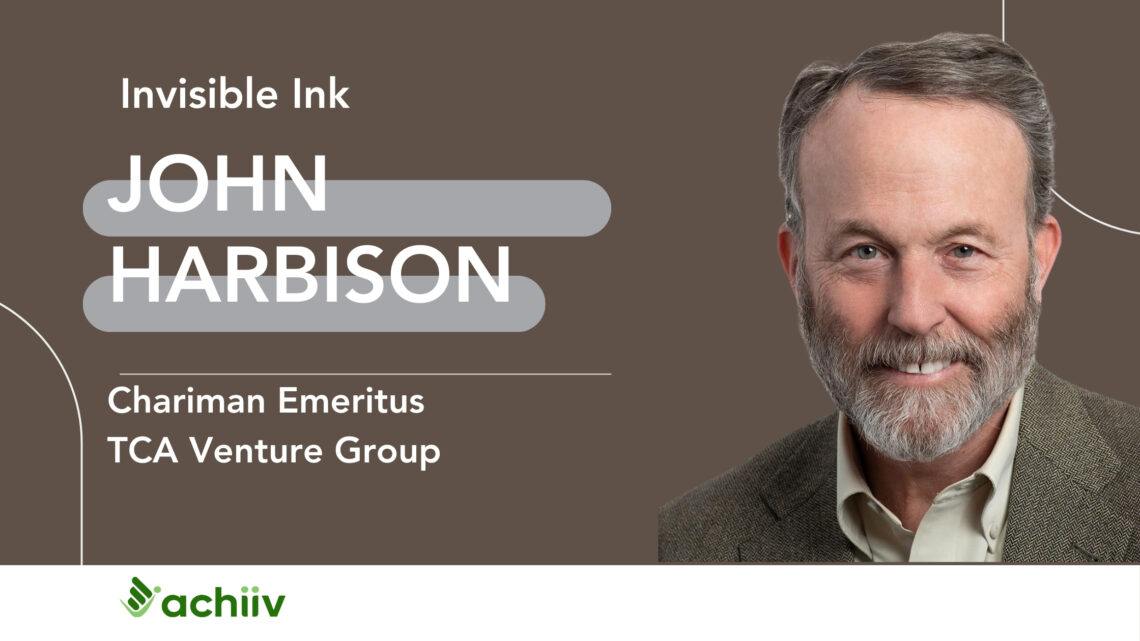
About John Harbison
John Harbison has been involved in early-stage businesses for 24 years, both as an investor and as a founder. He is Chairman Emeritus of TCA Venture Group where he has led 14 deals and invested in over 65 startups. He is also an active investor in public companies, and has realized returns from 250x – 1600x in five companies (Microsoft, Apple, Abbott Labs, Nucor and McGraw-Hill). He recently served on the Angel Capital Association Board, and currently chairs the ACA’s Data Analytics Committee where he regular publish analytical insights that help angels become better investors. He has also served on the Board of multiple early-stage companies.
Previously he co-founded and served as COO at Next Autoworks– a disruptive new American car company backed by investors such as Kleiner Perkins and Google Ventures. Before that he served as CEO of network security software SilentRunner Inc., and as President of Raytheon Commercial Ventures Inc. where he helped launch four businesses in two years leading to two successful exits and a third company which achieved $700 million in annual revenue within eight years by introducing the world’s first blindspot detection radar for cars. Earlier in his career, he was a strategy consultant and partner at Booz•Allen. He has degrees from Harvard College and Harvard Business School.
Episode Highlights
- The 30-minute scoring exercise that quietly predicts which startups won’t survive
- Why a company with “balanced” risk can be more dangerous than one with obvious red flags
- The founder response that instantly shifts an investor from skeptical to interested
- The one signal that collapses multiple risk categories at once
- Why “we have no competitors” is worse than you think
- The subtle way founders lose credibility during competitive analysis
- The coachability test founders don’t realize they’re taking in every meeting
- The board dynamic that multiplies outcomes — and the one that destroys them
- The winning company that only worked because they abandoned their original pitch early
- The difference between pivoting wisely and panicking after one data point
- The personality trait that saved six doomed companies — and killed six others
- The financing contingency one experienced CEO refused to build — and what happened next
- Why you don’t need most of the room to believe in you (and why that changes how you should pitch)
Links and resources
- TCA Venture Group (Formerly Tech Coast Angels) One of the largest angel investor networks in the U.S., where John invested and analyzed board impact data.
- Raytheon Commercial Ventures– The corporate venture group at Raytheon where John developed and used a structured risk-scoring framework to vet startups.
- Angel Capital Association (ACA)– Leading professional association of angel investors that publishes data insights and portfolio performance research.
- Central Texas Angel Network (CTAN)– An angel investing group that conducted analysis showing significantly higher returns when angels had board representation.
- Green Dot– A prepaid debit card company that pivoted from targeting wealthy teens to serving the underbanked, ultimately delivering a 235x return.
- Kleiner Perkins– A major venture capital firm that funded one of John’s companies early in its journey.
Interview Transcript
Shubha K. Chakravarthy: Good morning, John. Welcome to Invisible Ink. I’m so excited to have you here today.
John Harbison: Happy to be here.
Shubha K. Chakravarthy: You know, one of the things I’ve liked the most about my prior conversations with you is just your unique view on risk—the lens that you bring on risk. So before we get started, I just want to maybe ask you an introductory question. Over the course of your extensive experience as an investor with TCA and your adventures as a founder, what has been the single biggest learning you’ve had about risk?
John Harbison: First of all, every company has risk, and every company usually has all the dimensions of risk, whether it’s market risk or competitive risk or technical risk or financing risk and so forth. One of the things that I did back when I started screening companies and vetting ideas when I was at Raytheon Commercial Ventures, and we had to do triage against ideas that were out there, is we had a framework with all these different buckets of risk.
And in the first half hour of conversation, we basically came up with hypotheses of scoring that idea against the various risk factors from one to five. And then we had a filter that says, you know, if there’s a four or five, it’s probably going to be something that’s going to be hard to manage. If it had all twos or threes, that was a problem too. So you’re trying to look at the balance of what ultimately is most important in the risk.
The biggest mistakes, I think, founders make is they’ll tend to focus on risks. They’ve got to focus on the right risks. And it’s very hard at the beginning of a venture to know what kinds of things are going to cause a venture to go south. Nobody’s ever made a list of things they haven’t thought of, but you can make an assessment of: This is primarily going to be a technical risk thing. If we can solve the technology, there are enough indications that there’d be a value proposition and people would buy it.
Or the risk may be totally in terms of market adoption and value proposition, and it doesn’t seem like there’s a lot of competitors. But usually there’s something on each dimension. So it’s good to approach it with some kind of framework that helps you prioritize all those risks.
Ultimately, it’s not to deny them. An important part about all this stuff is to be very realistic about assessing them. And when you see all these risks, it’s not to say, “Oh, well, that’s not a risk.” You can say, “Well, that risk may be less important than this, but even if it’s less important, these are the things I’m going to do to mitigate those risks.”
I’ve never met a risk that doesn’t have at least some things you can do to mitigate it. Sometimes it’s out of your control, but often very much it’s in your control. So the approach to risk is very important, that it takes the attitude of: What am I going to do about it? As opposed to just saying, “Is it good or bad? Is it investible or non-investible?”
What an investor really wants to see is an acknowledgment: “Yeah, there is this risk, whatever it is, and these are the steps I’m going to take to mitigate them. And this is, I think, how long it’s going to take to mitigate those risks.” So that will create some milestones of de-risking the value proposition. So you bring the investor along on not just saying it’s there, so don’t invest. They will likely decide to invest if you’ve got a plan for how to deal with those things. So risk should very much be accompanied with: What can I do about it, and what can I do to mitigate the risk?
Shubha K. Chakravarthy: Got it. And in your experience along those lines, is there one thing that you see consistently that founders miss on that aspect? Is there something that just stands out?
John Harbison: I think the biggest issue—well, they know they need to come up with a value proposition, and they know they need to convince the investors that the value proposition is real—but too often they just use personality and waving their arms around and charisma and stuff, saying it’ll all work out.
Maybe it will work out, but the biggest kind of de-risking that cuts across all the other risk factors is if there are customers out there that are showing a willingness to buy some version, maybe an MVP, or some commitment that if you do something such and such, I will buy it.
Ultimately, if you get customers that are willing to do it and they’re willing to set what kind of price you’re talking about, then the rest of it is pretty much something you could work out. You can say, “Okay, well then how many more customers are there like that out there, and how can I multiply that out?” But you’re not thinking, “Is this a $5 a month thing or a $50 a month thing? What are they willing to pay?”
Getting it out of the abstract and saying, “Well, they should be willing to pay X, Y, Z”, that’s the risk that often derails these things. Because as investors, if we don’t see the evidence of customer traction which is why it’s so important to do the MVP kind of thing, you need to get feedback from customers. And it’s more than just a conversation of, “Yeah, I met your CEO, and they seem to be a nice person, and maybe someday when they develop something, I would be interested in it.” You want to have that demonstrated.
Investor Evaluation Mechanics
Shubha K. Chakravarthy: Got it. That makes sense. So, you know, I want to talk about how you’re forming beliefs as an investor, right? When you’re looking at a startup that comes across, just to kind of get into the mechanics of it, there’s a potential misunderstanding. Founders think that when you’re considering 10 different startups for funding, that you’re trying to predict who will win. Is that what you’re trying to do? What are you trying to do as an investor when you’re faced with 10 different pitch decks that you’re trying to evaluate?
John Harbison: First of all, every investor’s different, so I can just sort of say what I do. I tend to start with the value proposition rather than how differentiated it is. Because if you don’t have a compelling value proposition to somebody and it’s something that’s going to make the customer’s life demonstrably economically better by using your product, it needs to be a painkiller, not a vitamin kind of thing.
But once you get the value proposition, then you turn to how differentiated is my offering and how much barrier do I have to a source of sustainable advantage. There are plenty of examples when I look back in the TCA Venture Group portfolio where there were a lot of competitors pursuing the same thing, and the ones that succeeded really came back to the nature of the team rather than the technical advantage that they had to be able to get to the finish lines.
So it’s one of the things I have heard said so many times. It’s just, “We have no competitors,” which is kind of a bad thing to say. It either says that we have no competitors because nobody would ever want a product like this, that’s not good. Or we don’t have any competitors because I’m so myopic and tunneled on that, I don’t know who the competitors are. Or they dismiss, they know a bunch of names of companies and they create their little competitive matrix of all the ball charts of all the features and functionality and, gee, we’ve got a lot of solid balls and the other guys have half empty balls and so therefore we’re better.
Those kinds of things are often very much a problem because every company starts with the things that they think are important, which they bothered to put in their product. There’s some overlap in what the competitors wanted to do, but there’s also things that competitors perceive that are important and they put in their product.
So it’s needed. Whenever I see the chart that says we have all solid balls and all the competitors have something else, you know, they get a negative impression on their understanding of competitors because I’ve never seen a business that’s just like that, where somebody just is, you know, hitting the ball out of the park on every dimension that is relevant.
It’s obvious that in those situations there are dimensions that are not captured on the chart. And there also can be examples where they’ve understated a competitor’s ability.
Fortunately, this is an area where AI can be very helpful in the front end of due diligence, of at least surfacing the names of the competitors. List all the companies that you are aware of that are doing something like this and create a plus and minus against the features. And you just basically ask them to create the chart. And if that chart looks demonstrably different than the one that’s in the pitch deck, then you say, well, you know, it at least gives you a set of questions. Says, “Well, gee, you put an empty ball here. You know, here’s the evidence that it seems to be that they’ve got, you know, we had, they have no customers. Well, they’ve got $10 million of revenue, so somebody’s given them money for something.”
There are a lot of things I’ve turned down because they say, “I have no competitors.” And even before we had AI, I’d just do Google searches and come up with a bunch of names of competitors and I would say, “What about this and what about that?” And sometimes they would say, “I’ve never heard of that company.” Sometimes they would say, “I’ve heard about them, but I dismiss them for this reason.” Then I have to assess and validate their reasons and stuff.
But every step along the way in presenting, it’s really important as a founder to be very objective, not put a positive spin on any of the assessments, and be able to explain where you are. Not necessarily to defend it, but explain where you are. And if an investor says, “Here’s a piece of information you may not have considered,” and you haven’t considered it, say, “I’m not aware of that. I have to look into that. Let me get back to you.”
Coachable Founders Matter
John Harbison: One of the main reasons companies don’t get funded is they’re perceived as not being coachable. Every question you put in front of them, they’re defensive. They don’t end up doing anything different as a result of it. That’s usually a kiss of death. And I’ve been at this for 25 years or so. I’ve got lots of scars to show that when you align yourself with an entrepreneur who doesn’t do well on that dimension, it is very frustrating as an investor and it usually leads to a bad place.
I had one that was a very charismatic founder back in 2005, 2006. We raised over a million dollars. A lot of people were really excited about them. He was very compelling and everything. But we ended up with the board structure being the CEO and the CTO, the two co-founders, and me. And then they let one of the other investors in as an observer.
And so as this thing evolved, I would come up with ideas or the other investor would come up with ideas and literally he never did any of them. It was very frustrating because he basically eventually got the company up to about $3 million in revenue. Didn’t listen to what we were saying. We could have saved the company and it ended up going under.
I have this little speech I go through when I start out on a new board relationship. And I tell the CEO this. I say, “Listen, I’m going to tell you right now that I’m not going to be bashful. I’m going to give you all sorts of ideas from my perspective. And I think about 70% of them are probably good ideas. You ought to explore them.
20% or 30% are going to be bad ideas. I can’t tell you which are the good ones or the bad ones. You’re the one who’s closest to this, your industry and your company. So what I’m counting on you to do is, if you think it’s in the 70%, then say, ‘Yeah, I’m going to give it a try.’ And if it’s in the 30%, don’t just say no and don’t do anything. Say, ‘I don’t agree with that for these reasons.’
And ultimately, you’re the CEO and you make the calls, but all of my ideas can’t be wrong. I’ve been at this long enough that I know that over 50% of the time, they’re good ideas.” But you need to have that kind of relationship where they’re open to those kinds of ideas.
Boards Boost Outcomes
John Harbison: We just did an analysis at TCA, and we published it in ACA on the most recent data insight on board representation. And I went back and looked at the early days of TCA where I had the data in the first five or six years. And I looked at how many of the companies we had at least one board representative. I also measured whether it was one or two. When we had five members on the board, about 70 or so percent of the companies, we had a board seat.
Since it was so long ago, most of those have had outcomes. So how did it work out for the ones that had board representation versus not board representation? And the difference was absolutely stunning. The ones that had board representation had four times higher multiple on invested capital, 14 times higher, not 14% higher, 14 times.
Shubha K. Chakravarthy: 1400%.
John Harbison: Yeah. And the IRR was infinite because the IRR for the ones that didn’t have board representation was less than one. CTAN, Central Texas Angel Network, has done the same analysis of their portfolio and they had a very impressive seven times multiple for the ones that they had done it.
It’s not perfect. There’s been ones where we’ve been on the board. There are ones I’ve been on the board that still failed. Nobody’s perfect. But the odds are much better if you have a structured board with some people who care deeply about the company, are willing to put in time, ask you questions, guide them along, and that it is just much more likely to get to the right kind of outcome.
Every company that I’ve ever been involved in in the last 30 years of rattling around startups, I’ve started companies, I’ve been a founder, I’ve run companies, I’ve invested in companies. Every single one of them had bad things happen at some point. And the measure of the ones that got through all that to the goalposts were the ones that figured out how to, one, recognize what was happening and then come up with some plan to do something about it, and pivot if necessary.
But not to stick with the idea that they had initially, regardless of whatever else. We all want to see passion and commitment, but that doesn’t mean you’re committed to the idea in the absence of information that might prove otherwise.
Pivoting and Green Dot Story
John Harbison: And some of our biggest hits were total pivots. In the first five or six years, the biggest hit we had was a company called Green Dot, which made debit cards, prepaid debit cards.
And when they pitched the Tech Coast Angels, they were going to make prepaid debit cards for rich teenagers. That was what they pitched. It was a good thing. We raised about a million and a half dollars. People seemed to like the value proposition. They started building out all the things.
As soon as they’d done that and they started to go to the next step of how do I start signing these up, it became very clear that there really wasn’t a market for that product because a rich teenager just used mom’s credit card. They didn’t need it.
And so they said, we built all this capability. What the heck do we do with it now? So they said, well, there’s a whole other area of people out there who don’t have bank accounts, that were underbanked. They don’t have checking accounts. So there’s no banking relationships, whatever. So let’s go after the underbanked.
And that was the business that they ultimately developed into a very successful company that IPO’d, and at the end of the day, it was a 235x return and all worked out. But it was a pivot at the beginning. But it happened in the first year. It wasn’t like we tried this for six years and said, gee, there really aren’t any rich teenagers buying this stuff. Why is that not working?
They took the initial feedback and said, I’m going to do it now. Now you mentioned how many competitors out there. They were not the only company that figured this was an unmet need. At the time that company was funded, it was back in 2002. There were, I think, 17 or 18 other companies basically doing the same thing.
By the time they IPO’d, they were the last man standing. The other 17 had all gone out of business. So it’s more than just saying, is there a value proposition? You’ve got to say, is this team going to be able to do that?
Now, as we were assessing that, we couldn’t say the CEO had no experience being a CEO, had no experience in the financial industry. But he was this really sincere guy who seemed to, you know, he had done some interesting things in his life. He was very open to ideas and there were other signals that kind of get on there. And he ended up building this great company and surrounding himself with good people and got through all that.
And at the end of the day, it was execution that created that opportunity. But obviously, if they never pivoted, they would have failed. If they hadn’t perceived the opportunity, they would have failed. So all these things have to build. You can’t just say, there’s a value proposition, I’m done, because that doesn’t work.
Holding Ideas Lightly
Shubha K. Chakravarthy: You just painted such a rich picture here that I have two or three things that I want to drill down into. The first is, you mentioned this value proposition. It has to be very compelling, but on the other hand, you said, well, it might also not work, right? That’s kind of point number one.
So I’m the founder on the other side. You’ve given me a fantastic picture from your side of the table. I’m a founder who’s preparing. I have conviction in my idea. That’s why I’m coming to you and I spent all this time. I have a value proposition.
Number one, how do you assess the value proposition? And number two, how should the founder be thinking about holding an idea lightly? I’ve heard that phrase. You hold an idea, but you hold it lightly. Where is that balance? How should they get that right so that their chances of success are maximized, but they’re also open to any disconfirming evidence that’s coming from the real world?
John Harbison: I mean, you don’t get successful by having five pivots in the first two years just because you had one bad data point. So when you get something that suggests that maybe there’s something wrong, then you need to assess that. And in some cases, it’s let me test it again slightly differently, but not dramatically differently.
It just may be some other thing that causes the thing not to. You may be talking to the wrong potential customers. So before you just suddenly throw it all away and start over again, you need to do the data. Anyone can draw a line going any direction from one data point.
When I was in consulting the first 20 years of my career, they described what the definition of a partner in a consulting firm was, they can draw a line based on one data point.
Shubha K. Chakravarthy: That resonates.
John Harbison: And whereas you, as a lowly associate, needed multiple data points to draw the line. And the partners, with that experience, sometimes they’re right. Their hypothesis of what it is ends up getting approved. But sometimes it turns out differently and they have to kind of go through that.
But yeah, so it’s important. It’s important to do that. Often companies fail because they give up too early on an idea or they change too quickly. So as you said, it is a balance. And you’ve got a clock running. You’re burning through money. So you probably ought to err on the side of, if you’re getting feedback, try modifying something and see if it’s any better.
But before you throw the whole thing out and start over again, you should have something stronger than just a gut reaction to some data point that’s out there. It’s not like, well, I just read an article in XYZ magazine and I don’t think my thing’s going to work anymore, so I’m going to go do something else. That could be a very valuable input, but it doesn’t necessarily mean that you keep changing every time one little wrinkle gets thrown your way.
There’s a lot of evidence out there that people who have had experience as CEO do better than ones that don’t. As I said before, in the Green Dot, there are exceptions to that. And there’s a slide that I use in the returns course that we present for ACA where, after we show all the data that says if you look across the whole portfolio, the ones that have experience do better than the ones that don’t have experience.
I say, but if you did that and the next screening you did, Steve Jobs comes in with this idea called Apple and Sergey Brin and Larry Page come in with an idea called Google, and Jeff Bezos comes with an idea of selling books on the internet, and Bill Gates is going to create a software company.
Those were all first-time entrepreneurs. They’d never done anything else. And if you’d invested in any one of them, you would have done very, very well. So you need to look at the whole package. But it’s not to say that not having experience means you can’t do it. But it does mean that you probably want that CEO to build on his or her team to fill in some gaps in experience.
So there are at least some people in the room when they’re going through all this that are helping fill that out. And I’ve seen a lot of situations where that was the way that they accommodated for it. And the other part of it is that they get the right kind of advisors and board members involved. They can provide some of that stuff too.
I think Steve Jobs did okay because he had some people giving him coaching in their early years. And you can compensate for it in different ways. But I don’t know if that answered.
First-Time Founder Signals
Shubha K. Chakravarthy: Yeah, it does. So I’m just going to play back. I’ve heard a pretty rich picture from the investor side, so I’m now going to come across the other side. I’m sitting here as a founder. Let’s say that I’m a first-time founder, right? So I know I cannot manufacture prior CEO experience.
What I’m hearing from you is, as I’m preparing to go to the investors, number one, be realistic about where I stand and where they’re likely to evaluate me as a first-time versus not a first-time CEO. How much conviction, based on what kind of real data, do I have on this value proposition? On the face of it and with the data that I have, do I have a solid value proposition?
And then number four is, am I coachable? You are checking off these boxes as an investor when you’re now evaluating me as a founder, right? If there is a problem that comes up, or am I even open to the idea that I could be wrong and I might need to pivot, but not just on a whim? Do I feel coachable?
And I guess I want to pause on that one second and say, how do I come across as coachable to you? Obviously, there’s a presentation aspect, which is not what I’m concerned about. I’m more concerned about my operating system as a founder that makes it easy for you to coach me, but at the same time that tells me when to push back and say, I hear you, but here’s why I’m going to take the stand and here’s why I believe that the direction that I’ve chosen is right. So what does the founder need to do to strike that balance between coachability, being open to data, and having conviction?
John Harbison: First of all, just because they’re not, the previous experience doesn’t mean don’t try, because if you look across all the 70 angel groups that report data to the ACA every year, something like 70% of the companies that are funded don’t have previous experience. So, you know, you can still get money without that.
I think your likelihood of getting money is slightly higher if you have that experience, but it’s more than the experience. Because if you’re doing the due diligence well, you’re going to ask the CEO, so what did you learn? What were the biggest obstacles you faced in your previous company and how did you overcome them? And things like that.
And even if you haven’t had a previous company, I ask those same kind of questions about life. What are the big obstacles you’ve had in your personal life? You know, you had a parent die, you had to take care of your little sister, you had to get yourself through college because you didn’t have money, because you were really poor. Just however you dealt with it, because you went through it.
So, if somebody’s been through life’s adversity and shined, they’re probably going to get through the adversity of whatever’s going to get thrown at them in this thing. So that kind of testing of the resilience and that sort of thing. It’s nice if it’s all wrapped up into, I had a previous company, had a successful exit.
If you had a previous company that didn’t have a successful exit, but you learned stuff from it, that can be just as valuable than you had a successful exit and you have no idea why you had a successful exit and you have no idea what you would’ve done differently.
One of the questions I sometimes ask is, well, congratulations to your past success. If you could have done anything differently, what would you have done differently? And if the answer is absolutely nothing, I had a success, then I’d say, well, you know, there still would’ve been things that you would’ve done differently because you had a good outcome, but there were stumbles along the way.
And if you can’t acknowledge that and what you learned from it, it becomes kind of a negative. It doesn’t have to be the previous experience as a CEO. It could be whatever your job experience was before, if I was somebody who wasn’t a CEO with a job.
Okay, well, what are the challenges? Well, I suddenly had some customer call me up, said they were going to walk, and what did you do about it? And how did you solve that? Or we had a problem with a product and we came up with this improvement on our problem. It’s what do you do about the things that you’re trying to test, and it’s really less important on the outcomes, but it’s more, is this somebody who takes learnings from what they do and then applies it?
Picking People Over Ideas
John Harbison: One of our investors at TCA, in his first 11 investments, or first 13 investments, he had six seven-figure outcomes where he got more than a million dollars back.
And so we asked him to give a talk for all the other TCA members. What’s the secret of picking these companies? You know, he must be doing what you’re talking about, valuing all these risk factors.
He says, well, I don’t do any of that stuff, really. He says, I do it all in the assessment of the individual. Obviously, it has to be some kind of a reasonable idea, but ultimately whether it’s going to succeed or not, I’m looking for how the person is wired and how they think and how they use data and how they improvise and do all that kind of stuff.
And he says, and the tool that I use for that is the Myers-Briggs four-by-four matrix thing. And there’s one cell that he thinks is the optimal characteristic of CEOs. Unfortunately, only about 3% of the people are in that.
Shubha K. Chakravarthy: What is that? I’m dying now.
John Harbison: I forget which one it was.
So there was a column that he had. So there were four of the 16 that he looks for. And what he does in due diligence, he doesn’t hand them the test and say, go fill this out and I’m going to make an assessment.
But he asks questions about stuff, and then through the conversation he pins them where they are. And so it’s, my version of that is the thing I just talked about, which is how do they face challenges?
I’ve made 60-some investments over the years. Half a dozen of those should have died, but the CEO was in the “ I don’t ever give up” category. And they kept at it and kept trying different things and eventually getting something out of it.
Okay, there were another half a dozen that were still great ideas, but the first big roadblock that came, they gave up. And if they’d had the other kind of CEO in there, a couple of those, you don’t think would’ve been unicorn kinds of companies, but they gave up too soon. So the nature of the individual is really important as you get through all that.
In the teams that I’ve led personally, I would always have this little speech I would give the people that says, when something is confronting us that’s a problem, don’t come to me with the equivalent of the dead mouse and say, here it is.
Tell me what the problem is, and then tell me what you’re going to do about it, or what you’re going to try to do about it. And the analogy is, I say, if you’re climbing a mountain and there’s a boulder in the path, don’t just come back and say, I can’t go any further, there’s a boulder in my path.
Say, well, do you dig under the boulder? Do you get some dynamite, blow the boulder up? Do you push it off to the side of the road? Do you jump over, climb over the boulder? Whatever you’re going to do, because there will be boulders in front of every company, and it’s important to recognize when they come and do something about it.
Paranoia And Contingencies
John Harbison: Now, the really good teams, the high-performing teams, are inherently paranoid and are looking for all the things that could go wrong and then prioritizing all those things, which of those things could go wrong would really be really bad. And the ones that survive are the ones that do that.
And then when, God help us, one of those things did occur, you can do something about it. The company that I was a co-founder in back in 2008, and we got our initial funding from Kleiner Perkins, we had five or six life-threatening things that hit us. And every one we had thought about ahead of time and come up with a Plan B and a Plan C.
And when they happened, we stepped right into the replacement. In every case of those things, we ended up not just keeping the company going, we ended up being stronger for that. So it was really doing that, and because we were paranoid.
And then after two years, they decided to replace the founding CEO because, as we were raising money through a government loan, the DOE said, we want a CEO with automotive experience. And our founding CEO didn’t have that.
So we went out and got some very capable executive who had run a couple billion-dollar automotive supplier as a CEO. And the company died because when we got to the point where we were saying at the very end of the thing, what are we going to do if we don’t get this $250 million loan from the Department of Energy?
And so I said, I want to go start talking to Indian companies and Chinese companies that are all trying to develop a car like this. And we figured it all out. We have a product that’s going through focus groups that’s going to prove it here. I want to come up with a Plan B that if we don’t get it, at least we can salvage something.
And she said, no, that’s not the way a company works. Everyone’s got to have one path that they’re going forward, and you never verge from the path. And lo and behold, we didn’t get the loan at the very end. We actually got approved by the DOE, but then the Obama administration turned it down.
But we had no time to recover there, and it kind of killed the company. So it’s very important to have that paranoia and then do something about it, not just to lose sleep over these things, but think about how you’re going to respond to those things.
And as I said, we got through five of the things that would’ve killed any company. You take successful companies like Tesla, they had three or four, while they were growing, that were life-threatening kinds of events that they managed to get through.
Even the really successful companies all have bad things that happen, and the ones that get through it are through some combination of the skills of the team. And so they figure out a way to get through it and power through it, get past all that.
Shubha K. Chakravarthy: So this is fantastic because you just gave us a masterclass on the founder and the team, and how I can prepare as a founder. Right? So just to kind of synthesize what I just heard, clearly the founder is really important, and I heard three main things that you have seen from experience and data being contributing factors to a successful outcome for a startup.
Number one is clearly, if there is prior experience, fantastic, but that’s not necessary. And if you don’t have that, there’s some combination of either innate ability or the way they think, or they call it the Myers-Briggs or whatever else. But the main point of that is how you’re able to handle adversity, overcome it regardless of what life throws at you.
The second main theme I heard was this idea of being paranoid, right? So you’re always thinking about backups to backups to backups to backups. What are the contingencies that can happen? And that becomes part of your operating software of how you think as a founder, right?
Because you’re always thinking about, this is my ideal outcome, and for that I need these three conditions, but if they don’t happen, then here’s my backup plan. Even though the outcome is not the same. That’s kind of the second big theme I heard.
The third big theme, which I picked up along the way, was this reliance on data or having faith in data and letting the data guide what you’re doing over and above your passions is important. So there’s slightly a tension because, you know, the data might not lead to where your passion leads or where your faith leads, but you still have to be able to balance the two.
Is that a good summarization of what I would look to develop in myself as a founder if I were to be investible and guide my startup to a successful outcome?
John Harbison: Yeah, I mean, I think you need to take the data where it needs to go. It doesn’t mean that your customers are going to be fully cognizant of what their needs are or articulate enough of what their needs would be.
I mean, Steve Jobs was notorious for imagining where customers would be and developing a product independent of the customers. And it usually worked out, didn’t always work out, but it usually worked out that the market was there.
But it wasn’t because they did focus groups that said, okay, do we want a version of a trio phone that is without buttons on it, that integrates, you know. I don’t think they did a single focus group to do that. They just said, well, gee, I can imagine if I did that, it’d be pretty cool.
So it doesn’t mean that everything’s incremental and it’s all driven by incremental needs. But all those things that you said are important as they go through this.
Shubha K. Chakravarthy: So talking about data and risks, right, I want to talk a little bit about the evidence and how you prove and back up your claims, right? Like we always hear, bring receipts. Don’t just tell me what you’re doing. Bring evidence.
So from an investor’s perspective, can you just talk a little bit about when you’re evaluating a startup and a founder? What are you looking for in terms of evidence? Is there a hierarchy of what’s more important, what’s less important, and which are the most critical risks you’re looking to find evidence against?
John Harbison: Well, don’t bring evidence that can’t be backed up, obviously, because every test along the way the investors are testing whether they can trust you. So if they spin something beyond the facts, then you’re going to lose them for another reason. So just be very objective.
Handling Tough Questions
John Harbison: You asked the question earlier, you know, how do you, if you have questions being asked and you have information that is counter to whatever the expressed opinion of the investor is. I mean, don’t respond by saying, well, that was a stupid question, or you don’t know enough about my business to do that. That’s generally not it.
But if you say, well, actually, I can understand why you said that. And the conventional view in this industry is that, and a lot of people in this industry have that perspective. But we have this specific set of experiences or trials where we’ve done this, and in fact this is ultimately what we found.
And so you give them the information that they didn’t have, because they have some general information about your industry. They didn’t have the specific information about it. It’s always a way to say it in a way that the best entrepreneurs, it’s like watching one of these news things where they always, you know, you interview somebody and they always say thank you for being on the show. There are certain things you say at the beginning and the end of these things.
And when a question comes, never is the right answer, that’s a stupid question. It may be a stupid question, but you’d always say, that’s a great question, and now I’m going to give you a great answer.
Shubha K. Chakravarthy: Has any founder ever said, that’s a stupid question? Because I don’t see.
John Harbison: Yes, I’ve had them. They roll their eyes and say, you don’t understand my business. Why am I wasting my time with you? It’s done through body language rather than saying it outright. Or they think that if they can’t defend every single number on every slide, that somehow the whole thing’s going to fall apart.
Yeah, even if it’s not a great question, it’s good to say it’s a great question because it makes the investor feel good. And then you give them the answer that they need. And the result of the information is that this person listened to me, they answered it, I’m a little smarter because of this interaction, I feel good about it. I’m more likely to invest. You’re building a rapport and a relationship, and there’s a good way and a bad way to do that.
Now if they say something that is really off the mark, then you say, well, you know, I understand why you might say that, particularly if I’ve done my homework and I know that person has had some experience in my industry. But actually, in this particular part of this industry, this is a little bit different, and this is why we think it’s different.
Or I have two people on my team who have been through this process faster. So I think they can be more streamlined in working through it than a team that hasn’t been through that experience. So you can give them concrete things that would expand their horizon of what’s there.
Pitching Deep Tech Clearly
Shubha K. Chakravarthy: You really brought up a great example where you’re politely but respectfully, and in a data-backed way, you’re refuting something that the investor said. The two other points that I want to get your thoughts on as they relate to evidence and information, the first is, especially when it comes to technology based or deep tech STEM based businesses, there’s a tendency for the founder to basically give you a science lesson, right?
What do you recommend or what have you seen be effective when you’re a founder who has such a product or an idea? How do you get the idea across? And how do you present facts and evidence in a way that convinces you, the investor, even though you’re not a subject matter expert, but at the same time doesn’t end up giving you like a science lesson?
John Harbison: One of the challenges is if you’re pitching to a bunch of angels in an angel group, some people in the room hopefully do have some subject matter expertise, but a lot of them won’t. If you can pick up who the people are, if you’ve done your homework ahead of time, sometimes you don’t have the names and you can’t do that sort of thing.
But if you know who they are and you try to talk to them before the initial screening, and so then when they have evidence says, well, gee, I’ve already talked to this person, it sounds pretty good. And not everybody opening their mouth has the same level of credibility with the other people in the room.
This is particularly true in the angel world, where people come from certain industries, but they’ve been out of the industry for 15 years or 20 years and it really doesn’t work the way they thought it was. And they would kill ideas by just saying, well, gee, you know, this thing has to do with airplanes and I was a pilot 15 years ago and never going to work or whatever.
So I’ll give you an example of that. There was a company, it’s called Tron, and they presented to Tech Coast Angels. And this was back in 2005 or so, something, five or six, sometime around then. And this guy used to work at Apple and he left Apple. And there was, he perceived a market need for a tablet that ran the Mac operating system. And so you could use all Adobe stuff in a tablet interface.
And he literally, he would buy a MacBook from Apple, he’d rip the cover off the top of it, and then he’d put a touch display in it and put it all together. And so it was a pretty fat tablet, but it did what he said it was going to do. And he took it to the Consumer Electronics Show and he got $4 million of orders because this is before iPads came along.
And he says it proved that there was a market there for this. And so I remember having the conversation and he says, “Well, I understand, but the problem with this is that if there’s enough people, you need a certain number of people to make this thing work. Probably you need to sell like two or 300,000 of these things. If the demand is a lot more than that and at 200 or 300,000, Apple’s not going to introduce anything to compete with you. And they could obviously do it a lot cheaper because you’re selling something at a retail margin and then you’re in a cheap position, like $3,000 tablets.”
So what I was saying was, the problem is if it’s too small, you don’t have a company. But if it’s too big, you don’t have a company. Because let’s say it’s a million or 2 million or 10 million. Then Apple’s going to say, “Oh, thank you for pointing out that people want something like this, so we’re just going to do it.” And that’s the end of your company. So I said there’s this narrow range where we’re guessing not just whether there’s a value proposition, but it can’t be too good a value proposition, because if it is, then Apple will jump in and it’ll kill the company. And if Apple decided to make this, it wasn’t like they were going to acquire his company. They’d just go develop the product.
And so it was this kind of half thing that if, even though you have $4 million, you know, and you haven’t made one of these things yet, that certainly suggests that there’s demand out there. There was this problem that it didn’t fit in any way. One of the observations I would make is all these pitches, if you know nothing about the industry, sound great. The problem is when you know something, then you start asking a lot of questions and seeing potential flaws, some of which might be fatal.
So when I go into something and it’s outside of my area of expertise, I look around the room for somebody who is deep in it, and then I start asking questions, some of which are pretty dumb questions, but because of the nature of the way angel groups work, people tolerate that and humor you and try to answer your questions. And so I lean on them.
Not to say, because they’re the subject matter expert, I’m going to do whatever they’re going to do, but because they have that expertise, I’m going to ask questions of them and take their answers with more credibility potentially than the founder.
So it’s important for a founder to realize who are the really thought leaders and make sure that they have enough information so that they can be your advocates.
One of the companies I invested in, the founder was a very humble guy. He was very sharp and an amazing guy, but he was very humble. And every meeting started out by saying, it was like two minutes of, yeah, we’ve done these good things. And then the rest of the meeting was, I have these three problems and I want to have the conversation focus on how you can help me think through these other problems. And I’ll let you know what my thinking is, but I want you thinking on these things and we’re going to solve those problems together.
And that board, it got to a successful outcome. Not surprising, but he understood that the board was there to help him and he would ask it. The same thing’s true of the investors. So many of these companies who invest in, once they get the money, they go radio silent. And finally, when they’re about to raise some other round, we get some email from the CEO and says, you haven’t heard from me in three years, but I’m raising another round and I’m obligated to tell you what’s going on. And if you want to invest, I’d like to have you invest. And usually we say, no, I’m not going to invest yet. You aren’t communicating to us.
So one reason to communicate is that you’re much more likely to get follow-on if they have experienced you as you go through that process. The other part of it is you can, in those communications, say, these are the things that I need your help on. And, neither the doors I want to get into X, Y, Z companies, anyone know anybody at X, Y, Z company.
So the company that I talked about that we started back in 2007, 2008, we had a thing where every month, and we had great investors, we had. Kleiner Perkins was an investor, Google Ventures, T. Boone Pickens was, we had some interesting investors.
But every first Friday of every month we sent out an investor letter every single month. And we never missed it by a day. And every single Friday when we were writing the thing, we said, “Well, there’s something that’s going to happen next week. Maybe we should just wait till next week and do it next week.” And we always said, “Well, we’ll cover it in the next month one.”
And we spent a page and a half telling about what was happening in engineering and manufacturing and each dimension of the company. But then the last part was, “This is what we need your help on.” And we got help because we were asking for it and they were along for the ride.
But good communications is really important for these companies and the relationship with investors. And further, it helps you when you do subsequent rounds because when somebody comes in later on, they usually want to ask, “What was it like for the earlier investors?” If they say, “Well, I don’t know. We never heard from them,” this is not going to be good.
Even if you get some real arrogant VC comes in and says, “Well, that’s fine and you shouldn’t have talked to angels because angels don’t add any value,” it’s important to be able to have the dialogue going and a founder having realized that that’s one of the biggest things you can do to make your company successful is doing that.
Like when we had two of the senior partners at Kleiner Perkins on our board and John Doerr was one of them. And John Doerr at the time was number one on the Forbes Midas list of the best private equity investors in the world. And he’s a brilliant guy. And he had started Google and Amazon and Amgen and, I mean, he had a whole bunch of really big successes.
Shubha K. Chakravarthy: Touch, yeah.
John Harbison: And it was a golden touch.
But when we got to the point where we were doing our Series B, nine months after we did the Series A with them, they got their Rolodex out and, you know, “We want to make a pitch to this person or this company.” And they would make a pitch to the company.
And the downside is we were doing a Series B, which we started in the first week of October in 2008. And if you remember what was happening then.
Shubha K. Chakravarthy: I worked in subprime mortgage. I know all about it.
John Harbison: Money around like crazy, and we met all the milestones we were going to do in the first nine months. We thought this was going to be shooting fish in a barrel. And suddenly the stock market fell like 30% in a week. And it was like suddenly everything was coming off the table.
And so it took all those introductions. I had a spreadsheet where all the companies that we made pitches to, there were like 110 lines in the spreadsheet. And we had six people invested in Series B, six entities out of 110. And it was literally the largest Series B of any company in the United States that year.
But we had 90% nos to 10% yeses, which is another message for founders. Don’t get discouraged when you get a no. There’re going to be a lot of nos. But ultimately, at the end of the day, you’ve got to get through the door yourself.
Shubha K. Chakravarthy: So you’ve kind of woven the tale pretty beautifully, right? From, you know, I started with, hey, how should a founder present a scientific type of product? And you kind of wove that into a beautiful narrative where I heard you say, well, it starts at the beginning where you’re actually understanding who the experts, the subject matter experts are and making sure that you can come across credibly to them, treating the others with grace and making sure that you’re handling their lack of knowledge appropriately.
And then that went on to, okay, that starts a relationship potentially where they could even be on your board, which led to how do you construct a board thoughtfully? How do you use them properly? And how do you continue to stay in touch and communicate with your investors so that they get a good outcome, you get a good outcome, and you’re really setting yourself up for future success. So that’s a pretty complete narrative.
So I want to close out with, if you had to maybe summarize or synthesize with like the top three must-dos for founders on the cusp of their first outside round, based on all of the experience you’ve had on both sides of the table, what would those three actionable things be?
Top Founder To-Dos
John Harbison: Just to summarize some of the things, so you know, one is get the right team and understand on your own team, your internal team, what skills you lack and make sure that they’re covered on the team. Sometimes you may have a CEO that’s really strong on marketing but not on technology, and so you need to fill in those roles, or somebody who has relationships that ultimately help you build the channels or whatever.
So understanding no CEO’s going to have all those things, so there’s something that you don’t have. And a lot of these companies, like Apple as an example, you know, Steve Jobs couldn’t design a computer and Steve Wozniak couldn’t do the things that Steve Jobs did. And so they had a team that together was very powerful.
And the internal team of understanding what you lack and then asking your advisors for help in finding those people. And don’t say, I have a complete team and it’s perfect. You know, say, well, yeah, I do want to build out the team in these kinds of ways and I’m open for any ideas of people that you know that have been through that kind of thing.
Because it’s a lot more efficient to get it that way than to do your LinkedIn search or go to jobs.com or someplace to find those kinds of people. So to make sure that in the overall team you have all the ingredients that are necessary.
The second thing is this whole thing about being realistic about what are the things that could cause problems for you and come up with definitive plans that hopefully you don’t. It’s not like insurance policies. The best insurance policy is the one you never use, but when you need it, you better have it. And the process of thinking through that and being sufficiently paranoid without being petrified by your paranoia, you view it as a challenge.
And then the third part is saying ultimately the investor is investing at some form. It’s always, you know, jockey and horse kinds of stuff. At some point, are they comfortable with you as an individual? And so you’re trying to connect with them and you’re trying to come across as somebody who is intelligent, somebody who understands the problem, somebody who understands the technologies and understands the market, but also somebody who can motivate people and build a team and do all those kinds of things.
So you’re on audition, like an interview for a job kind of a thing. And so there needs to be a rapport there. And ultimately you’re not going to marry the investor, but it is a relationship like that you’re going to want to be comfortable with and they need to be comfortable with you.
They’re going to be along for the journey and rather than be a hindrance. Now, clearly some companies go in the wrong direction and boards intervene and replace CEOs. So they’re not going to just stick with you regardless of what happens. But if you’ve had the right relationship and you’re making the corrections that need to be made based on information, it’s very unlikely they’re going to say, well, I’m going to go find somebody else.
So those are some of the themes, being realistic about whatever information you have and then being proactive about coming up with plans and implementing those plans to do those things ultimately leads to successful companies.
Shubha K. Chakravarthy: Fantastic. This has been an amazing conversation as I knew it was going to be. Is there anything that you wish I had asked you but I didn’t?
John Harbison: No, I think you have a lot of very thoughtful questions. I thank you for that. Obviously this is something you’ve thought about a lot and, as I said, it’s nuanced.
Angel Math And Syndication
John Harbison: I guess the one closing thought is, it goes back to my thing where 90% said no, but we still had raised more money than anyone else in the United States. It’s when you, one of the real cool things about pitching to a group of angels is that you don’t need to convince all the people in the room. You don’t need to even convince half of the people in the room to get money.
If you go and pitch with an angel group that’s got a couple hundred people and the amount of money you’re going to raise, if you can get 20 of them to come to a yes out of the 200 and they’re all going to give you $25,000 and that meets your whole thing, you only need 10% of the people who think it’s a good idea.
The other 90% can say, this is a terrible idea and I’m never going to invest in this. That’s very different than when you go to a VC and you pitch a VC. You will have to almost convince everybody in the room that this is something they want to go into.
And so the dynamic is very different with an angel group. And so not to get discouraged when some people just either don’t get it or are disinterested or playing with their phone and doing something else and playing a Wordle or something, you don’t need to convince everybody.
And the beauty is that it’s obviously tailored for companies that have a lot of risk associated with them, and not everyone’s going to assess that risk differently and not everyone’s going to get on board as they go through that. But you can get to a very successful outcome with a small percentage of people that you ultimately could convince.
And one of the things that I think is a very positive thing that’s happening, there’s more and more syndication going on across all these groups and very few groups are going to be able to give you all the money you’re trying to raise.
Don’t get too dependent on one group, because at the end of the day, you’re not going to get all your funding from any one group. But plant the seed with those groups to encourage them to invite other ones and talk to each other and play the syndication game somewhere, because that’s another way to get this stuff done.
I also tell entrepreneurs that if you have a lot of money and you can do this without the external investment, save your time and just build a company. You should still go reach out and get advisors and put people on the board and all that kind of stuff.
But it is a distraction to do this. And so if you can bootstrap a company, do that. And more and more companies, because of technology, you can do a lot of bootstrapping with a very limited budget.
And that’s one thing that I think AI is going to be a game changer, that a lot of companies are going to get to a minimum viable product with very little investment because you’ve got AI writing code for you and all this kind of stuff.
Yeah, when you grow up, you’re going to have a bunch of software engineers that are going to run circles around whatever the AI developed. But you can get companies further along on a shoestring right now and save yourself some frustration of going out too early for funding because you don’t have something that you can show that there’s customers that do it.
And when you get to the point where you’ve proven the value proposition, you’ve got customers and it’s a matter of scaling it, don’t just go get a bunch of money and throw a bunch of money at a problem if it may not be necessary.
There’s a lot of companies that grow very successful companies through internally funding themselves. If it’s a really good value proposition, they start making money really early on and they kind of grow with that and they never really get into this kind of thing.
So not everything requires all that capital. And not everything necessarily needs the capital. I think one of the dangers these days is that the whole venture capital world created such large funds that they want to write really big checks, even when really big checks aren’t needed and they end up spending money that they didn’t really need to spend.
And I had one poster child that I was, a company we invested in, we got it up to, I don’t know, four or $5 million of sales. It was profitable. And then they accepted $30 million of venture capital. And the venture capitalists then started spending money like drunken sailors and drove the company right into the ground into a big loss position. And the company almost went under and they did a recapitalization at $1 million valuation.
Shubha K. Chakravarthy: It just hurts to hear it.
John Harbison: A lot of the angels said, enough, you know, it just destroyed my company. Three or four years later, they sold it for a hundred million. So the people who took the recap did really well. But sometimes the venture capitalists were, I mean, they were doing stuff like, it wasn’t quite buy a Super Bowl ad, but it was stuff like that was just spending money.
There’s smarter ways to develop a, to scale a company. You don’t always need all this money to scale. And it’s always, I got to get there before the next one. But if you can build a sustainable company with less money, that’s always a better value proposition because everybody’s going to have a better multiple at the end of the day.
Shubha K. Chakravarthy: Fantastic. This has been an amazing conversation, John. I really want to thank you for your time.
John Harbison: Okay. It’s my pleasure.
Shubha K. Chakravarthy: And I know that our founders will really benefit a lot from all of these stories and these observations. So thank you very much.
John Harbison: Okay. Happy to do my part in sharing some of my lessons learned and scars from my own experiences.


hello world
hello world
ursodiol medication
ursodiol medication
ivermectin lotion
ivermectin lotion
allopurinol 300 mg tablet over the counter
allopurinol 300 mg tablet over the counter
doxycycline hyclate 100mg for sinus infection
doxycycline hyclate 100mg for sinus infection
lasix furosemide 40 mg
lasix furosemide 40 mg
cenforce 200 india
cenforce 200 india
pancrelipase otc
pancrelipase otc
sildenafil tablets reviews
sildenafil tablets reviews
vidalista black reviews
vidalista black reviews
dutasteride reddit steroids
dutasteride reddit steroids
minoxidil foam vs liquid scientific overview
minoxidil foam vs liquid scientific overview
minoxidil mechanism research
minoxidil mechanism research
orlistat mechanism explained
orlistat mechanism explained
Duration Variability Patterns
Duration Variability Patterns
Sildenafil vs Avanafil Clinical Evidence
Sildenafil vs Avanafil Clinical Evidence
Sildenafil vs Levitra PK Onset
Sildenafil vs Levitra PK Onset
the tadalafil brands overview
the tadalafil brands overview